|
Forwarded this email? Sign up for free to have it sent directly to your inbox. |
|
|
|
Good morning,
Today, we’re looking at the midterm election results, how the Trump administration can still reform the Department of Education, Anthropic’s corporate structure, and a new book about Israel’s fight against Hamas.
Write to us at editors@city-journal.org with questions or comments. |
|
|
|
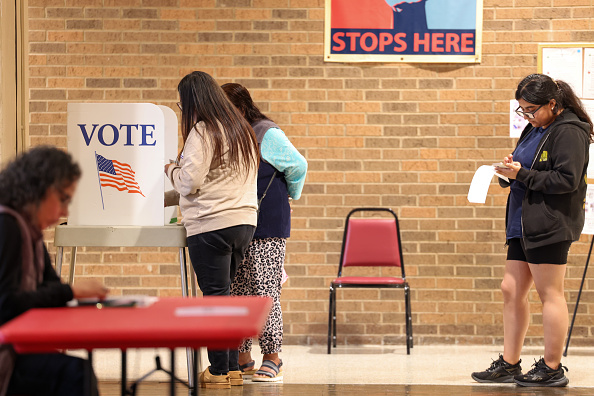
Photo credit: Milwaukee Neighborhood News Service / Contributor / Getty Images News via Getty Images |
Democrats may have swept the midterms, but voters stopped short of fully endorsing progressive policies. In fact, even in blue states and in other states where Democrats made gains, voters supported more right-leaning ballot initiatives.
In Iowa, for instance, where Democrat Rob Sand won the governorship, residents voted in favor of an amendment that requires a two-thirds vote in each legislative chamber to increase income-tax rates. In Wisconsin, where Democrat David Crowley won the governorship, residents voted in favor of an amendment that prohibits affirmative action based on race or sex in public employment.
“The ballot results cannot explain precisely why Republicans lost,” Sean Speer writes, “but they imply that conservative ideas remain broadly popular even if the Trump-led Republican Party is decidedly not.” Read more. |
|
|
Just because Democrats have taken control of Congress doesn’t mean all hope is lost for reforming the Department of Education. True, eliminating it will no longer be possible, but the executive branch can still make a number of changes on its own.
Ilya Shapiro has some suggestions, including strengthening grant regulations, restoring boundaries between protected speech and harassment, and cracking down on racial preferences in scholarships and fellowships. “A lame-duck presidency that just lost decisively in the midterms doesn’t have to mean either forgetting about a policy agenda or having to push the constitutional envelope to achieve it,” he writes. “Plenty can be accomplished in the next two years—at the Department of Education and beyond—through executive orders, regulations, guidance, grant priorities, and enforcement.”
Read Shapiro’s ideas here. |
|
|
As Anthropic prepares to go public later this month, it’s evident that the company wants to keep CEO Dario Amodei and his co-founders in total control.
Indeed, according to Anthropic’s SEC filing, the founders will retain 50.1 percent of shareholder voting rights via a special Class F share, which will give them the ability to name three of the company’s seven directors. Three other directors will be chosen by the Long Term Benefit Trust, an oversight board that votes on its own members. And while the seventh director is also chosen by the Trust, the founders will hold the veto power. They can also—together with majorities of Class E and Class A share owners—vote to disband the trust.
“Anthropic’s structure lacks both the simplicity of shareholder control and the personal accountability that founders with super-voting shares can’t avoid,” Mark Gimein writes. “In their place, it provides a way for founders like Amodei to take whatever path they want while claiming that independent appraisers of the public interest have vetted their actions.”
Read more. |
|
|
In the War Room, a new book by Yonah Jeremy Bob and Elliot Kaufman, follows the story of American and Israeli operations in the Middle East, starting from the hours before October 7, 2023, through the delayed decision to invade Gaza, American and Israeli operations in Iran, targeted assassinations, and the various hostage deals. The authors profile Israeli Prime Minister Benjamin Netanyahu, Defense Minister Yoav Gallant, former minister and Netanyahu political opponent Benny Gantz, and many of their American counterparts across two administrations.
“Bob and Kaufman unveil a fractured Israeli leadership faced with impossible decisions, fraught relationships, and a tightrope walk between diplomacy, politics, and war aims—with a leap of faith or two thrown into the mix,” Yael Bar Tur writes in her review. As she observes, “war is chaotic and messy, especially when led by humans, which makes Bob and Kaufman’s accounts of tense conversations as gripping as the parts about jets and bombs.”
|
|
|
“Trump’s immigration policy was fundamentally no different than Obama’s. The difference is how the Left reacted. There were no demonstrations when Obama deported people who, in his own words, were ‘just living their lives.’ No one interfered with ICE. It’s just another example that progressives have zero standards they’re willing to apply to both themselves and the Right. It’s always, always (D)ifferent when they do it.”
|
|
|
|
A quarterly magazine of urban affairs, published by the Manhattan Institute, edited by Brian C. Anderson. |
|
|
|
Copyright © 2026 Manhattan Institute, All rights reserved. |
|
|
|
|