|
Forwarded this email? Sign up for free to have it sent directly to your inbox. |
|
|
|
Good morning,
Today, we’re looking at why New York Republicans lost in the midterms, how Trump squandered the GOP’s immigration advantage, why Texas’s red-state model will endure, and what to make of the administration’s offshore-wind fight.
Write to us at editors@city-journal.org with questions or comments. |
|
|
|
Photo credit: Newsday LLC / Contributor / Newsday via Getty Images |
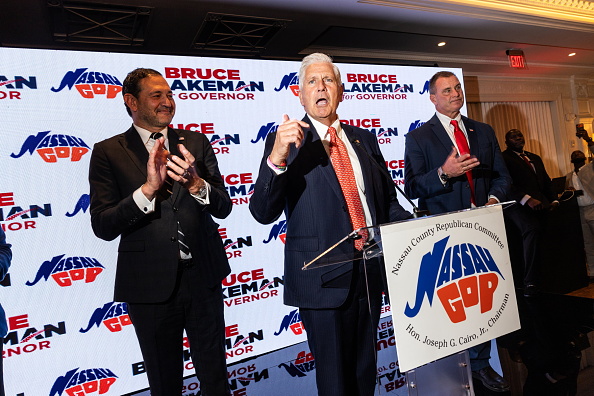
New York is facing numerous serious problems. It has the nation’s highest tax burden, a housing shortage, and public-sector work rules that make government services more expensive.
Democrats aren’t offering solutions, but the midterm election results show that Republicans clearly haven’t eased voters’ concerns, either. Governor Kathy Hochul beat Nassau County Executive Bruce Blakeman roughly 60 percent to 40 percent, and looking back at Blakeman’s campaign, it’s not hard to see why.
Blakeman’s message about a collapsing state and a lawless city failed to break through, given voters’ actual experiences in a place that’s much more vibrant than such rhetoric suggests. He also failed to explain how he would achieve his promise of cutting electric bills in half while siding with public-sector unions rather than proposing reform. And he failed to turn Hochul’s liabilities—like economic stagnation and concerns about crime—into effective issues. “He didn’t proffer a clear vision for the state and regularly struggled to explain how he’d achieve his objectives,” Ken Girardin and John Ketcham write. Voters “could see that his portrait was as disconnected from reality as his policy proposals.”
Read more. |
|
|
In 2024, President Trump won 43 percent of the Latino vote. In this week’s midterms, Republican House candidates won only about one-third of the Latino vote, while Latino men, in particular, swung 25 points toward Democrats. What happened?
There’s reason to believe that the administration’s immigration policy influenced the shift, Santiago Vidal Calvo argues. A poll ahead of the midterms found that “immigration policy, deportations, and ICE” were Latino voters’ top priority. They favor enforcement, but they also support creating more ways for people to immigrate legally.
The GOP once understood this balance, Calvo points out. “Though Republicans have traditionally sided with immigration restrictionists, they have also recognized that America benefits by welcoming legal immigrants. The American people get to choose whom to admit, and those admitted will get a fair shot at building a new life in the greatest country on earth,” he writes. “The Trump administration’s narrow immigration vision has damaged that bargain.”
Read more about Trump’s missteps. |
|
|
Is Texas turning blue? Between Gina Hinojosa’s governorship win and other Democratic victories there, including for attorney general and the comptroller’s office, many think the Left could transform the state.
Not likely, Judge Glock argues. Yes, some conservative programs may be terminated, like the school voucher program—but that was a recent reform. State policies tend to be sticky, and it’s improbable that Texas will prove any different.
Texas’s “low taxes, low cost of living, cheap energy, and booming housing market are a continuing refutation of arguments that the red-state model can’t work,” Glock writes. “Political and constitutional constraints mean that a blue Texas will likely remain far more conservative in its policies than even many technically red states.”
Read more. |
|
|
The Bipartisan American Affordability and Jobs Act (BAAJA) would improve the nation’s permitting process and streamline approvals for pipelines, power plants, transmission lines, and more. Democrats are threatening to derail the BAAJA over Justice Department filings that they claim represent a renewed attack on offshore wind. (The lawsuits are consistent with the Trump administration’s long-held legal positions.)
Shawn Regan argues that the BAAJA would prevent future administrations from revoking valid permits and protect approved projects across the energy sector from political reversals. Democrats should support the legislation as a critical safeguard against executive overreach.
“At a time of rising electricity demand, aging infrastructure, and growing concerns about affordability, America needs to build more energy infrastructure,” he writes. “That requires greater certainty that federal approvals will survive changes in administrations. The point of permitting reform is not to turn Trump into a champion of offshore wind, but to ensure that fully approved projects can proceed regardless of who occupies the White House.”
Read more here. |
|
|
“No political party will ever learn that lesson.” |
|
| |
A quarterly magazine of urban affairs, published by the Manhattan Institute, edited by Brian C. Anderson. |
|
|
|
Copyright © 2026 Manhattan Institute, All rights reserved. |
|
|
|
|