| Forwarded this email? Sign up for free to have it sent directly to your inbox. |
|
|
|
Good morning, Today, we’re looking at Mayor Mamdani’s new plan for closing the Rikers Island jail, Jensen Huang’s resignation from Nvidia, America’s nuclear renaissance, and Wikipedia’s anti-conservative bias. Write to us at editors@city-journal.org with questions or comments. |
|
|
|
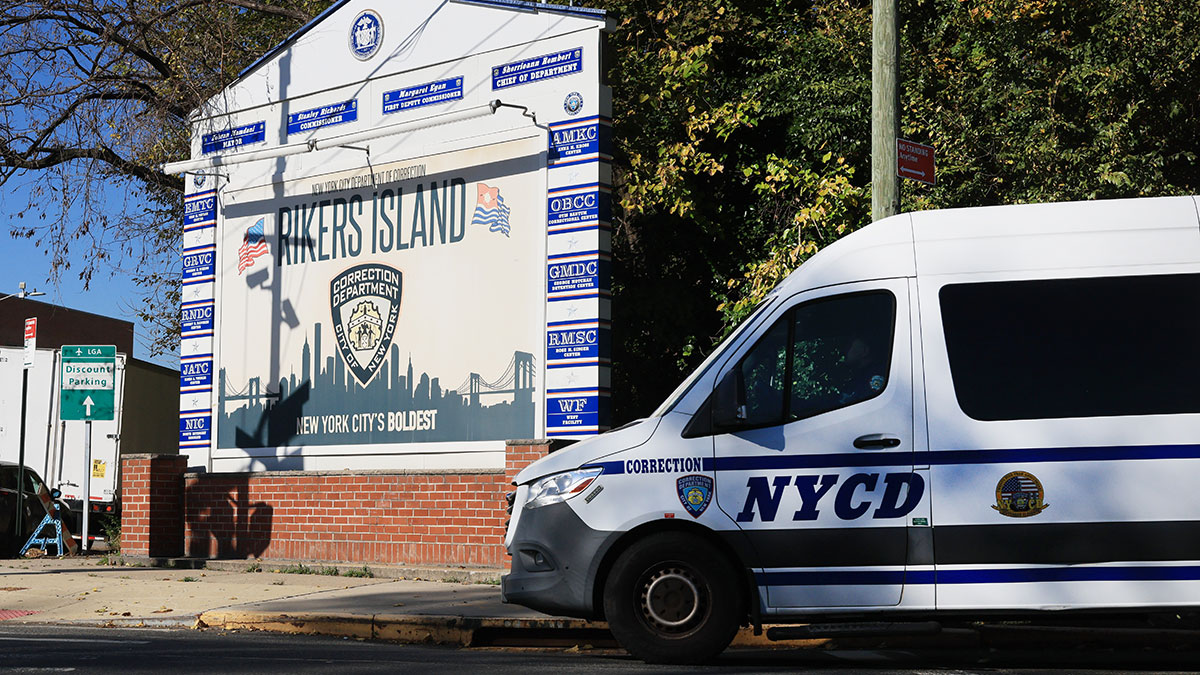
Photo by Spencer Platt/Getty Images |
Last Friday, New York City Mayor Zohran Mamdani released a video proudly proclaiming that his administration was “closing Rikers Island, once and for all.” “The naïve viewer would assume that Mamdani was proposing a brilliant new approach to shuttering the controversial facility,” writes Charles Fain Lehman. In fact, the announcement was closer to an admission of defeat. A 2019 city law states that Rikers must close by summer 2027. The mayor’s new plan pushes that date back to 2032. “The reason for the delay is obvious: none of the four borough-based jails meant to replace Rikers is ready yet,” writes Lehman. Moreover, the city still has no credible plan to cut the average daily jail population by nearly 40 percent, from roughly 6,600 detainees to its 4,100 target. “The mayor has always sold fantasies,” writes Lehman. “That Rikers can safely close is just the latest. It won’t be the last.” |
|
|
|
As rumors swirl about the possible return of Jensen Huang as Nvidia CEO, Robert T. Miller argues that shareholders would be better off if he never comes back. Huang’s alleged affairs, news of which broke last week, not only appear to have violated company policy; they may also have put national security at risk and raised questions about Nvidia’s adherence to U.S. export-control laws. “Boards have ousted many CEOs over the years for far less,” writes Miller. Read more. |
|
|
|
Four years ago, the operators of Michigan’s Palisades nuclear plant took the reactor offline for what they assumed was the last time. Today, workers are bringing it back online for an early 2027 return to service, marking the first time a decommissioned U.S. plant has been restarted. The Palisades restart is one of many signs that America’s nuclear energy industry is rebounding, argues Shawn Regan. Several factors are driving the renaissance: AI and data centers’ hunger for reliable energy; federal licensing reforms; and newer, more efficient plant designs—especially small modular reactors. “Nuclear is returning, in short, because America has rediscovered the value of abundant, dependable electricity, just as building reactors has begun to seem possible again,” Regan writes. Read his feature from the Autumn 2026 issue here. |
|
|
|
Richard Cooke’s new history of Wikipedia, The Last Best Place on the Internet, describes the online encyclopedia as a dependable if occasionally quirky source of information whose editorial ethos of neutrality is protected by the collective wisdom of its army of volunteer editors. This view is dangerously naïve, writes Danielle Shapiro. “Cooke rightly identifies Wikipedia’s critical role in shaping the modern information ecosystem, but he refuses to acknowledge the platform as a captured institution that will train artificial intelligence to treat progressive orthodoxy as the only legitimate viewpoint,” writes Shapiro. In his discussion of bias, Cooke makes no mention of Wikipedia’s systemic blacklisting of conservative media or its purging of pro-Israel perspectives. “In refusing to examine where Wikipedia has gone wrong, Cooke was either ignorant of the organization’s full history or complicit in its attempt to brand itself as the neutral public square,” writes Shapiro. Read it here. |
|
|
|
“All true, but masks a lot of loss down ticket, including 16 seats in the state House of Representatives. New legislature will still have a GOP majority but much slimmer. . . . I am glad I can live in Florida and that Amendment 3 passed with 62 percent (a comfortable cushion over the 60 percent required for adoption) and wish Byron Donalds the best (with a tough act to follow), but I wouldn’t be too complacent about the future.” |
|
|
|
A quarterly magazine of urban affairs, published by the Manhattan Institute, edited by Brian C. Anderson. |
|
|
|
Copyright © 2026 Manhattan Institute, All rights reserved. |
|
|
|
|