|
Forwarded this email? Sign up for free to have it sent directly to your inbox. |
|
|
|
Good morning,
Today, we’re looking at how Pacific Gas and Electric bought Gavin Newsom, the importance of the NYPD’s Strategic Response Group, the plight of New York City’s horse-carriage drivers, and the Onion Futures Act.
Write to us at editors@city-journal.org with questions or comments. |
|
|
|
Photo credit: Smith Collection/Gado / Contributor / Archive Photos via Getty Images |
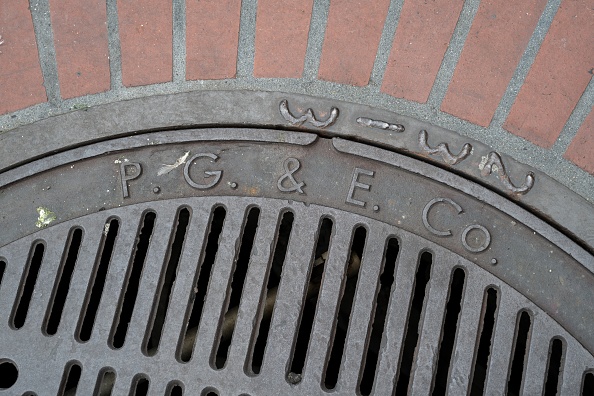
In 2018, a hook suspended from a Pacific Gas and Electric tower in California snapped, setting 150,000 acres on fire. The blaze destroyed thousands of homes and killed 85 people. PG&E pleaded guilty to 84 counts of manslaughter and had to pay billions in damages and insurance claims.
But then Governor Gavin Newsom came to the rescue. In 2019, he signed A.B. 1054, which created a $21 billion fund for utilities whose equipment causes fires. Under the law, utilities could use the fund to pay some fire-related expenses if they had acted “reasonabl[y]” shortly after the disaster. Why would Newsom sign such legislation?
“We reviewed financial records, spoke to a whistleblower, examined exclusive internal emails from the state’s utilities commission, and discovered a straightforward scheme,” Christopher Rufo, Susan Crabtree, and Kenneth Schrupp write. “PG&E funneled cash to entities linked to Newsom, his wife, and his political agenda. The governor’s office, in turn, worked to benefit PG&E, including reviewing and apparently approving a crucial safety license.”
Read their investigation. |
|
|
Earlier this week, New York City Mayor Zohran Mamdani announced that he was disbanding the NYPD’s Strategic Response Group. While mostly cosmetic, the move still validates claims that the SRG threatens free speech.
But those claims just aren’t true, Josh Appel and Stu Smith argue. “In reality, past deployments of the SRG to protests were often necessary,” they write, “as in many cases masked lawbreakers had already crossed the line from speech into action.”
Consider what happened in April 2024, when activists at City College and Columbia University caused millions in damages; or the year before, when a giveaway at Union Square Park turned violent. In these and numerous other instances, the SRG’s training was vital to restoring order. “At a time when ‘protest’ for many has come to mean breaking and entering, arson, graffiti, intimidation, and property damage,” Appel and Smith write, “we need the SRG more than ever.”
Read more. |
|
|
Last month, New York City Council Speaker Julie Menin announced that the council had passed a ban on horse carriages, claiming that the industry is “cruel and deadly.” That couldn’t be further from the truth, Nicole Gelinas argues. The horses get ample vacation time and breaks in extreme weather, and they stay in spacious, regulated stables. “In passing the bill to ban this sturdy industry, Menin and the council haven’t just ignored the absence of any evidence supporting allegations of harm,” Nicole Gelinas writes. “Menin has also created an untenable situation for the horse-carriage drivers themselves.”
Indeed, the ban offers no provision to help drivers find new jobs or to compensate them for having invested at least six figures in the government-issued medallions required to operate the carriages. “Several horse-carriage drivers to whom I’ve spoken are distraught that they may not be able to afford to continue to care for their much-loved animals,” Gelinas notes. What’s worse, the drivers are now subject to politically inspired violence with no protection.
Read more about the ban and a recent Saturday Night Live skit that Gelinas says will only worsen the social environment for these workers. |
|
|
Passed in 1958, the Onion Futures Act bans futures markets for onions. That means onion farmers can’t protect themselves against market volatility since they have to plant their crop without the price signals of demand. “The result is that onion prices can fluctuate wildly from year to year,” Adam Ash writes. “That leaves in significant financial jeopardy the very farmers that the Onion Futures Act was meant to protect.”
Read more about the law and why Ash is so determined to lead a protest movement against it. |
|
|
“Is the only hope for the USA at this point to attempt to inflate away the debt? If so, we are in for a very rocky road.” |
|
|
|
A quarterly magazine of urban affairs, published by the Manhattan Institute, edited by Brian C. Anderson. |
|
|
|
Copyright © 2026 Manhattan Institute, All rights reserved. |
|
|
|
|