|
Forwarded this email? Sign up for free to have it sent directly to your inbox. |
|
|
|
Good morning,
Today, we’re looking at a militant conference hosted by the San Francisco Public Library, New York’s union speech crackdown, Cambridge University’s Jason Arday investigation, and the Left’s costly war on gig work.
Write to us at editors@city-journal.org with questions or comments. |
|
|
|
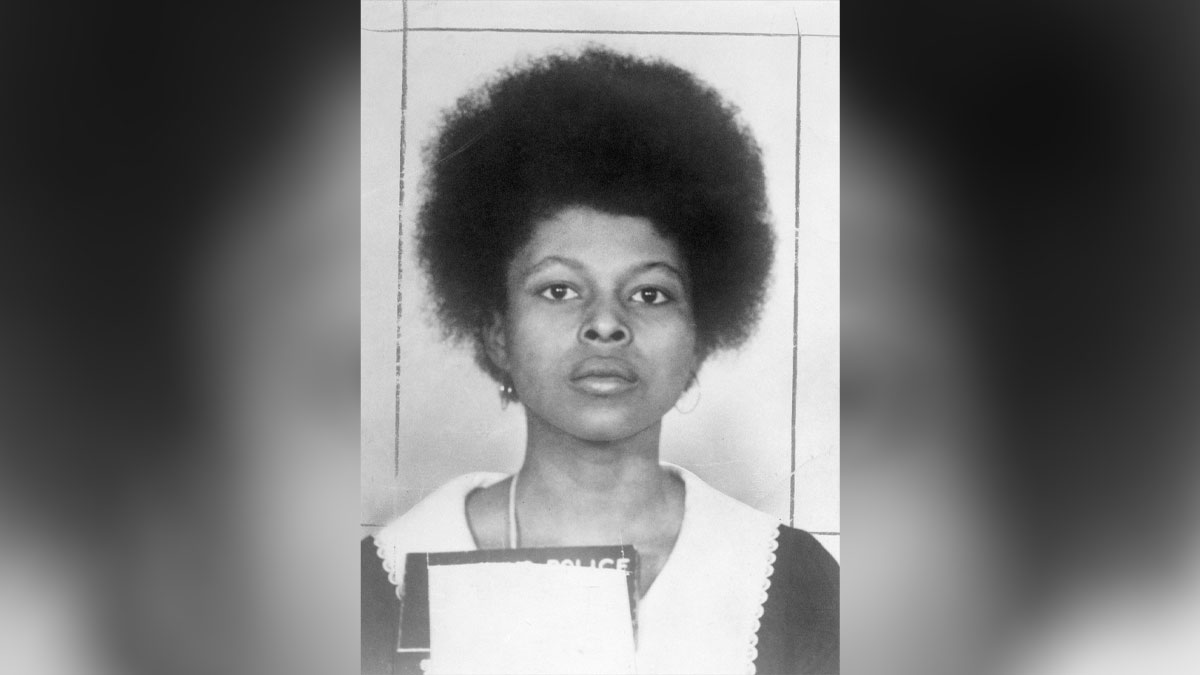
Assata Shakur (Photo: Bettmann/Contributor/Bettman via Getty Images |
Stu Smith reports on a virtual event held by the San Francisco Public Library that convened former members of the Weather Underground, Black Liberation Army, and other groups with militant and terrorist ties to reminisce on their revolutionary struggles.
The panelists included Herman Bell, convicted of murdering two NYPD officers in 1971; Claude Marks, who pleaded guilty to conspiracy charges involving a plan to free a terrorist leader from prison; and Laura Whitehorn, who was imprisoned for her involvement in multiple bombings, including one at the U.S. Capitol in 1983.
“A public library is meant to facilitate access to education and community,” writes Smith. “That mission shouldn’t extend to convening terrorists, murderers, and other serious criminals to celebrate their past and mentor a new generation of political militants.” Read the whole thing here. |
| |
A New York State law ostensibly targets people who impersonate union officials, but its real intention is to prevent nonunion groups from informing union workers about their rights. The Freedom Foundation, a free-market nonprofit, has sued New York, arguing that the law violates the First Amendment.
Sean Higgins, a research fellow at the Competitive Enterprise Institute, outlines the broader problem of unions keeping workers in the dark about their rights under the National Labor Relations Act (NLRA), which makes unions the “exclusive representative” of workers. Many are unaware of right-to-work laws or the Supreme Court ruling in Janus v. AFSCME that public-sector workers neither have to join nor pay dues to their unions.
“Until the NLRA is amended,” Higgins writes, “it falls to the small handful of outside groups like the Freedom Foundation to do the awkward but necessary work of informing workers about what their unions neglect to tell them. New York and other states should not be afraid of workers knowing their rights.”
Read more here. |
|
|
Cambridge University has announced a second part to its investigation into the matter of Jason Arday, the young black professor who committed suicide after numerous allegations of plagiarism surfaced against him.
The first part of the investigation will concern “the support, interventions and protections available to Arday” prior to his death, according to the BBC. The second will “examine the university’s institutional arrangements for recognising and responding to race equality.”
Neither review will investigate the plagiarism allegations, the quality of Arday’s academic work, or Cambridge’s decision to hire him, writes Theodore Dalrymple. He calls these inquiries “a typical example of modern British public administration: simultaneous work creation and work avoidance, all at great, not to say pharaonic, expense.”
Read it here. |
|
|
The gig economy—epitomized by ridesharing apps like Uber and Lyft and food-delivery apps like DoorDash and GrubHub—was once heralded for providing job flexibility for workers while breaking up taxi-medallion cartels and delivering global cuisines to front doors in minutes. But today, the gig economy is under assault by “an expanding system of rules, mandates, and fees” that are driving up prices, write Jarrett Dieterle and Santiago Vidal Calvo in the Autumn 2026 issue. In theory, the new regulations were meant to help gig workers; in practice, however, they’re reducing the flexibility that workers cite as their top reason for taking these jobs while driving up prices for consumers. For example, in Seattle, the average cost of a half-hour Uber ride was $60 in 2025; in New York, it was $47.47; and in Los Angeles, $42.63.
Read here about the factors that Dieterle and Vidal Calvo say policymakers should consider before implementing any new gig law or rule. |
|
|
“Instead of pestering the governor, why not simply make it impossible for him to get his grapes harvested by going after the owners and managers of the companies that hire illegal labor?” |
|
|
|
A quarterly magazine of urban affairs, published by the Manhattan Institute, edited by Brian C. Anderson. |
|
|
|
Copyright © 2026 Manhattan Institute, All rights reserved. |
|
|
|
|