|
Forwarded this email? Sign up for free to have it sent directly to your inbox. |
|
|
|
Good morning,
Today, we’re looking at the Dignity Act, how schools anchor neighborhoods, and a new essay collection on America’s 250th.
Write to us at editors@city-journal.org with questions or comments. |
|
|
|
Photo credit: Heather Diehl / Staff / Getty Images News via Getty Images |
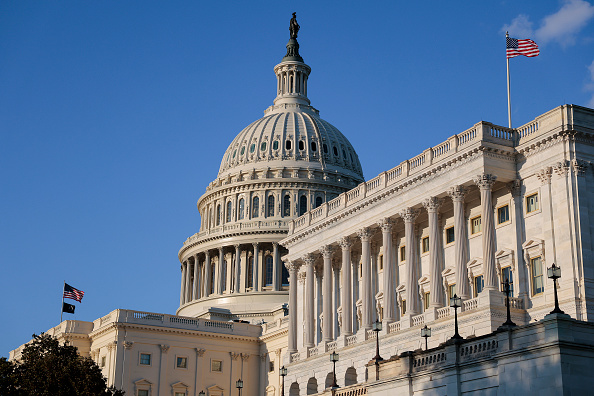
Many on the Right are skeptical of the Dignity Act, and understandably so, as it would grant legal status to millions of immigrants who arrived illegally in the U.S. before 2021. But by not engaging with the legislation or working to make it tougher, they miss a real opportunity, Daniel Di Martino argues.
The act is more in harmony with the Trump administration’s immigration agenda than many Republicans acknowledge. It mandates E-Verify for all employers, it strengthens criminal penalties for illegal immigrants, it curbs large-scale categorical parole, and it expands high-skilled legal immigration, which could reduce the national debt by more than $4.5 trillion.
To be sure, the bill still has flaws. But Republicans could use it as a base from which to build. “With the border more secure than ever before, they can consolidate President Trump’s immigration agenda into law: implement a tough public-charge rule; push for less chain migration; abolish the diversity visa lottery; and impose tougher limits on Temporary Protected Status,” Di Martino writes. “They should also write limits into the law so that the Biden border catastrophe is never repeated.”
Read more. |
|
|
There are about 19 percent fewer children under the age of five living in New York County than there were in 2020. As a result, enrollment in schools is down by nearly 90,000 students since then, with many schools operating below capacity. Fewer children in school will inevitably lead to closures—and that can be detrimental to a neighborhood, Liena Zagare writes.
“People feel strongly about their zoned schools because schools anchor places, bringing together families who live near each other, regardless of background, and building strong communities,” she notes. “They create friendships, memories, and strong emotional attachment among kids as well as parents, which is why few things are as politically charged as consolidating or closing a school.”
Read her take. |
|
|
How do contemporary scholars regard America’s 250th birthday? A new essay collection, The American Revolution at 250, is revelatory, Edward Short writes.
The book is edited by a professor of American history at the University of Edinburgh, Francis D. Cogliano, who urges in his introduction that readers view the Founding through a “culture wars” lens, with the 1619 Project on one side and President Trump’s 1776 Commission on the other. “Fortunately,” Short observes, “while it’s true that some partisan historians might march under one or the other of these standards, they are not representative of the semi-quincentennial’s true reception.” And most of the collection’s contributors steer away from narrow partisanship, offering valuable insights on the Revolution and its meanings.
Read his review. |
|
|
“As the great Thomas Sowell reminds us:
‘When people get used to preferential treatment, equal treatment seems like discrimination.’” |
|
|
|
A quarterly magazine of urban affairs, published by the Manhattan Institute, edited by Brian C. Anderson. |
|
|
|
Copyright © 2026 Manhattan Institute, All rights reserved. |
|
|
|
|