|
Forwarded this email? Sign up for free to have it sent directly to your inbox. |
|
|
|
Good morning,
Today, we’re looking at two Americans who died for the New People’s Army in the Philippines, Mayor Zohran Mamdani’s crackdown on gig companies, why British cultural identity is in peril, and an effort to expand affordable housing in New York.
Write to us at editors@city-journal.org with questions or comments. |
|
|
|
Photo credit: STR / Contributor / AFP via Getty Images |
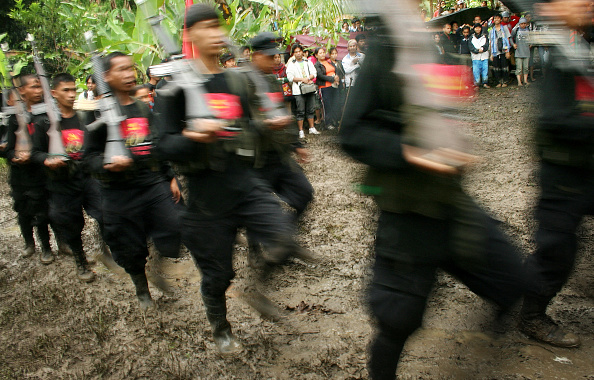
Last month, two Americans, Lyle Prijoles and Kai Dana-Rene Sorem, died fighting for the New People’s Army (NPA) in the Philippines. The NPA serves as the armed wing of the Communist Party of the Philippines (CPP), and the State Department designates both as foreign terrorist organizations.
“The incident shows how Americans can become mixed up with terrorist organizations. Such entanglements begin not just overseas but also within political organizing environments in the United States,” Stu Smith writes, “including college campuses and diaspora advocacy networks. Both the U.S. government and higher education institutions should scrutinize these networks more closely—before more American lives are lost.”
Read about how Prijoles and Sorem became radicalized. |
|
|
New York City Mayor Zohran Mamdani has promised to enforce the city’s gig-economy laws, like a minimum wage for food-delivery workers and a rule that requires apps automatically to suggest a 10 percent tip.
The problem? These laws aren’t good for workers or consumers. After the minimum-wage law took effect, for instance, food-delivery costs rose 10 percent while tips plummeted by nearly 50 percent. Meantime, apps started limiting the number of drivers on their platforms. “Higher wage mandates push gig companies to operate more like traditional employers, limiting how many workers can be on the clock at one time,” Jarrett Dieterle explains. “If too many log on, the firms risk paying for idle or underutilized labor.”
Read more about Mamdani’s anti-gig campaign. |
|
|
For decades, the end of World War II in Europe was central to British identity. Not anymore, apparently. A recent survey found that two-thirds of Gen Z Britons don’t recognize the significance of V-E Day.
It’s a striking figure, but not entirely surprising. “Today’s young adults have grown up at a time when Great Britain is at war with its own past,” Joanna Williams writes. Indeed, following the 2020 Black Lives Matter protests, 83 percent of U.K. schools made changes to “diversify” their curricula, and several have renamed buildings to distance themselves from national heroes. Meantime, protesters in Bristol toppled a 125-year-old statue of Edward Colston, and the Churchill statue that stands in Parliament Square in London is frequently vandalized.
“If we mine the past only for its failures and crimes, we cannot give children a balanced view of British history,” Williams points out. “As the lack of awareness about V-E Day shows, today’s young adults have only a vague understanding of the role Britain played in defeating Nazism.”
Read more. |
|
|
Last week, New York City Mayor Zohran Mamdani released policy recommendations for developing more affordable housing. The initiatives include creating teams to guide projects through complicated review processes; cutting the zoning pre-certification period from 24 months to six; reducing the timeline of the housing lottery; and accelerating the process for permits and inspections.
“While some of these are quick fixes, many will require diligent effort over months and years to be realized,” Daniel Golliher explains. Read about some of the challenges the mayor could face. |
|
|
“It just keeps getting worse and we’re all supposed to pretend we don’t know what the problem is. The so-called ‘leaders’ of the community blame the store for not willingly accepting the shoplifting losses and endangerment of their employees. Yet if you suggest that the dysfunctional subculture is responsible for this situation, you’re branded as a racist.”
|
|
|
|
A quarterly magazine of urban affairs, published by the Manhattan Institute, edited by Brian C. Anderson. |
|
|
|
Copyright © 2026 Manhattan Institute, All rights reserved. |
|
| |
|