|
Forwarded this email? Sign up for free to have it sent directly to your inbox. |
|
|
|
Good morning,
Today, we’re looking at L.A.’s homeless population, the end of the LIRR strike, why another Walgreens is closing in Chicago, and Hispanic assimilation in Miami.
Write to us at editors@city-journal.org with questions or comments. |
|
|
|
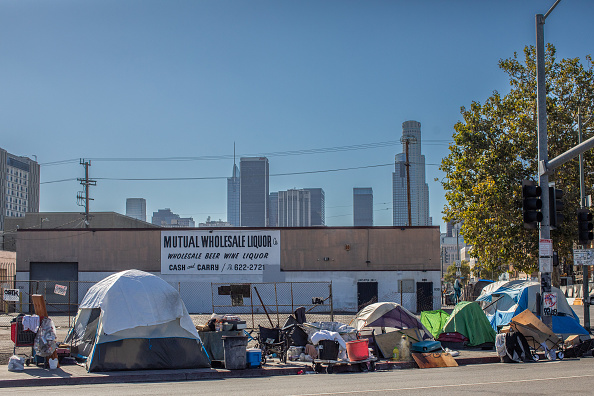
Photo credit: Apu Gomes / Stringer / Getty Images News via Getty Images |
In recent years, some left-wing politicians have dismissed the claim that homeless people are flocking to Los Angeles from other areas of the country as a myth. That’s not what the Los Angeles Homeless Services Authority (LAHSA) found in 2020: one-third of “unsheltered Angelenos” became homeless outside of L.A. County. RAND Corporation made a similar finding in 2024: 41 percent of the street homeless surveyed across three L.A. neighborhoods were “last housed” somewhere else. Christopher Rufo and Kenneth Schrupp wanted updated numbers. They spent two days asking more than 200 homeless in Hollywood, Venice, and Skid Row where they came from. More than 60 percent said they were from outside the city; 53 percent said they were from outside the county; and nearly 40 percent said they were from other states.
“The homeless respond to incentives. They flock to places where it is easy to camp, do drugs, and commit crimes, and where the government provides housing, benefits, and drug paraphernalia,” Rufo and Schrupp write. “That’s exactly what Los Angeles has done. As a result, there is a ‘magnet effect’ that continuously attracts the homeless from around the world.”
Read more from their report. |
|
|
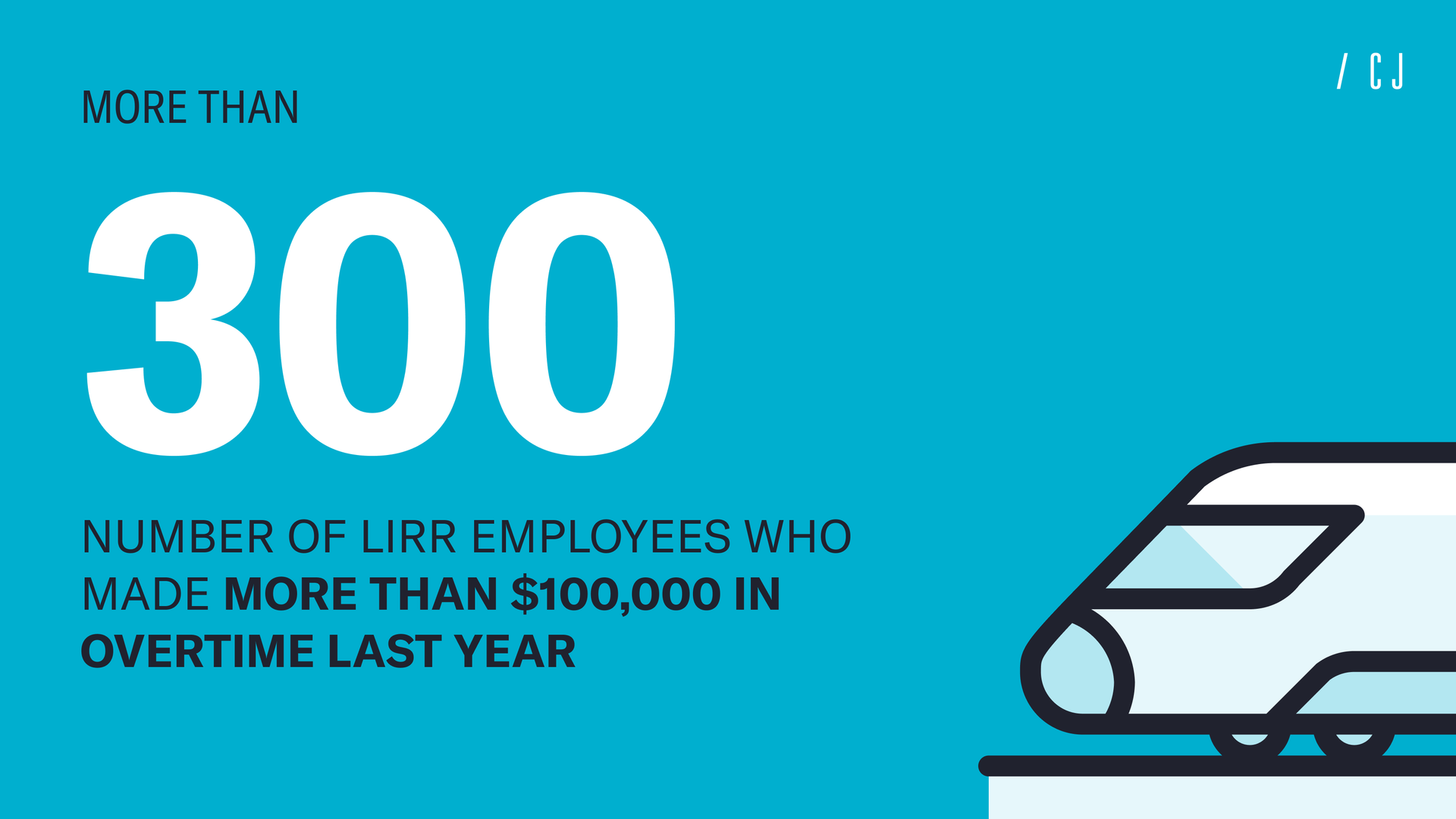
For three-and-a-half days, about 3,500 Long Island Rail Road workers went on strike over contract disagreements. Thankfully, the work stoppage ended Tuesday after the Metropolitan Transportation Authority reached a deal with the unions. And though the details of the agreement aren’t yet public, New York Governor Kathy Hochul can claim at least something of a victory, Ken Girardin argues.
“When the trains stopped, Hochul didn’t issue the usual pablum about how both sides needed to keep talking,” Girardin writes. “She called the strike ‘reckless’ and immediately began communicating about the facts, the stakes, and the public’s interest in seeing a settlement that favored LIRR management.” Read more here.
|
|
|
Yet another Walgreens store is pulling out of Chicago’s South Side—the seventh to do so over the past year. The latest is located in the city’s Chatham neighborhood, where the store lost more than $1 million last year due to declining prescription sales and theft. In fact, 16 percent of the location’s inventory is lost to shoplifting—four times the company average.
Even so, Alderman William Hall, who represents Chatham, blames the company, saying it should be charged with “first-degree corporate abandonment” for leaving residents with little access to medicine.
Hall is right to worry about those with chronic health conditions, Aidan Grogan writes, but criminals are the ones to blame for store closures. “It may be expedient for Hall to blame a Fortune 500 company for his ward’s woes, but it certainly doesn’t benefit his constituents in Chatham,” he notes. “They will now lose another business vital to their well-being because of the city’s failure to address rampant property crime.”
Read on. |
|
|
Have Hispanics in Miami assimilated into American life? Judging by the share of residents who speak Spanish at home, one might assume that they haven’t. While the average rate of Spanish-speaking at home in the U.S. among third-generation Hispanics has fallen from 55 percent in 1980 to 25 percent in 2024, it has risen in Miami from 55 percent to 64 percent.
Even so, when it comes to other metrics like college-degree attainment, median wage, labor force participation, and homeownership, Hispanics in Miami perform strongly against those in other cities. And it’s not just against other Hispanics. “Across most measured dimensions, Miami Hispanics have converged with, and in some cases overtaken, national non-Hispanic whites,” Gil Guerra writes. This, he observes, “shows that Miami’s lack of progress on language assimilation has not held it back on other metrics.”
Read more. |
|
|
“DEI programs hurt the really competent minority members who do go into professions. They get tarred with the DEI brush, even if they have met the best standards.”
|
|
|
|
A quarterly magazine of urban affairs, published by the Manhattan Institute, edited by Brian C. Anderson. |
|
|
|
Copyright © 2026 Manhattan Institute, All rights reserved. |
|
| |
|