|
Forwarded this email? Sign up for free to have it sent directly to your inbox. |
|
|
|
Good morning,
Today, we’re looking at the Red Pill movement, what’s really driving higher health-care costs, the DSA’s politicization of public office, and the Supreme Court’s next big religious freedom case.
Write to us at editors@city-journal.org with questions or comments. |
|
|
|
Andrei Pungovschi / Getty Images News / Getty Images |
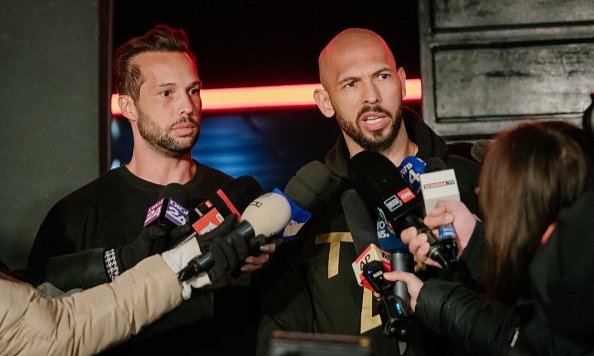
“You are the victim of a culture that favors women and discards men. To deal with women safely, treat them as adversaries. And now that you see the truth, the path forward runs through my book, my course, my subscription.”
That is the central message of The Red Pill (TRP) movement. The name comes, of course, from the film The Matrix, when Neo takes the red pill and sees reality for what it is. Today, male influencers are applying that concept to relationships, cultivating grievance and anger among young men and convincing them that they’ve uncovered the rules governing attraction and power.
“Masculinity is portrayed as besieged by cultural institutions, family courts, and modern dating norms,” Ed Latimore writes in our Spring 2026 issue. “Romantic disappointment becomes proof of systemic betrayal.”
Read more about the movement, Latimore’s experience with it, and why he says that in some ways, its outreach to young men resembles gang recruitment. |
|
| Earlier this year, Massachusetts Senator Elizabeth Warren and Missouri Senator Josh Hawley introduced the Break Up Big Medicine Act. Warren claims that because health insurers “own or control every part of the health care supply chain,” the only way to make care more affordable is to break up the big companies.
Not quite, Chris Pope writes. Hospitals account for most of the consolidation, but the most expensive ones are already in the most competitive markets. And just 1 percent to 2 percent of physicians work for insurance companies directly. Insurers also bear an increasing share of prescription drug costs, meaning patients pay less. “For insurers, integrating prescription drug coverage with insurance for other medical services is common sense, allowing them to improve medication adherence and thus avoid more costly hospitalizations,” Chris Pope explains.
The real culprit of rising costs? “The growing use of increasingly sophisticated medical technologies,” Pope writes. Read more. |
|
|
Last month, the Los Angeles chapter of the Democratic Socialists of America (DSA) hosted a panel with three elected officials who revealed how the DSA seeks to redefine public office. Through activism, mutual aid, and organized resistance to immigration enforcement, DSA officeholders are using their positions to advance DSA priorities, not necessarily the will of voters.
City Journal investigative analyst Stu Smith summarized the panel and the DSA’s broader strategy: “The DSA’s politicization of public office blurs the boundary between governing and movement-building, risking a drift toward a form of clientelism in which access and policy responsiveness are increasingly mediated through organizational and ideological loyalty rather than democratic administrative norms.”
From resisting the Trump administration and ICE operations to opposing billionaires and “status quo Democrats,” the panel's discussions provided a window into the DSA’s thinking. Smith concluded that the DSA-ers “do not view public office as a public trust but instead as an instrument to serve their own ends.”
Read more here. |
|
|
For the past decade, the Supreme Court has issued a series of rulings barring government from excluding religious organizations from public-funding programs. A new case, St. Mary Catholic Parish v. Roy, will push that jurisprudence into new terrain: what to do about government-imposed conditions that collide with religious commitments.
At issue is a Colorado state program that funds preschool for families to enroll children in the private or public provider of their choice. While religious schools are technically eligible for the program, the state has imposed “quality standards” that effectively exclude certain institutions.
“The legal reality, likely to be addressed by the Supreme Court, is that this sort of asymmetrical treatment violates the First Amendment,” writes Michael A. Helfand. “Colorado cannot require religious schools to trade away their church autonomy rights as the price of entry into the universal pre-K program.” |
|
|
“The culture wars rage on. As the Supreme Court steadily moves the nation toward a colorblind constitution, the Democrats’ response is to support court-packing and DC/PR statehood. Can universities return to playing a more neutral, constructive role in the debate? It seems unlikely, as they’re the intellectual heart of wokeism. Something bigger must change first.”
|
|
|
|
A quarterly magazine of urban affairs, published by the Manhattan Institute, edited by Brian C. Anderson. |
|
|
|
Copyright © 2026 Manhattan Institute, All rights reserved. |
|
| |
|