|
Forwarded this email? Sign up for free to have it sent directly to your inbox. |
|
|
Good morning, Today, we’re looking at AI cheating in schools, California’s changing demographics, and a review of Lionel Shriver’s new novel. Write to us at editors@city-journal.org with questions or comments. |
|
|
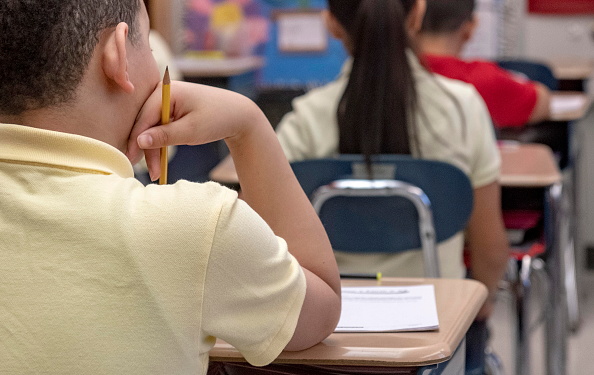
With AI platforms like ChatGPT and Copilot so easily accessible, teachers have struggled to discourage students from using them to cheat. But detection tools can cost school districts hundreds of thousands of dollars and don’t always work well.
The best way to address the issue? A greater focus on in-person assessments, Neetu Arnold argues. “This could involve offering smaller, more frequent tests, fewer but larger ones with heavier weighting on final grades, or weighing in-person assignments more than homework,” she writes. “Students might still use generative AI to complete homework or other assignments, but their grades on in-person tests or classwork would suffer as a result. The key is to ensure that stakes are attached to graded work.”
Read her take. |
|
|
California is growing old. In 1970, the median age of state residents was 28. By 2060, it will be over 45. And by 2040, one in four Californians will be over 60. Already today, those over 65 outnumber those in the 25-to-34 age group.
A number of factors are at play here. For one thing, Californians’ life expectancy is among the nation’s highest, meaning the elderly stick around longer. Meantime, unable to afford the astronomical housing costs, younger residents are fleeing the state. And those who do stay are having fewer children.
“All this bad news leaves the boomers, the last successful California generation, in a quandary,” Joel Kotkin writes. “Many see their offspring leaving, while the remaining young Californians are increasingly restless. As in New York, many are opting for radical leftism, embracing higher taxes on the rich (meaning boomers) to pay for redistributionist policies like free health care and rent control.”
Read more about California’s changing demographics and what it means for the state’s future. |
|
|
Lionel Shriver’s novels aren’t known for their cheerful endings. “An expert in the depiction and skewering of middle-class vanity,” Seth Barron writes, “Shriver is merciless in examining dainty liberal principles, then shredding them and the people who hold them.”
Her latest novel, A Better Life, is no exception. Focused on mass migration, specifically in New York City during the Biden years, it “takes a jaundiced view of the idea that immigrants seeking ‘a better life’ for themselves are inherently valorous for doing what every living creature does instinctively,” Barron observes.
Read his review. |
|
|
“Meanwhile, the local Catholic school attached to my parish charges $5,300/year for one student (with slightly reduced rates for each additional child/year in the same family). The facility is somewhat subsidized by the parish based on some dual use, but that funds all the classrooms, teachers, staff, curricula, and maintenance. Granted, they don’t offer special ed, but there is simply no way that lumping all that in together NEEDs to cost more than $11,000/ year on average for all kids. The rest is pure graft, waste, and bloat. That’s how government rolls, folks. Make everything cost 3x what it needs to.”
|
|
|
Photo credits: Newsday LLC / Contributor / Newsday via Getty Images |
|
|
A quarterly magazine of urban affairs, published by the Manhattan Institute, edited by Brian C. Anderson. |
|
|
Copyright © 2026 Manhattan Institute, All rights reserved. |
|
|
|