|
Forwarded this email? Sign up for free to have it sent directly to your inbox. |
|
|
Good morning,
Today, we’re looking at an umbrella group behind protests in the U.S., President Trump’s recent executive order, a problematic housing bill, the decline of ESG investing, and the work of writer Murray Kempton.
Write to us at editors@city-journal.org with questions or comments. |
|
|
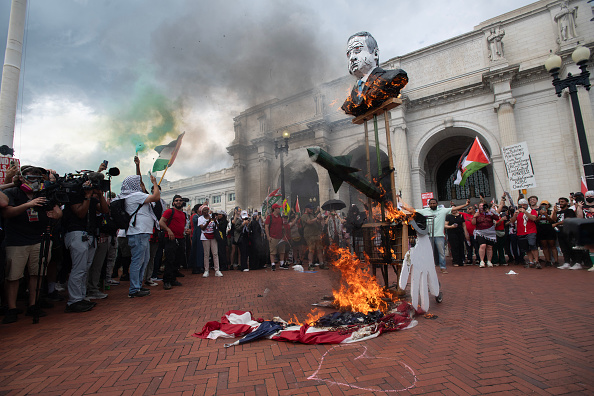
If the pro-Iran protests in the U.S. have felt eerily similar to earlier pro-Maduro and anti-ICE demonstrations, that’s because an umbrella group, the ANSWER Coalition—Act Now to Stop War and End Racism—is often behind them.
ANSWER links activist organizations with media outlets and protest infrastructures, often coordinating the rallies and the messaging. “ANSWER’s activities can and sometimes do turn from peaceful protest into civil terrorism—the strategic use of lawbreaking to effect political change through intimidation or coercion,” Tal Fortgang and Stu Smith write. For instance, in July 2024, the group was behind a protest in Washington, D.C., that turned into a riot, as protesters burned American flags, blocked intersections, and spraypainted graffiti on a public fountain.
Read more about the group, its funding and foreign ties, and why Fortgang and Smith argue that an investigation should be in order. |
|
|
Last week, President Trump issued an executive order that Judge Glock calls “one of the most important federal housing actions ever undertaken.” It requires agencies to simplify Clean Water Act regulations that could increase homebuilding costs. It does the same for National Environmental Policy Act regulations and for Section 106 of the National Historic Preservation Act. “These federal rules are not the main drivers of high housing costs in major cities like Los Angeles and New York,” Glock writes, “but they do make a big difference. And the rules are especially burdensome for builders in suburbia or in outlying areas that get little attention from policymakers.”
Read more about the order. |
|
|
The 21st Century ROAD to Housing Act, currently making its way through Congress, aims to cut red tape to encourage homebuilding. The bill would also prevent institutional investors that own at least 350 homes from purchasing more; those that do so would need to sell them to buyers within seven years.
This provision is misguided, Shawn Regan argues. It’s clearly targeting the build-to-rent sector, where an investor owns a large number of single-family homes—all built with the intent to rent vs. sell. “Institutional investors—pension funds, real-estate investment trusts, and large asset managers—play a central role in financing these projects,” Regan writes. “Restricting their ability to own rental homes therefore risks choking off investment in a segment of the market that is actually adding supply. Forcing investors to exit projects after a fixed period would make it harder to finance long-term rentals.”
Read more about the bill’s potential ramifications. |
|
|
Just five years ago, ESG (Environmental, Social, and Governance) investing was all the rage. Between 2020 and 2021, net inflows more than doubled, and as of January 2026, funds were managing $629 billion, up 1.9 percent from the year prior.
But the boom may be coming to an end. Since 2022, money has flowed out at a greater rate—last January, ESG funds saw a $935 million net outflow. Meantime, Vanguard settled last month in a lawsuit that alleged its ESG practices harmed consumers. “ESG funds were already falling out of fashion before the settlement,” Allison Schrager writes. “Vanguard’s fines and renewed commitment to passive investment could accelerate its end.”
Read her take. |
|
|
Writer Murray Kempton may be unfamiliar to most readers today, but he was greatly admired before his death in 1997. Joan Didion, Christopher Hitchens, and William F. Buckley Jr. all “valued his blend of anti-dogmatism, wit, wisdom, erudition, and gift for character study,” Marc Landy writes. Kempton referred to himself as a socialist but also had a great love for the church, tradition, and friendship. “His conservatism, though, was a fundamentally left-leaning one,” Landy observes, “grounded in an abhorrence of greed, materialism, inequality, sectarianism, and arrogance.”
Read more about Kempton and his work. |
|
|
“The irony, not only here and in the U.K. but also in Australia, New Zealand, and Canada, is that all the racialist identity politics is making people more race conscious and more racist, not less. The woke fancy themselves as intelligent, sensitive, progressive heroes, but the truth is that the woke movement’s incoherent ideologies—critical theory, Marxism, intersectionality, and postmodernism—are damaging society.”
|
|
|
Photo credits: MATTHEW HATCHER / Contributor / AFP via Getty Images |
|
|
A quarterly magazine of urban affairs, published by the Manhattan Institute, edited by Brian C. Anderson. |
|
|
Copyright © 2026 Manhattan Institute, All rights reserved. |
|
|
|