|
Forwarded this email? Sign up for free to have it sent directly to your inbox. |
|
|
|
Good morning,
Today, we’re looking at pediatric gender medicine, Zohran Mamdani’s endorsements in the New York City primary, the lessons of Spencer Pratt’s mayoral campaign, Rep. Ro Khanna’s contradictions, and the work of novelist Curzio Malaparte.
Write to us at editors@city-journal.org with questions or comments. |
|
|
|
Photo credit: UCG / Contributor / Universal Images Group via Getty Images |
Last month, an Oregon-based study found that roughly one in 240 girls between the ages of eight and 17 were taking testosterone, and about one in 630 boys were taking estrogen. Those are shocking numbers. Even so, the study authors claim that medical transition is “rare,” access is “limited,” and “structural and systemic barriers” could be keeping treatment rates down.
Defenders of “gender-affirming care” change their tune depending on the data. “If the rates are low, that proves the panic is overblown. If the rates are high, that’s evidence that access is improving,” Colin Wright observes. “If the rates rise, that means stigma is declining. If they don’t rise enough, that means barriers remain. Heads they win, tails you’re a bigot.”
Read more about the study. |
|
|
MI has partnered with the Sun Valley Policy Forum’s Summer Institute, bringing some of your favorite City Journal contributors to Idaho’s iconic mountain town this summer: Heather Mac Donald, Reihan Salam, Ilya Shapiro, Shawn Regan, Jesse Arm, Judge Glock, Brandon Fuller, Mark Mills, and more. Friends of City Journal receive discounted registration. We hope to see you there.
|
|
|
|
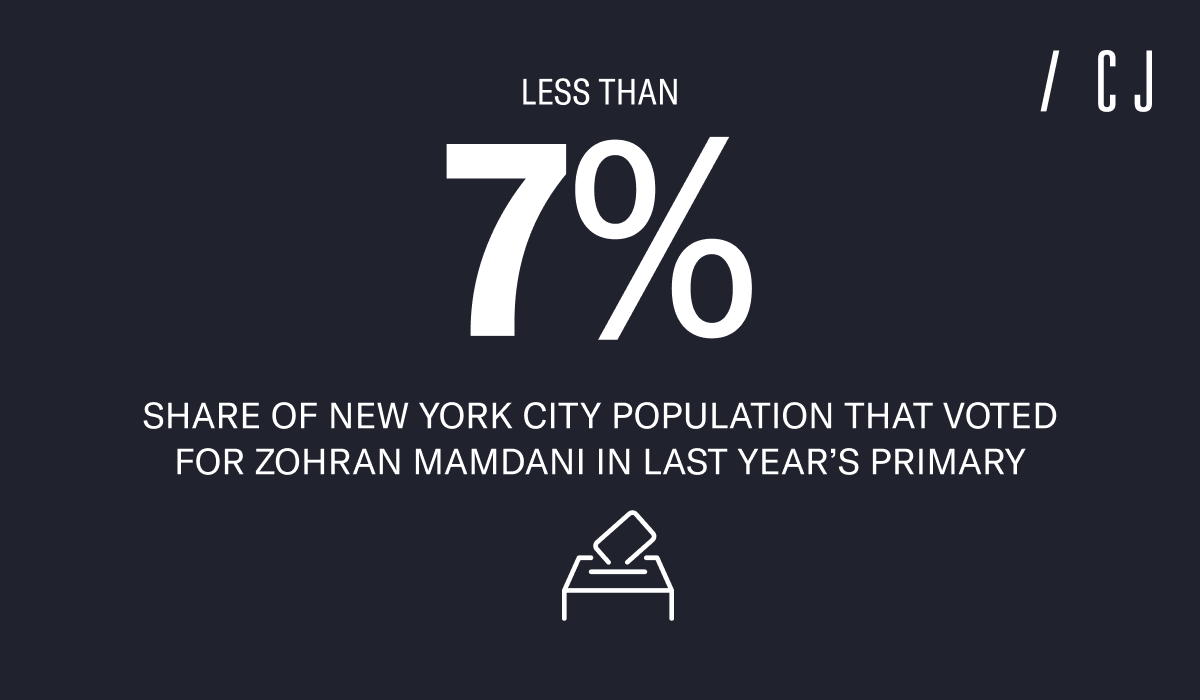
To be able to claim a victory, New York City Mayor Zohran Mamdani needed just one of his three candidates to win in the primaries earlier this week. “Even a single seat flipping from establishment Democrat to the insurgent Left would have changed the status quo and given him some bragging rights,” Nicole Gelinas argues.
All three of them won. Assemblywoman Claire Valdez beat Brooklyn Borough President Antonio Reynoso; former city comptroller Brad Lander beat two-term incumbent Dan Goldman; and Darializa Avila Chevalier beat five-term incumbent Adriano Espaillat. “Mamdani’s tenure has a long way to go, but for now, his careful bets are still coming up aces,” Gelinas writes.
Read more here. |
|
|
It didn’t take long for Spencer Pratt’s campaign for mayor of Los Angeles to gain national attention. His home had been destroyed in the Palisades Fire, and he spotlighted the city’s biggest problems, from homeless encampments to disorder to rising costs. Locally, too, his message resonated: Angelenos pay high taxes in a city that tolerates a lot of crime. And they had just witnessed the wildfires tear through their own community. Perhaps it’s no surprise, then, that Pratt overperformed in the Palisades. He also gained ground in precincts across the Westside and San Fernando Valley, and became especially popular in places like Beverly Hills and Santa Monica. So how did he finish third in the primary?
“His strongest constituencies were too narrow, too geographically limited, and in some cases not even part of the electorate he needed,” Jesse Arm and Matthew Knee explain. “Virality can amplify a grievance; it cannot substitute for a winning coalition in the bluest parts of the country.”
Read more. |
|
|
Elected in 2017, Representative Ro Khanna has often talked about the promise of America, and says his experience growing up Indian American was “remarkably easy.”
Perhaps that’s why his politics feel so jarring—“strangely detached from his biography,” as Rohit Goyal puts it. Khanna frequently expresses alarm about the white-black racial wealth gap, for instance, and he supports affirmative action, saying that “race matters” and is “consequential to people’s lives.”
Indeed, “Khanna oscillates between two extremes, seemingly feeling no need to reconcile them,” Goyal writes. “When he reminisces on his past, America is a colorblind society, teeming with opportunity for people of all backgrounds. When he turns to the issues of the day, America is a racist prison, forever holding racial minorities down.”
Read more. |
|
|
Born in 1898 in Prato, Italy, Curzio Malaparte wrote Kaputt and The Skin after serving as an army captain during World War II. “His prose blends fact inextricably with fiction, reality with dream, as though doing war reportage in the key of magical realism,” Brian Patrick Eha writes. “His perspective is pan-European, his allegiances shifting and uncertain, his sympathies not easily aroused except by suffering or slaughtered animals, most innocent of war’s victims.”
Malaparte was, according to his biographer, able “to believe in his own reality—perception interwoven with fabrication.” Read more about the writer, whom Eha describes as “a chameleon who veered from fervent Fascism in 1920s Italy to avowed anti-Fascism after the war.” |
|
|
“My cousin got a job teaching math at the same junior high school we attended.
Within a year, she was head of the math department because she was the only one in the entire department who could do long division. That’s all it took! Now, she doesn’t teach kids math anymore. She teaches math to math teachers—math teachers who were hired to teach math but can’t do math themselves. How are students supposed to learn math when their teachers don’t know math and therefore can’t teach it? Beam me up, Scotty. There’s no sign of intelligent life down here.” |
|
|
|
A quarterly magazine of urban affairs, published by the Manhattan Institute, edited by Brian C. Anderson. |
|
|
|
Copyright © 2026 Manhattan Institute, All rights reserved. |
|
|
|
|