|
Forwarded this email? Sign up for free to have it sent directly to your inbox. |
|
|
|
Good morning,
Today, we’re looking at New York’s Democratic primaries, Gavin Newsom’s questionable network, and sensible AI regulation.
Write to us at editors@city-journal.org with questions or comments. |
|
|
|
Photo credit: Michael M. Santiago / Staff / Getty Images News via Getty Images |
Meet Darializa Avila Chevalier: a 32-year-old member of the Democratic Socialists of America, she attended a pro-Palestinian rally the day after the October 7, 2023, Hamas massacre; she has maligned interracial relationships; she called Joe Biden a rapist; and she said that the Dominican flag is “violent.” And she now represents New York’s 13th congressional district.
Chevalier is one of three Zohran Mamdani-backed candidates who won in New York’s primaries earlier this week. Her victory “shows that even little-known, unhinged radicals can upend the lethargic Democratic establishment—so long as they have Mamdani’s approval to activate the DSA machine,” John Ketcham and Christian Browne write.
“Now that all three of Mamdani’s endorsees have won,” they continue, Mamdani “will continue his transformation of the DSA from a group of fringe agitators attached to the Democratic Party into a modern version of the Tammany Hall machine. Through on-the-ground canvassing, smart messaging, and social media, it can secure victory for candidates willing to advance its policies, regardless of their backgrounds or extremism.”
Read more about the election results and how establishment Democrats might respond. |
|
|
MI has partnered with the Sun Valley Policy Forum’s Summer Institute, bringing some of your favorite City Journal contributors to Idaho’s iconic mountain town this summer: Heather Mac Donald, Reihan Salam, Ilya Shapiro, Shawn Regan, Jesse Arm, Judge Glock, Brandon Fuller, Mark Mills, and more. Friends of City Journal receive discounted registration. We hope to see you there.
|
|
|
|
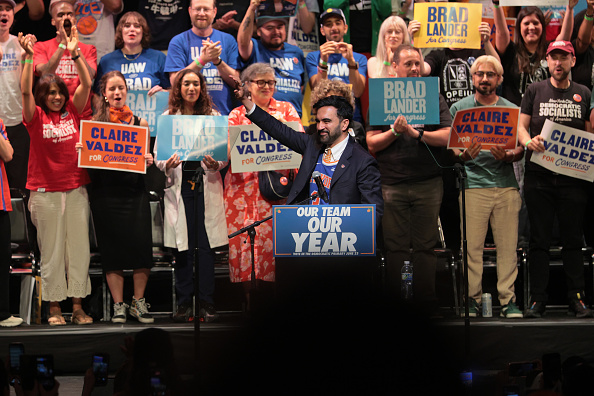
New York City’s Democratic primaries demonstrated the continuing strength of Mayor Zohran Mamdani's political movement. Three candidates whom he endorsed—Darializa Avila Chevalier, Claire Valdez, and Brad Lander—won their congressional primaries, suggesting that the coalition that helped elect Mamdani remains influential.
City Journal investigative reporter Adam Lehodey argues that these victories reflect the success of organized left-wing activism among younger, college-educated voters, but don’t necessarily indicate New York City’s broad acceptance of socialism. Working-class and immigrant voters remain skeptical of such policies. “Though some headlines are portraying Mamdani as a new Democratic kingmaker, the real takeaway may not be the mayor’s magic touch,” he said. “Instead, New York’s primary results suggest that the same political current that carried Mamdani into office is still running strong.”
Read more here. |
|
|
Over his nearly three decades in politics, California Governor Gavin Newsom has surrounded himself with questionable colleagues. Indeed, in a new report, Christopher Rufo, Jedd McFatter, and Susan Crabtree find that many of Newsom’s appointees, employees, and associates have been implicated in ethical violations and criminal offenses.
“California’s culture of self-dealing and corruption stretches back decades,” they write. “As mayor of San Francisco and now governor, Newsom has had ample opportunity to change it. Instead, he has spent nearly three decades in politics surrounding himself with many of the people responsible.”
Read about some of those individuals and the scandals plaguing them here. |
|
|
Can artificial intelligence be regulated without sacrificing innovation? While there’s no magic bullet, Mark P. Mills argues, self-regulation offers the best path forward. It “may sound like an oxymoron,” he writes, “but it’s an old and often successful means for juggling the challenges created by rapidly emerging technologies or industries.”
Mills urges every tech executive to read George Washington University Professor Aram A. Gavoor’s paper, which “describes how self-regulation ‘can be economically rational rather than merely aspirational,’ and how ‘codification can support federal preemption where state regulation becomes conflicting or excessive,’” Mills observes. “In short, it offers a path that is as close to a get-out-of-jail-free card as is humanly—and politically—possible.”
Read more. |
|
|
“Slobodian dislikes free market capitalism and has taken to slandering the messenger as a method of attacking the message. Not being able to discredit free market capitalism itself, he attacks one of the best theorists of capitalism.”
|
|
| |
A quarterly magazine of urban affairs, published by the Manhattan Institute, edited by Brian C. Anderson. |
|
|
|
Copyright © 2026 Manhattan Institute, All rights reserved. |
|
| |
|