|
Forwarded this email? Sign up for free to have it sent directly to your inbox. |
|
|
|
Good morning,
Today, we’re looking at the history of slavery in America, the arrest of an Iranian agent, two millionaires supporting radical causes, what AI will mean for jobs, and three states working to restore religious freedom.
Write to us at editors@city-journal.org with questions or comments. |
|
|
|
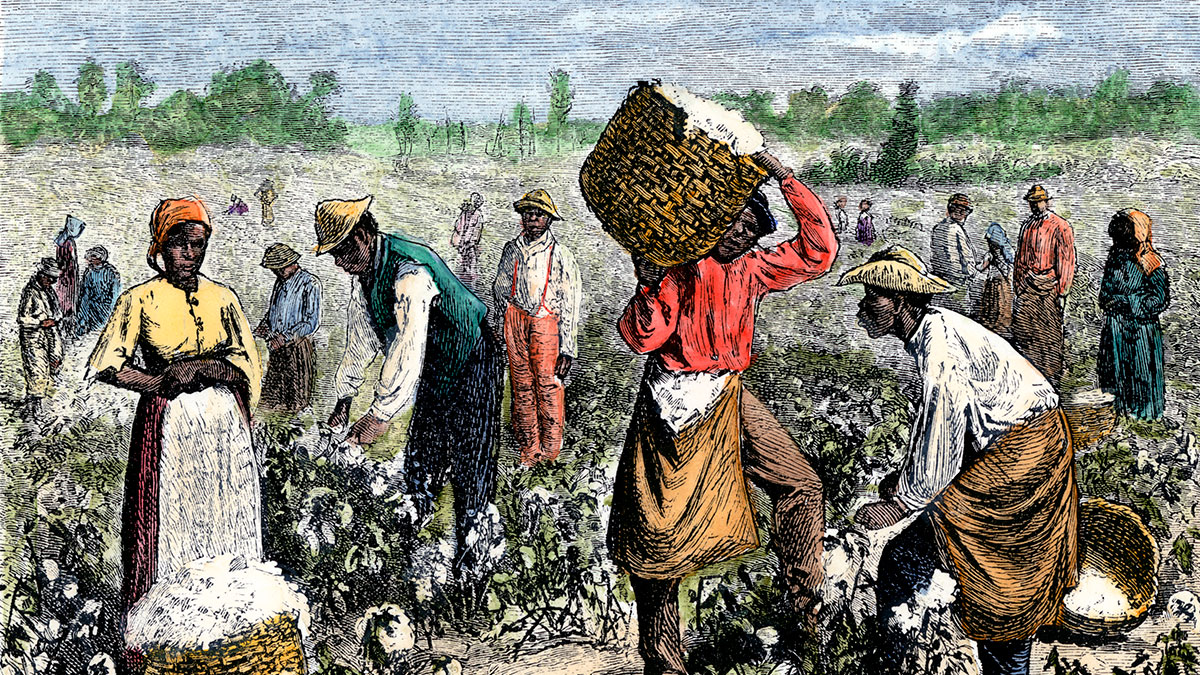
The idea that slavery was both central to America’s founding and the primary source of the country’s prosperity has gained much traction in recent years. But neither contention is true. “The reality is that slavery has existed since time immemorial,” Jason L. Riley writes. “It has taken many forms—field hand, domestic servant, soldier, artisan, concubine—and has been practiced on every continent.” Indeed, slaves were denied citizenship in ancient Greek city-states like Athens and Sparta. Rome allowed open torture and combat against wild animals. Large-scale plantation slavery was common in Egypt and Sudan. Slavery in China dates back thousands of years. Slavery in the Ottoman Empire lasted for more than 500 years.
Meantime, large numbers of slaves “meant fewer consumers for the services of lawyers and mechanics or for manufacturers’ goods,” Riley points out. “And to the extent that the slave system devalued labor and led the white population to spurn physical work, it encouraged idleness.”
Read more about the history of slavery across the world and why Riley argues that singling out the U.S. as uniquely evil for the practice is misguided. |
| |
Earlier this month, Mohammad Baqer Saad Dawood al-Saadi, a Kata’ib Hizballah commander working closely with the Iran Revolutionary Guard Corps, was arrested. He was allegedly directing bombings of financial institutions, synagogues, and Jewish schools, and was mapping out an attack on a synagogue in Manhattan. He is now accused of six terrorism-related offenses.
“The episode highlights with rare comprehensiveness the interlocking problems of global Islamist terrorism, American immigration policy, and a fixation with Jews and Jewish institutions—particularly those that openly support Israel,” Tal Fortgang writes. “Preventing such incidents means hardening both our border and the nation’s Jewish institutions—before the next al-Saadi succeeds.”
Read more about al-Saadi and his alleged involvement in nearly 20 attacks. |
|
|
Heir to the Cox media fortune, Jim “Fergie” Chambers has long supported left-wing causes and activities like “anti-imperialist” organizing, Students for Justice in Palestine, and bail assistance.
Now, Chambers is publicly attacking another far-left funder: Neville Roy Singham, a Shanghai-based tech billionaire. Chambers wrote on X that the Singham network and The People’s Forum have redirected insurgent organizing into institutions linked to the Party for Socialism and Liberation (PSL). Chambers implies, Stu Smith writes, that “Singham prefers exercising control over the movement to enabling the sort of serious radicalism Chambers endorses.” This public critique by Chambers “offers a rare public window into the inner workings of the Singham network, one of the radical Left’s most effective and prolific organizing operations,” Smith maintains. “And, in its surfacing of the importance of the PSL to that network, Chambers’s X commentary highlights a potent target for policymakers looking to dismantle Singham’s influence operation.”
Read more here. |
|
|
Throughout history, technological revolutions have displaced workers, but they’ve also created new jobs and opportunities. Artificial intelligence will prove to be much the same, Milton Ezrati argues.
“The efficiencies and cost reductions brought by AI and robotics, even as they displace workers, will raise real incomes elsewhere in the economy,” he predicts. “Accordingly, they will increase demand for more goods and services in general and in ways facilitated by the new technology. Those demands will create more jobs for displaced workers and others.”
Read more about past technological waves and what they suggest about the future. |
|
|
Last year, Oklahoma Governor Kevin Stitt directed state agencies to eliminate laws that excluded religious individuals and institutions from public benefits. Last month, Florida Attorney General James Uthmeier proclaimed that state laws excluding religious institutions from public benefits violate the First Amendment. And Iowa Governor Kim Reynolds recently signed legislation repealing anti-religious restrictions within the state’s education code.
These states should be applauded for their efforts, Michael Helfand and Nicole Stelle Garnett argue. “These recent developments may signal the beginning of a far healthier constitutional trend—one that does not require wave after wave of costly litigation simply to secure religious liberty for Americans,” they write.
|
|
|
“Weird what actually enforcing the law will do.” |
|
|
|
A quarterly magazine of urban affairs, published by the Manhattan Institute, edited by Brian C. Anderson. |
|
|
|
Copyright © 2026 Manhattan Institute, All rights reserved. |
|
| |
|