|
Forwarded this email? Sign up for free to have it sent directly to your inbox. |
|
|
|
Good morning,
Today, we’re looking at why Iryna Zarutska’s alleged killer could walk free, why we need to update the KKK Act, and the success of the Cornerstone Classical Academy in Florida.
Write to us at editors@city-journal.org with questions or comments. |
|
|
|
Photo credit: Anadolu / Contributor / Anadolu via Getty Images |
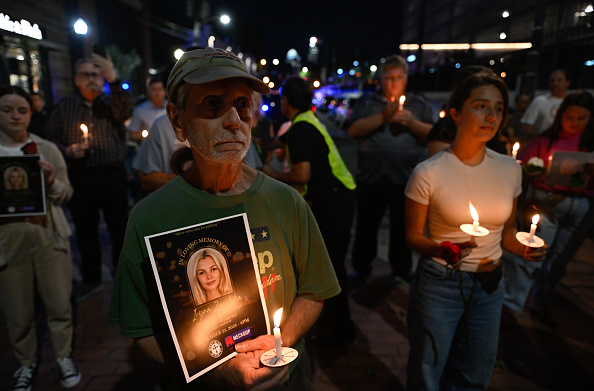
Last year, Decarlos Brown Jr. allegedly stabbed 23-year-old Iryna Zarutska to death on a North Carolina light-rail train while out on bail. Brown faces both federal and state murder charges. But because a federal judge has ruled him mentally incompetent to stand trial, he may never face a jury—and could ultimately walk free.
The possibility stems from both federal and North Carolina law. Defendants deemed unable to understand court proceedings cannot be tried, convicted, or sentenced. Brown, currently in federal custody, will undergo four months of psychiatric treatment aimed at restoring his competence. If those efforts fail, authorities can keep holding him or transfer him to North Carolina.
“If he is remanded to state custody, the outcome could be outrageous,” Chris Sharp explains. “Under North Carolina law, Brown could be released back into the community with all charges dropped if further treatment does not restore him to competence. Specifically, if he is found not restorable within the maximum term of imprisonment (ten years for felonies), Brown’s charges will be dismissed and he will be released—with the same untreated mental illness and history of violence.”
Read more about the case. |
|
|
MI has partnered with the Sun Valley Policy Forum’s Summer Institute, bringing some of your favorite City Journal contributors to Idaho’s iconic mountain town this summer: Heather Mac Donald, Reihan Salam, Ilya Shapiro, Shawn Regan, Jesse Arm, Judge Glock, Brandon Fuller, Mark Mills, and more. Friends of City Journal receive discounted registration. We hope to see you there.
|
|
|
|
A Brooklyn synagogue besieged by masked hooligans. Keffiyeh-clad thugs rushing police barricades in Manhattan. Protesters in N95s hurling insults at Jewish diners. The common thread in these anti-Semitic incidents is identity-concealing face coverings. Time and again, masks have allowed protesters to evade accountability for illegal acts captured on video. Akiva Shapiro proposes a solution: update existing anti-masking laws. “For over a century, states across the country barred face coverings during mass gatherings to combat the Ku Klux Klan’s harassment and intimidation campaigns,” Shapiro writes. “These laws worked, making public exposure the price of participation in Klan rallies.”
Read here to see how the KKK Act could be revised to combat intimidation campaigns by masked agitators. |
|
|
After securing a five-year contract with the state of Florida, Cornerstone Classical Academy opened in 2020. The charter school now enrolls 1,100 students in grades K–11 and has a waiting list of 900.
It’s easy to see why. The curriculum follows a classical model; honors and AP courses are available; teachers are nonunionized; every classroom displays an American flag; cell phones are prohibited; students can choose from a wide range of sports and extracurricular activities; and there is no tuition.
“After the second-grade session, I’m led down the hall, where a fourth-grader in high-top Converse sneakers matching the school’s green-and-blue plaid steps outside her classroom, introduces herself, shakes my hand, and recites Thackeray’s whimsical six-stanza poem ‘A Tragic Story,’” Mark Bauerlein writes. “In the ninth-grade English class I visit next, the period opens with students reciting lines from The Iliad in English translation.”
Read more about the school and what Bauerlein saw during his visit. |
|
|
“The idea that every professional field and every societal outcome should, at every level, perfectly reflect the makeup of society is farcical on its face.”
|
|
|
|
A quarterly magazine of urban affairs, published by the Manhattan Institute, edited by Brian C. Anderson. |
|
|
|
Copyright © 2026 Manhattan Institute, All rights reserved. |
|
| |
|