|
Forwarded this email? Sign up for free to have it sent directly to your inbox. |
|
|
|
Good morning,
Today, we’re looking at fire management in California, Mayor Zohran Mamdani’s foster care cuts, the problem with funding fentanyl test strips, and the meaning of the American Revolution.
Write to us at editors@city-journal.org with questions or comments. |
|
|
|
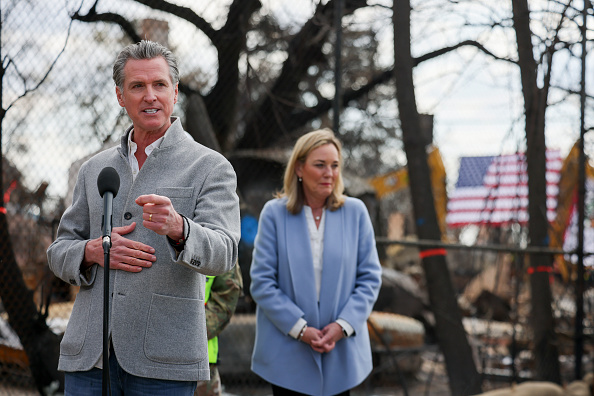
Photo credit: Juliana Yamada / Contributor / Los Angeles Times via Getty Images |
Last year, California Governor Gavin Newsom issued an emergency proclamation to cut red tape and speed up wildfire-prevention projects. The administration fast-tracked fuels-reduction work on nearly 100,000 acres of land. But so far, projects totaling only 798 acres have been completed. That’s less than 1 percent.
“The fundamental role of government is to ensure the physical safety of its people,” Christopher Rufo, Shawn Regan, and Kenneth Schrupp write. “In fire-prone California, that means allocating enough resources to reduce extreme fire risk and making sure approved mitigation work is completed.” But funding for programs like brush clearing and prescribed burning has fallen from $1.1 billion in 2022 to $620 million in 2026. And Newsom’s proposed budget for the coming year would reduce it even more.
Read more about the state’s regulatory mess. |
|
|
New York City Mayor Zohran Mamdani is reportedly cutting close to $3 million in “foster care prevention services,” including addiction help, parenting classes, and mental-health counseling.
These cuts make sense, Naomi Schaefer Riley argues. “Addiction and mental-health treatment are likely helpful remedies for these families—they need a lot more than just food stamps and housing vouchers,” she writes. “But once a family is ‘at risk’ of having children removed, the abuse or neglect are already severe, chronic, or both. ‘Prevention’ isn’t obviously the right approach in such situations.”
Read more on why the cuts are a smart move, and the changes that could better support children and families. |
|
|
The Trump administration recently reinstated a ban on the use of federal funds for fentanyl test strips, which alert drug users if fentanyl is present. Devon Kurtz and Elinore McCance-Katz argue it’s the right move.
For one thing, the strips sometimes yield false negatives. They can’t detect new substances, and there isn’t much evidence that they reduce overdose deaths. They also represent the “harm reduction” approach to drug policy, which treats drug use as something to be done safely rather than discouraged. As Kurtz and McCance-Katz point out, “it is legally and morally suspect for the federal government to support practices, like hard drug use, that are undeniably illegal and dangerous.” Indeed, the government shouldn’t support the violation of its own laws.
Read more. |
|
|
The American Revolution and Declaration of Independence are fundamental to our understanding of the nation and what it hopes to be. “If we want rising generations to understand and appreciate their country, we must ensure that they grasp the essential meaning of the American Revolution,” Wilfred M. McClay writes. “Without that point of reference, we not only forget the succession of historical events, the names and places and stories that form the warp and woof of our common life; we will also eventually forget who we are as a people.”
Read more. |
|
|
“It’s not as if this should have caught Democrats by surprise. When they were busy morally preening about how they wouldn’t enforce drug laws or three strikes laws or theft laws or whatever else ran afoul of progressive dogma, conservatives were asking, ‘What will you do when Republican prosecutors refuse to enforce gun laws they don’t like?’ Now they are finding out, and as Mr. Kennedy points out, their blatant hypocrisy is obvious.”
|
|
|
|
A quarterly magazine of urban affairs, published by the Manhattan Institute, edited by Brian C. Anderson. |
|
|
|
Copyright © 2026 Manhattan Institute, All rights reserved. |
|
| |
|