|
Forwarded this email? Sign up for free to have it sent directly to your inbox. |
|
|
|
Good morning,
Today, we’re looking at America’s low birthrate, the federal government’s problematic guidance on foster care, and two California cities that are reducing homelessness.
Write to us at editors@city-journal.org with questions or comments. |
|
|
|
Photo credit: Robert Alexander / Contributor / Archive Photos via Getty Images |
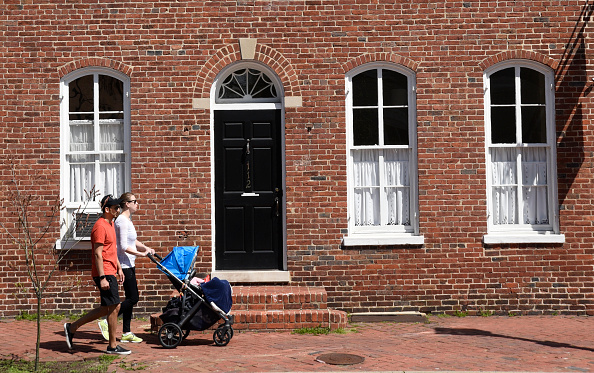
A new report from the Institute for Family Studies finds that the American birthrate has fallen below 1.6 children per woman. Replacement fertility requires about 2.1, which means the U.S. is officially in its third extended period of below-replacement fertility. The report’s authors predict that if the trend continues, the American population will peak in the 2050s and then decline. What explains the falling birthrate? “Here the authors have uncovered something genuinely novel: evidence that the fertility collapse is not only economic, but social,” Robert Henderson writes. “Americans are not having fewer children because they want fewer children. They are having fewer children, in part, because friendship has thinned and social support for family life has weakened.”
Read more about the report’s findings. |
|
|
In 2023, the Administration on Children, Youth, and Families changed a federal rule to let states create alternative licensing processes for foster kids’ relatives to become foster parents. In May, the Trump administration issued guidance enforcing that policy, stating: “Agencies are discouraged from automatically disqualifying applicants on the basis of a criminal history beyond the federal list of automatically disqualifying felony convictions.”
Those disqualifying convictions include rape, child abuse, and murder, but do not include other types of aggravated assault, drug trafficking, or domestic violence.
“The idea that being related to a foster child should exempt you from this requirement is outrageous,” Naomi Schaefer Riley writes. “If we wouldn’t accept a nonrelative convicted of such crimes caring for a foster child, sharing some DNA with the child shouldn’t make any difference.”
Read more about the guidance and the risk it poses to children. |
|
|
While homelessness and public disorder remain major issues in cities like Seattle, Portland, and Los Angeles, the news isn’t all bad on the West Coast. Two California cities—San Francisco and San Jose—have made progress in tackling the problem and getting help for those who can’t help themselves.
“San Francisco has experienced a dramatic 22 percent drop in unsheltered homelessness since 2024, while San Jose has seen a 23 percent decline since 2019,” writes Tom Wolf.
Both cities’ successes began with their mayors—Daniel Lurie in San Francisco and Matt Mahan in San Jose—who have implemented policies recognizing that street homelessness is inextricably linked to drug use and mental illness, not simply a lack of shelter, and that treatment and enforcement must be part of the solution.
“These are hard things to admit, but San Francisco and San Jose have done so,” maintains Wolf. “When will Seattle, Los Angeles, and Portland follow suit?” |
|
|
“America has the best piece of God’s green earth. We have the best, most optimistic and generous people. The most dynamic economy. The strongest military. We don’t have mass starvation or abject poverty in the streets.
To the whiners and pessimists, I say, ‘Happy 250th!’ On this day you, too, can be proud and privileged to be American!” |
|
|
|
A quarterly magazine of urban affairs, published by the Manhattan Institute, edited by Brian C. Anderson. |
|
|
|
Copyright © 2026 Manhattan Institute, All rights reserved. |
|
|
|
|