|
Forwarded this email? Sign up for free to have it sent directly to your inbox. |
|
|
Good morning, Today, we’re looking at the deadly shooting in midtown Manhattan, Columbia’s settlement with Trump, George Mason University’s hiring practices, dangerous advice on policing, and the Dignity Act. Write to us at editors@city-journal.org with questions or comments. |
|
|
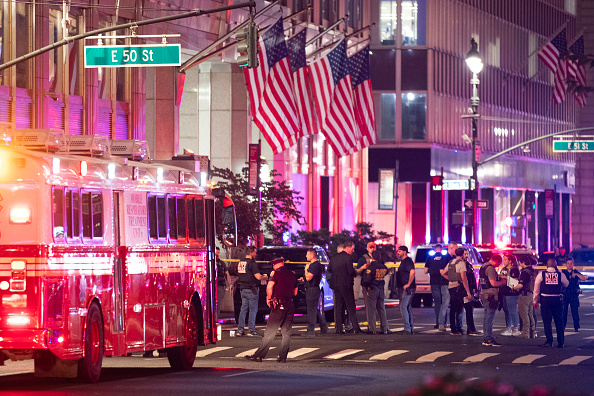
Monday’s mass shooting on Park Avenue, which claimed four lives including that of off-duty NYPD officer Didarul Islam, follows a troubling pattern: assailants with no prior ties to the city exploiting its global prominence to stage high-profile attacks. New York City remains a magnet for lone-wolf attackers.
Such events are inherently difficult to anticipate and prevent, but New York could do more, writes Nicole Gelinas. The city can use mass-scale data-mining to “track public social media, scanning for posters who regularly make threatening comments that target New York City or people and firms located here,” and it can “make better use of its network of license-plate cameras.”
Perhaps most important, as the November mayoral election approaches, New Yorkers will have to decide which mayoral candidate is most committed to protecting the city and its people. |
|
|
After months of jousting in the media and the courts, the Trump administration has finally reached a settlement with Columbia University. The deal, which requires Columbia to abandon some of its DEI initiatives and provide admissions data to an independent monitor, could be a template for the White House as it investigates other institutions of higher learning.
Christopher Rufo argues that the settlement could mark the beginning of a sea change in higher education. “The terms of the agreement call for a set of minimum standards—academic excellence, colorblind equality, data transparency, administrative reform—that will apply to Columbia and, one hopes, to all universities that accept federal funds or federal student loans,” he writes.
|
|
|
The Departments of Justice and Education have opened investigations into George Mason University for alleged racial discrimination. In an explosive new piece, John Sailer reports on a trove of documents that appear to reveal the university’s fixation on “demographic diversity” in the faculty-hiring process.
Sailer reviews a series of search-committee documents from GMU’s College of Humanities and Social Sciences that highlight the “demographics” and “composition” of applicant short-lists and contain assessments of candidates’ “contributions to diversity, equity, and inclusion.” The university’s focus on applicants’ identities, Sailer argues, raises potential legal concerns.
“Title VII of the Civil Rights Act of 1964 prohibits discrimination in hiring,” Sailer writes. “Yet, many search committees at George Mason showed little awareness that tipping the scale toward ‘underrepresented’ groups might raise red flags.” |
|
|
In a recent article in The Nation, police abolitionist Alex Vitale offers some advice to New York mayoral candidate Zohran Mamdani on how to “confront the NYPD.” As Rafael A. Mangual writes, “The essay is packed with dangerous prescriptions (like nixing the city’s gang database) that, if acted on, would spell disaster for the city and its most vulnerable residents.”
You can read more about Vitale’s radical positions, and what they would mean for New York, here. |
|
|
A new bill in Congress proposes a middle way in the U.S. immigration debate. The Dignity Act, sponsored by Florida Republican representative Maria Elvira Salazar and Texas Democratic representative Veronica Escobar, aims to introduce “new enforcement measures with a proposal to grant noncitizen legal status to qualified illegal immigrants, while pointedly withholding a path to citizenship,” writes Santiago Vidal Calvo.
“The Dignity Act tries to satisfy everyone, which means that it leaves everyone at least somewhat unsatisfied,” Calvo maintains. Many on the left will object to the lack of a path to citizenship, while many on the right will see the new noncitizen immigration status as an amnesty. The likeliest result? The bill will collapse “under the weight of its contradictions,” writes Calvo. |
|
|
“‘Gender medicine’ is the use of pharmacy and surgery to cover up psychiatry’s failure to cure a delusion.”
|
|
|
Photo credit: China News Service / Contributor / China News Service via Getty Images |
|
|
A quarterly magazine of urban affairs, published by the Manhattan Institute, edited by Brian C. Anderson. |
|
|
Copyright © 2025 Manhattan Institute, All rights reserved. |
|
|
|