|
Forwarded this email? Sign up for free to have it sent directly to your inbox. |
|
|
|
Good morning,
Today, we’re looking at an important new proposal from the Equal Employment Opportunity Commission, radicalism in Ferguson, Missouri, and Christopher Nolan’s adaptation of The Odyssey.
Write to us at editors@city-journal.org with questions or comments. |
|
|
|
Photo credit: Spencer Platt / Staff / Getty Images News via Getty Images |
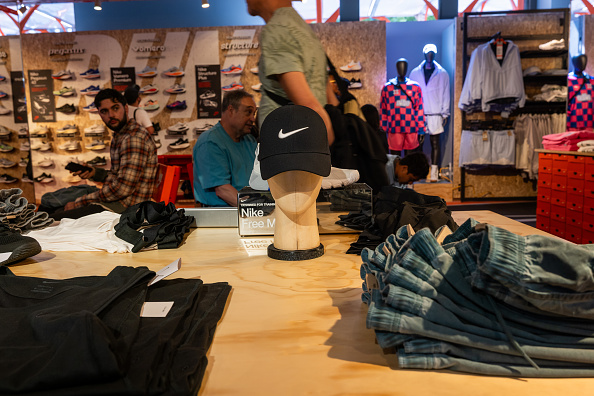
Since the 1960s, U.S. companies have been required to report their employees’ race and gender to the Equal Employment Opportunity Commission (EEOC). That could soon change.
The EEOC has proposed ending the reporting requirement, pointing to a few concerns. One is the risk that the mandate encourages employers to discriminate by race to make their numbers look more representative. Another is the Constitution itself, which requires the government’s use of race to be narrowly tailored. “Wholesale, indiscriminate collection of workers’ racial demographics via EEOC forms arguably crosses the line,” Robert VerBruggen writes. How influential this change will be remains to be seen, especially since a future EEOC could easily bring back the reporting requirements. And no longer reporting the data could make legitimate discrimination investigations more difficult. Even so, VerBruggen argues, the change “is for the best.”
Read more. |
|
|
Michael Brown Jr.’s death in 2014 in the St. Louis suburb of Ferguson, Missouri, sparked weeks of riots, looting, and protests. Over a decade later, the city still figures prominently in conversations about race and power in America, and it has spent millions on programs aligned with racial equity.
Behind all that spending, Jordan Duecker writes, “lies a nonprofit-activist complex and public-policy supply chain visible across thousands of public documents, social-media posts, reports, and recordings. Many Americans have forgotten about Ferguson or remember it only as a symbol. But on closer inspection, the Ferguson of today is a potent illustration of how the racial upheavals of the past decade can be turned into profit and unaccountable power.”
Read about how nonprofits used this “racial reckoning” to funnel millions into a radical agenda. |
|
|
Christopher Nolan’s adaptation of The Odyssey is “a genuinely fun, absorbing, and at times touching adventure,” Michael Gibson writes. “Nolan prunes the story to the elements he can shape, and at times stretch, to serve his theme of civilization’s breakdown.”
For instance, unlike in Homer’s famous poem (and in Greek tradition), where the Trojan Horse represents a feat of tactical brilliance, in Nolan’s film, it’s a devastating war crime. Civilization rests on trust, self-restraint, stewardship, and integrity. Here, atrocities are front and center. Everyone is guilty.
“One must read the fine print to discover why the gods are angry with some of the Greeks but not others, why certain men are denied a swift and intact homecoming while others sink to the bottom of the sea,” Gibson writes. “If attacking Troy was not exactly a righteous cause for Homer, neither was it an unjust war.”
Read Gibson’s review of the film. |
|
|
“The largest slumlord in the city of New York is . . . wait for it . . . The City of New York.” |
|
|
|
A quarterly magazine of urban affairs, published by the Manhattan Institute, edited by Brian C. Anderson. |
|
|
|
Copyright © 2026 Manhattan Institute, All rights reserved. |
|
| |
|