|
Forwarded this email? Sign up for free to have it sent directly to your inbox. |
|
|
|
Good morning,
Today, we’re looking at new Fed Chair Kevin Warsh’s debut, recent guidance from the Health Council of the Netherlands, and a writer’s visit to Deadhorse, Alaska.
Write to us at editors@city-journal.org with questions or comments. |
|
|
|
Photo credit: KEN CEDENO / Contributor / AFP via Getty Images |
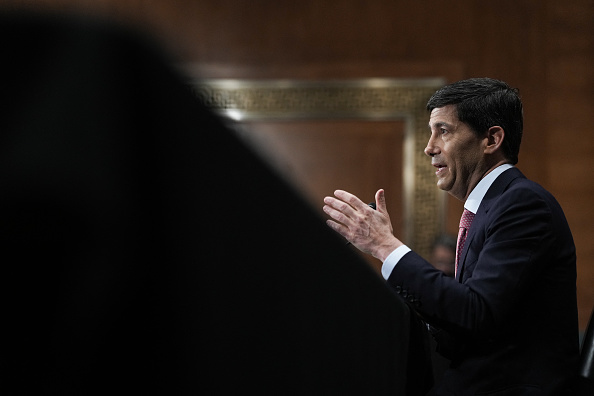
During his first press conference as Fed chair last month, Kevin Warsh announced that he would create task forces to revise balance sheet policy, communications, data use and method, and the inflation framework. This sounds a lot like the pre-Ben Bernanke Fed, which was characterized by fewer extraordinary policies and less transparency.
Good, Allison Schrager argues. This late twentieth-century-style monetary policy is exactly what the Fed needs right now. Communication, transparency, and aggressive action may have been the right policies after the financial crisis, when rates were near zero. Not anymore.
“We are in a new economy, one in which financial conditions require an older framework,” Schrager writes. “The Fed must be humbler about what it knows, what it can achieve, and how much of a presence it should have in financial markets.” Read more. |
|
|
Last month, the Health Council of the Netherlands issued guidance supporting the “Dutch Protocol,” which gives hormone treatments to youth suffering from gender dysphoria. “Research shows that hormone treatments physically achieve their intended function and appear to improve mental health,” a press release stated.
One problem, though: that guidance goes against the findings of several systematic reviews. Those findings have led early adopters of the protocol, like Finland and Sweden, to reverse course, and the Dutch House of Representatives to demand an independent evaluation.
“That the Health Council rubberstamped the protocol is a signal example of the problem of regulatory capture in the field of youth gender medicine,” Joseph Figliolia writes. “Such capture occurs when a regulatory body becomes so dependent on the sector it regulates for specialized expertise and policy guidance that it ends up functionally serving that sector’s interests.”
Read more about the council. |
|
|
Spread over four square miles, the landscape includes frozen thermokarst lakes and gravel roads; oil rigs and pipelines; pickup trucks and construction workers. No one lives there permanently. There are no public spaces. Welcome to Deadhorse, Alaska.
Jordan McGillis recently visited the town north of the Arctic Circle. It plays host to several thousand workers each year, who typically spend two weeks on-site before they head back home for another two weeks. The sun doesn’t go down this time of year, so sleep is . . . challenging.
The barracks house oil-field roughnecks, janitors, and command-post executives who eat in the cafeterias, exercise in the gyms, and enjoy entertainment in the movie theaters. “With their daily needs accounted for (and alcohol barred), there’s virtually nothing resembling normal commerce in Deadhorse,” McGillis writes.
Read more about the town, the work, and the psychological drain of living and working in this unique environment. |
|
|
“One of the worst things that has happened in America over the last 40 years is universities hosting political activists . . . and pretending they’re academics.”
|
|
|
|
A quarterly magazine of urban affairs, published by the Manhattan Institute, edited by Brian C. Anderson. |
|
|
|
Copyright © 2026 Manhattan Institute, All rights reserved. |
|
| |
|