|
Forwarded this email? Sign up for free to have it sent directly to your inbox. |
|
|
|
Good morning,
Today, we’re looking at the left-wing groups opposing data centers, L.A.’s slow wildfire recovery, D.C.’s delivery surcharge, and New York’s Specialized High Schools Admissions Test.
Write to us at editors@city-journal.org with questions or comments. |
|
|
|
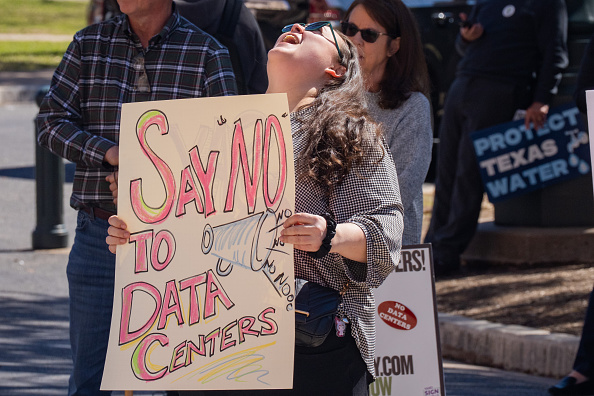
Photo credit: Austin American-Statesman/Hearst Newspapers / Contributor / Hearst Newspapers via Getty Images |
Left-wing activist groups have been unifying around a single cause: opposing data centers.
Organizers within the Democratic Socialists of America (DSA) blame data centers for rising costs and concentrated Big Tech power. Metro DC DSA has advocated for community control of electrical infrastructure, while DSA activists in Arizona are trying to take over Tucson Electric Power for its willingness to work with data-center developers.
Then there are the anti-ICE activists who argue that data centers enable domestic surveillance and immigration enforcement. Finally, there are the “anti-imperialist” organizations that frame AI as a tool for militarization. At a recent gathering of such groups, an Honor the Earth leader touted successful campaigns that resulted in moratoria on various data center development projects.
“To the activists behind these campaigns, data centers are not just critical digital infrastructure,” Stu Smith writes. “They have become symbolic targets into which to pour broader anxieties about capitalism, technology, and power. That all-purpose role, more than problems with the technology itself, is what makes the movement against the facilities politically potent.”
Read more. |
|
|
It’s been 18 months since the L.A. wildfires, and still just a fraction of the homes destroyed have been rebuilt. Large areas within the Pacific Palisades and Altadena are still empty, and many homeowners have left due to the uncertainty surrounding insurance, permit approval, and whether their neighborhoods will flourish in the future or remain half-empty.
“Instead of letting private investment meet the demand for rebuilding, government regulations, permitting delays, insurance dysfunction, and other institutional barriers continue to stifle recovery,” Matthew E. Kahn and Shawn Regan explain. “Los Angeles is now experiencing a second-order crisis—a disaster after the disaster—driven in large part by policies that have made it harder for residents to adapt, rebuild, and return.”
Read more about L.A.’s ongoing crisis and the government failures that led to it. |
|
|
Washington, D.C. is planning to slap a 20-cent surcharge on deliveries made through third-party platforms, from food to drinks to parcels to everyday household items. The city council is framing the charge as a way to fund local programs, but it’s real purpose is to help fill the district’s massive budget gap.
“Surcharges like these are attractive to city governments because they are small enough to avoid immediate public outrage and easy to raise later,” Santiago Vidal Calvo explains. “But for residents, they quickly add up.”
Indeed, residents already pay high costs for housing, taxes, parking, and utilities. Even a 20-cent fee could change consumer behavior, potentially leading to fewer orders, which means less revenue for restaurants and less earning potential for delivery workers. Read more. |
|
|
Over the weekend, New York City councilmember Lincoln Restler called for changing the city’s specialized high school admissions process—which currently consists of the Specialized High Schools Admissions Test (SHSAT), used for generations. Restler pointed to Stuyvesant High School’s admissions figures, which, like most years, include very few black students.
SHSAT is an objective exam open to every eighth-grade student and has long identified talent without regard to wealth, race, or connections. “The city should be reinforcing its commitment to the SHSAT and the specialized high schools, not trying to drown them in more equity mandates,” Wai Wah Chin writes. “Adding additional criteria—like class grades, extracurricular activities, or interviews—to the specialized high school admissions process would inject subjectivity and bias, likely favoring those with economic privileges.”
Read more about the exam. |
|
|
“‘Yet teen takeovers are overwhelmingly black, though the media avoid mentioning that fact.’
If the takeovers were overwhelmingly white, you can be sure the media would mention that fact. Over and over.” |
|
|
| A quarterly magazine of urban affairs, published by the Manhattan Institute, edited by Brian C. Anderson. |
|
|
|
Copyright © 2026 Manhattan Institute, All rights reserved. |
|
|
|
|