|
Forwarded this email? Sign up for free to have it sent directly to your inbox. |
|
|
|
Good morning,
Today, we’re looking at Florida’s Stop WOKE Act, why property-tax relief for seniors is bad policy, a better way to grant H-1B visas, and social media’s evolution.
Write to us at editors@city-journal.org with questions or comments. |
|
|
|
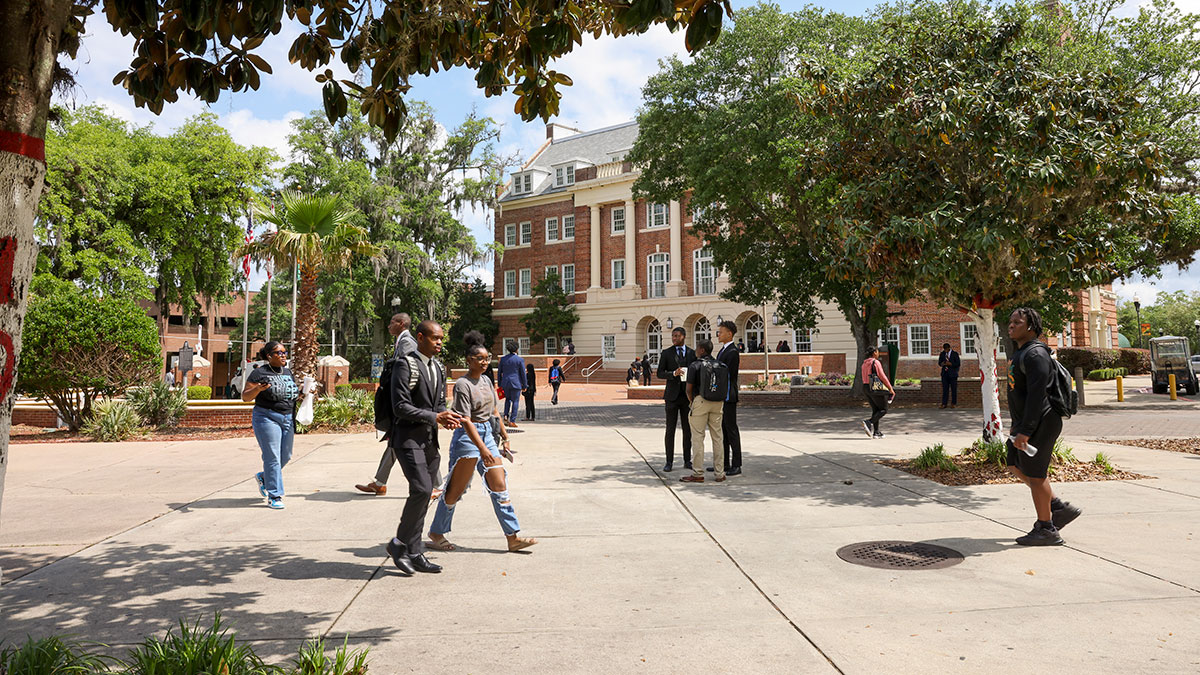
Photo by Glenn Beil/Florida A&M University via Getty Images |
Last week, a panel of the 11th Circuit Court of Appeals affirmed a lower court’s injunction against Florida’s Stop WOKE Act. The legislation intended to ban public university employees from promoting progressive ideas like white privilege and oppression but was struck down for likely violating the First Amendment.
The law was indeed viewpoint discrimination, Tal Fortgang writes, but the ruling also suggests that states cannot exercise full control over what’s being taught at public universities. The solution?
“The public can speak through its elected officials and appoint regents or similar governing boards who can scrutinize whether universities are advancing the public interest,” Fortgang argues. “State legislatures should empower these boards with oversight of institutional leadership, faculty hiring, and academic priorities.”
Read more. |
|
|
Michigan senatorial candidate Abdul El-Sayed wants to reduce seniors’ property taxes, proposing to freeze assessments on homeowners 65 and older. The federal government, he argues, should pay for any fiscal shortfall the freeze might cause state and local governments.
This is a bad idea, Judge Glock argues. For one thing, several states already have some sort of property-tax relief for seniors. “Federal subsidies to such programs would end up backfilling state and local government budgets, encouraging them to spend more and raise taxes elsewhere,” he explains.
Plus, federal involvement wouldn’t stop with subsidies. “Once the money started flowing,” Glock writes, “Congress and the federal bureaucracy would have to monitor and manage local property tax administration. Such an effort could end much of local autonomy in America.”
There are better ways to secure relief for seniors, Glock maintains. Read about them here. |
|
|
Last year, the Department of Homeland Security implemented a weighted H-1B lottery that gives visa applicants a better shot at winning if they make a higher wage. But because the system takes into account location and occupation, it tends to benefit more experienced applicants in lower-wage fields over new talent in advanced fields.
The administration should just scrap the lottery system, Sam Peak and Jiaxin He argue, and instead select applicants with the highest lifetime earning potential. “This would be done by evaluating an H-1B applicant’s salary and making adjustments based on age,” they explain. “It would, on average, increase the annual positive federal and state net fiscal impact by over $20,000 for each H-1B holder. This proposal would also favor critical industries—for example, tripling the number of H-1Bs going to workers in artificial intelligence, according to our estimates.”
Read more. |
|
|
Social-media pioneers like Mark Zuckerberg intended for the platforms to prioritize the personal over the distant, enabling users to know more about what’s going on in their friends’ lives. But as personal news-sharing grew, so did personal attitude-sharing. “User engagement through expressing personal beliefs reached its most extreme forms by the end of the 2010s,” Andrey Mir writes. This eventually led to censorship, bullying, and trolling, and users became reluctant to expose themselves too much.
“Against the backdrop of political instability and psychological hazards, more people now choose to do little beyond scrolling,” Mir observes. “People still spend enormous amounts of time on social media, but mostly browsing feeds with interesting ‘features,’ much as they once skimmed features in magazines, or watching short videos, much as they once watched TV.”
Read more. |
|
|
“New York City had better fulfill the functions of local government—keep civil peace, provide local services, maintain infrastructure—and leave international affairs to the people qualified to deal with that. Mamdani is an arrogant fool, seeking to posture on a global stage.”
|
|
|
|
A quarterly magazine of urban affairs, published by the Manhattan Institute, edited by Brian C. Anderson. |
|
|
|
Copyright © 2026 Manhattan Institute, All rights reserved. |
|
| |
|