|
Forwarded this email? Sign up for free to have it sent directly to your inbox. |
|
|
Good morning, Today, we’re looking at New York City’s new schools chancellor, today’s version of Tammany Hall, and good news out of Johns Hopkins University.
Write to us at editors@city-journal.org with questions or comments. |
|
|
In a letter to staff, Kamar Samuels, New York City’s new schools chancellor, stated “that every student—starting in early childhood and continuing through graduation—deserves a school that is academically rigorous, safe, and truly integrated.” He is right to focus on rigor and safety, Ray Domanico writes. “But focusing on integrated schools—especially in the many communities where the demographics conspire against it—can detract from ensuring that the least well-off students receive a quality education,” he observes.
Take the Bronx, where 87 percent of public school students are black or Hispanic. Or consider that in 20 of the city’s 32 school districts, fewer than 15 percent of students are Asian. Integration may be possible at some schools, but not enough to make a meaningful difference, and it could even come at the cost of academic excellence.
Read Domanico’s take on the policies Samuels should pursue to help students truly succeed. |
|
|
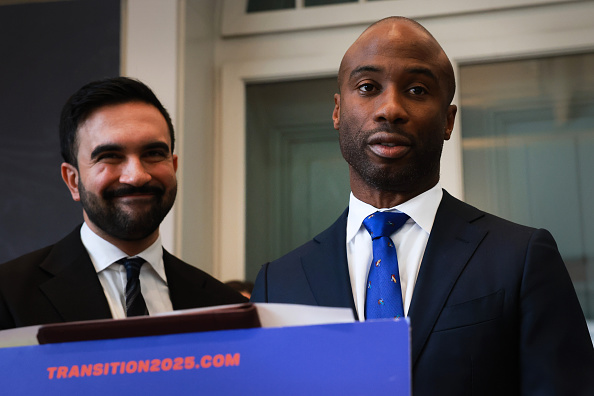
Today’s far-left coalition—or as Joseph Burns refers to it, Hipster Tammany Hall—scored a major win when Zohran Mamdani was elected as New York City mayor. But the leaders of this new movement appear to be looking beyond the Big Apple, endorsing candidates in North Carolina and California, for instance, and keeping an eye on Pennsylvania.
“If this hard-left machine has its way, 2026 will produce a wave of primary challenges against lawmakers who deviate, even marginally, from its line in New York and beyond,” Burns writes. “Opponents of the machine, particularly within the Democratic Party, should take the new Tammany seriously.” |
|
|
Last month, Johns Hopkins University announced that its most recent freshman class was 45.1 percent Asian American, up significantly from 25.6 percent in 2023.
Some critics worry about the declining numbers of black and Hispanic students, but these concerns are misplaced, Wai Wah Chin writes. “The mission of universities is to propagate and expand the frontiers of human knowledge—not to curate the ‘correct’ levels of ethnic or racial diversity on campus,” she points out.
Read her take on what the school’s makeup says about merit, and why universities that reject merit risk failure. |
|
|
The Manhattan Institute is proud to serve as the Principal Institutional Partner for the Sun Valley Policy Forum’s 2026 Winter Summit in the iconic resort town of Sun Valley, Idaho on February 11, 2026.
We are thrilled to join Joe Lonsdale and MI senior fellow Christopher F. Rufo for an evening on principled leadership and the future of American institutions in an AI-driven era. Please click here to learn more about the Sun Valley Policy Forum and our partnership and to purchase tickets at a discounted rate for friends of the Manhattan Institute.
|
|
|
|
In the first episode of our new “Who We Are” series, Rafael Mangual and Heather Mac Donald discuss the work of the Manhattan Institute and City Journal on crime and public safety over the years. They cover Broken Windows policing, disparate impact, the reality of interracial crime, why public order matters, and what Mayor Zohran Mamdani’s policies will mean for daily life in New York City. |
|
|
“Yes, let’s combat supposed price inflation with more government spending. Genius.
The Democrat Party is out of ideas.”
|
|
|
Photo credit: Spencer Platt / Staff / Getty Images News via Getty Images |
|
|
A quarterly magazine of urban affairs, published by the Manhattan Institute, edited by Brian C. Anderson. |
|
|
Copyright © 2026 Manhattan Institute, All rights reserved. |
|
|
|