|
Forwarded this email? Sign up for free to have it sent directly to your inbox. |
|
|
Good morning, Today, we’re looking at New York City Mayor Zohran Mamdani’s approach to homelessness, New York State’s population decline, the loss of Charlie Kirk, and a common misconception about charter schools. Don’t forget to write to us at editors@city-journal.org with questions or comments. |
|
|
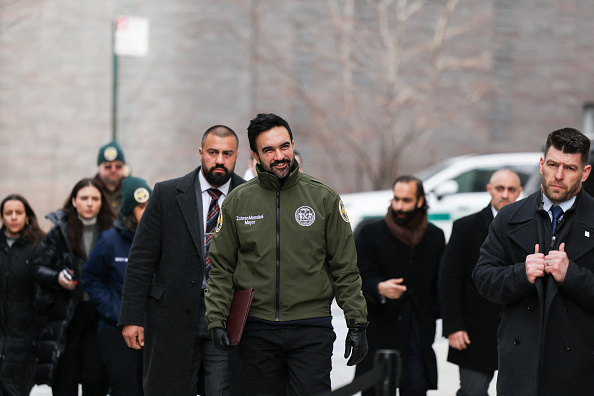
Earlier this week, New York City Mayor Zohran Mamdani said that at least ten New Yorkers have been found dead out in the cold, with seven of them showing signs of hypothermia. He has directed his homeless-services department to get people inside and convince even the most reluctant to stay in nighttime shelters. And the city is opening daytime warming centers and deploying vans so that people can get out of the cold instantly.
“But the mayor’s understanding of the causes of homelessness stands in the way of these sincere efforts,” Nicole Gelinas writes. “In his view, homelessness stems primarily from a lack of suitable housing—not from entrenched mental illness or addiction. He sees the homeless as people generally capable of making rational decisions in their own best interests.”
Indeed, rather than sending clinicians and police officers to evaluate a person’s ability to care for himself, Mamdani prefers having civilian workers assist the homeless with exploring different housing options. “This approach is dubious even in good circumstances, but in an extended deep freeze, it is deadly, because it sends an inconsistent message,” Gelinas explains.
Read her take on the mayor’s approach. |
|
|
New York’s population is declining. While the U.S. population as a whole grew 3.1 percent from April 2020 to mid-2025, New York’s population fell a net 201,269 over that period—the largest drop of any other state. New York is one of just seven states to experience a net decline, according to the latest Census Bureau estimates.
“Continuing a long-term trend, the negative drag on the Empire State’s headcount continued to be net domestic migration—the difference between the number moving into New York and the number moving out,” E. J. McMahon explains. And the trend is likely to continue in the second half of the decade. Read more here. |
|
|
Charlie Kirk’s death seemingly stopped the world. For the United States, it continued a trend of escalating political violence. For the Right, it represented the loss of a charismatic leader not easily replaced. For Kirk’s family, it was a devastating human tragedy.
Kirk’s last long-form interview was with Manhattan Institute Senior Fellow Rob Henderson. In City Journal’s Winter issue, Henderson discusses meeting the “gracious, curious” conservative activist and reflects on grief—why we feel it, and why it so often lingers. |
|
|
The Manhattan Institute is proud to serve as the Principal Institutional Partner for the Sun Valley Policy Forum’s 2026 Winter Summit in the iconic resort town of Sun Valley, Idaho on February 11, 2026.
We are thrilled to join Joe Lonsdale and MI senior fellow Christopher F. Rufo for an evening on principled leadership and the future of American institutions in an AI-driven era. Please click here to learn more about the Sun Valley Policy Forum and our partnership and to purchase tickets at a discounted rate for friends of the Manhattan Institute.
|
|
|
A common criticism of charter schools is that they don’t serve students with disabilities well. Some critics even allege that they push out such students to keep test scores high. Neetu Arnold reports on a new study out of Michigan that complicates this narrative.
The study, which looked at 60,000 K-8 students who switched from traditional public schools to charters between 2013 and 2018, found that students with and without disabilities showed improvement on both test scores and attendance. “[T]he results likely have as much to do with overall school quality—improved order, instruction, and expectations—as with the design of special-education services,” writes Arnold.
Read more on the study’s implications. |
|
|
“I’m an award-winning social studies teacher. An average lesson for me involves things like role-play debates and historical treaty negotiations.
Good teachers teach like this—students are critically thinking, moving, debating, negotiating, etc. AI cannot effectively design these kinds of lessons. Trust me, I’ve tried and been given several trainings on it. AI just doesn’t work in this way. Maybe it will in the future, but it doesn’t right now, and it’s not even close.
All AI does is pirate textbooks and get away with copyright infringement by obscuring where the AI got the information in the first place.
Sure, AI can give you a well edited text on a subject and give you some questions on that subject. That’s not education.”
|
|
|
Photo credit: ANGELA WEISS / Contributor / AFP via Getty Images |
|
|
A quarterly magazine of urban affairs, published by the Manhattan Institute, edited by Brian C. Anderson. |
|
|
Copyright © 2026 Manhattan Institute, All rights reserved. |
|
|
|