|
Forwarded this email? Sign up for free to have it sent directly to your inbox. |
|
|
Good morning, Today, we’re looking at the consequences of taxing inherited wealth and how AI can advance the school-choice movement. Write to us at editors@city-journal.org with questions or comments. |
|
|
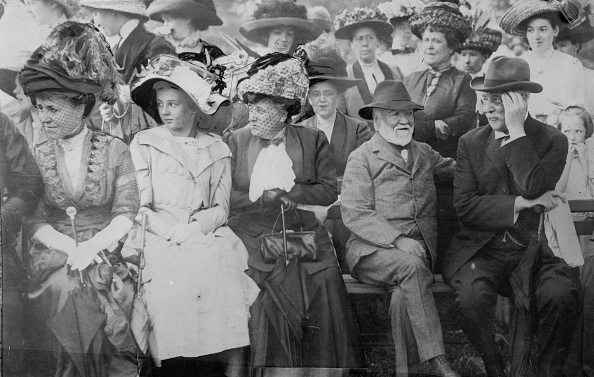
Fifty-one percent of Gen Z supports a higher inheritance tax to fight inequality. Politicians across the U.S. and Europe have imposed just that, along with massive estate taxes that penalize wealth transfers between generations. Even the wealthy themselves appear increasingly to oppose inheritance, with some announcing that they won’t pass on their fortunes to their kids.
“This cultural and political opposition to inheritance may be increasingly popular, but it is poisonous,” Matias Ahrensdorf argues. “Inheritance is how societies compound the achievements of past generations, preserving productive enterprises and building wealth over time. Anti-legacy sentiment risks undermining entrepreneurship, institutional continuity, and the mechanisms historically associated with long-term prosperity.”
Read about the economic consequences of taxing inheritance and what Ahrensdorf describes as “a moral and social crisis.” |
|
|
As artificial intelligence advances, the cost of education is sure to fall. Teachers are using AI to help them create lesson plans, while AI tutors like Khan Academy’s Khanmigo and SpaceX’s Synthesis cost just $4 and $29 per month. “Tools like these will empower leaner models of education—such as micro-, home-, and hybrid-schooling—and help build out the growing school-choice movement,” Jonah Davids writes.
Alpha School, a private school with locations across the U.S., offers an example of what this increased integration might look like. Students there spend two hours a day studying a digital curriculum; the rest of the day is devoted to sharpening life skills and pursuing passion projects. The school’s “guides” provide oversight, but the technology does the teaching.
“As more schools embrace individualized and AI-powered instruction,” Davids writes, “students will be free to move through the curriculum at their own pace, allowing them to master the material.” |
|
|
The Manhattan Institute is proud to serve as the Principal Institutional Partner for the Sun Valley Policy Forum’s 2026 Winter Summit in the iconic resort town of Sun Valley, Idaho on February 11, 2026.
We are thrilled to join Joe Lonsdale and MI senior fellow Christopher F. Rufo for an evening on principled leadership and the future of American institutions in an AI-driven era. Please click here to learn more about the Sun Valley Policy Forum and our partnership and to purchase tickets at a discounted rate for friends of the Manhattan Institute.
|
|
|
|
Rob Henderson, Theodore Dalrymple, and Rafael Mangual examine the real drivers of antisocial behavior and crime—and the growing disconnect between policymakers and the communities most affected by violence. They explore how elite “luxury beliefs” shape public narratives around criminality, often minimizing harm while insulating decision-makers from the consequences of their ideas. |
|
|
“So we win an election and the President tries to enact what we voted for—policies to remove criminal murderers, rapists, sex traffickers, drug dealers, fraudster illegal aliens—and we get armed rebellion from the Democratic Party.
This isn’t a ‘both sides’ issue. The ‘Democrats’ are totalitarians bent on destroying America.”
|
|
|
Photo credit: Heritage Images / Contributor / Hulton Archive via Getty Images |
|
|
A quarterly magazine of urban affairs, published by the Manhattan Institute, edited by Brian C. Anderson. |
|
|
Copyright © 2026 Manhattan Institute, All rights reserved. |
|
|
|