|
Forwarded this email? Sign up for free to have it sent directly to your inbox. |
|
|
Good morning, Today, we’re looking at rising tensions in Minnesota, the expansion of school choice programs, and crumbling streets in Los Angeles.
Write to us at editors@city-journal.org. |
|
|
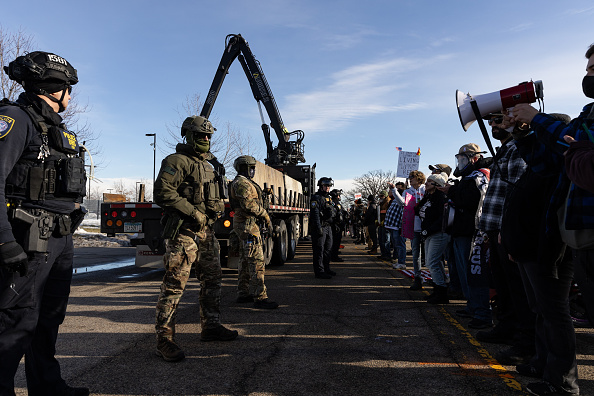
The city of Minneapolis is on edge. This month alone, two protesters have been shot and killed during confrontations with federal officials. Anti-ICE activists have barricaded city blocks, surrounded hotels where immigration officers are staying, and disrupted church services. Meantime, political leaders, far from seeking to ease tensions, have poured fuel on the fire: Minnesota Governor Tim Walz, for example, told reporters he was “fight[ing] a war against the federal government.” “We can hardly expect the public to remain measured,” as Rafael A. Mangual writes, “if our leaders do not. That’s why the most important thing right now is for everyone in power—on both sides—to lower the temperature.”
That means local police need to restore order. State and local politicians need to tell activists to stop blocking traffic, harassing law enforcement officers, and interfering with immigration operations. It also means federal officials should avoid being provocative. “If this strikes you as too tall an order, consider the alternative, and its consequences: heated rhetoric and aggressive action have led only to tragedy,” Mangual writes. |
|
|
Since 2020, 15 states have extended school choice programs to all families, regardless of their income. Most of them use education savings accounts for funding. The accounts essentially allow parents to use public funds as they wish for education-related expenses, whether for private school tuition, books, tutoring, or other needs.
“Expanding choice programs increases not only the demand for parental choice but also the supply of alternatives to traditional public education,” Nicole Stelle Garnett writes. “The rise of learning pods, microschools, and homeschooling co-ops—all enabled by ESAs—proves that parents and providers are capable of creating effective alternatives to district schools.”
Read more about the programs. |
|
|
The streets in Los Angeles are in bad shape. Each year, the city pays out millions of dollars to drivers whose cars get damaged from potholes, while broken sidewalks have led to years of costly litigation. And while the Bureau of Street Services will patch problem areas and make small repairs, it completely stopped doing full street resurfacing last summer.
“Under regulations implementing the Americans with Disabilities Act, when a city alters a street, it must also bring adjacent pedestrian infrastructure into compliance—meaning the installation of ADA-compliant curb ramps at every affected intersection,” Shawn Regan explains. Curb ramps alone can add $2 million per mile to the cost of repaving, and construction can take nine to 12 months per ramp. So the city patches up the streets “just enough to delay failure but not enough to qualify as an alteration,” Regan writes.
Read more about Los Angeles’s dilemma. |
|
|
The Manhattan Institute is proud to serve as the Principal Institutional Partner for the Sun Valley Policy Forum’s 2026 Winter Summit in the iconic resort town of Sun Valley, Idaho on February 11, 2026.
We are thrilled to join Joe Lonsdale and MI senior fellow Christopher F. Rufo for an evening on principled leadership and the future of American institutions in an AI-driven era. Please click here to learn more about the Sun Valley Policy Forum and our partnership and to purchase tickets at a discounted rate for friends of the Manhattan Institute.
|
|
|
“How many days they attend is irrelevant. The degree of Marxist indoctrination is what is important.”
|
|
|
Photo credit: Anadolu / Contributor / Anadolu via Getty Images |
|
|
A quarterly magazine of urban affairs, published by the Manhattan Institute, edited by Brian C. Anderson. |
|
|
Copyright © 2026 Manhattan Institute, All rights reserved. |
|
|
|