|
Forwarded this email? Sign up for free to have it sent directly to your inbox. |
|
|
Good morning,
Today, we’re looking at New York City mayor Zohran Mamdani’s budget, why New Yorkers should expect a rent freeze, Mamdani’s about-face on mayoral control, resistance to AI data centers, and Third-Worldist logic.
Don’t forget to write to us at editors@city-journal.org with questions or comments. |
|
|
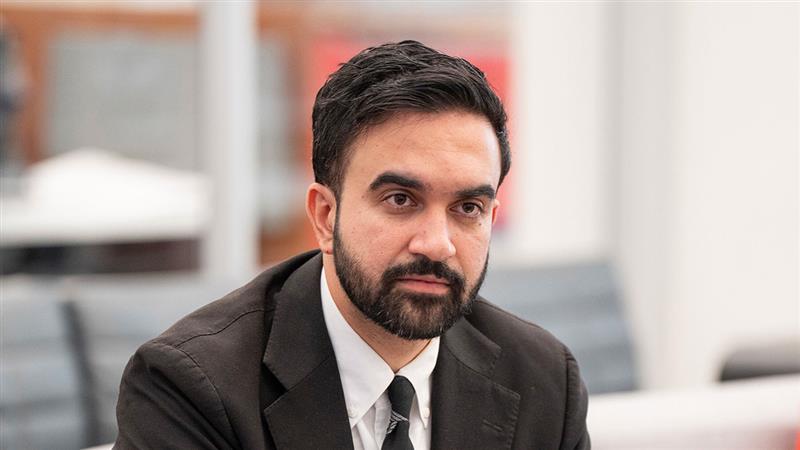
New York City mayor Zohran Mamdani will soon present his budget to the city council, marking the first time his campaign promises meet hard math. Among those promises: universal child care, a “Department of Community Safety,” a rent freeze, free buses, and city-run grocery stores.
Mamdani estimates his agenda will cost $10 billion a year, and $9 billion of that will come from new taxes: $5 billion from a state income-tax surcharge on millionaire earners and $4 billion from a higher state corporate tax. “Because Mamdani isn’t asking Washington to fund his agenda, the entire burden would fall on the local tax base,” Nicole Gelinas explains. “For his first fiscal year, beginning next July, New York expects to collect $82.8 billion in state and local taxes. Mamdani’s plan would raise that burden by roughly 11 percent.”
Read her take on his plans, what they would mean for New Yorkers, and why she says the best outcome would be “that his tax hikes never materialize.” |
|
|
Zohran Mamdani may make good on his “freeze the rent” campaign pledge faster than expected, thanks to an eleventh-hour fumble by outgoing Mayor Eric Adams, notes Jarrett Dieterle. Two of Adams’s appointees to the Rent Guidelines Board who presumably would have opposed Mamdani’s policy declined to serve, clearing the way for the new mayor to appoint a majority.
“The impact of this earlier-than-expected rent freeze will be substantial,” writes Dieterle. “For tenants living in stabilized units, it will mean run-down dwellings with more extensive deferred-maintenance backlogs. Tenants in non-stabilized units, meantime, can expect higher rents as competition gets fiercer for units not subject to the four-year freeze.”
|
|
|
On the campaign trail, Zohran Mamdani pledged to end mayoral control of New York City’s public schools. Now that he’s taken office, Mayor Mamdani has changed his mind—and the biggest winners are Gotham’s schoolchildren.
Mayoral control, as the name suggests, puts the mayor in charge of the city’s public schools. Since adopting the policy in 2002, Jennifer Weber notes, “New York City has seen rising graduation rates, academic gains, and the successful implementation of large-scale reforms, such as NYC Reads.”
Mamdani’s about-face may not be motivated by a genuine change of heart. Even so, Weber argues, “his decision is a good one” for children in New York City. |
|
|
The Manhattan Institute is proud to serve as the Principal Institutional Partner for the Sun Valley Policy Forum’s 2026 Winter Summit in the iconic resort town of Sun Valley, Idaho on February 11, 2026.
We are thrilled to join Joe Lonsdale and MI senior fellow Christopher F. Rufo for an evening on principled leadership and the future of American institutions in an AI-driven era. Please click here to learn more about the Sun Valley Policy Forum and our partnership and to purchase tickets at a discounted rate for friends of the Manhattan Institute.
|
|
|
Judging from consumer habits, people love modern digital technologies. At the same time, they don’t always like the massive physical infrastructure, including data centers, that makes those technologies possible.
Mark P. Mills has a suggestion for how today’s tech titans might ease public concerns: imitate Gilded Age industrialists like Rockefeller, Stanford, and Carnegie, who devoted massive philanthropic efforts to public libraries, universities, and research institutions.
“Grand philanthropic gestures don’t guarantee a ‘get-out-of-jail-free’ card for the social and political sins of the 0.1 percent,” writes Mills. “But they might help ameliorate some of the political anxieties of our time.” |
|
|
“In much of the contemporary West, decolonization has become a political theology—and, for some, an authorization of revolutionary violence,” Zineb Riboua writes. “The days after October 7 showed how deeply this worldview has taken hold.”
Indeed, in the U.S., Canada, and the United Kingdom, protesters denounced Israel, chanting that “decolonization is not a metaphor.” This anti-Israel sentiment comes from the Third-Worldist belief that the West is the oppressor, and that any movement against it should be viewed as righteous.
The implications extend to the United States. “In the Third-Worldist imagination, America is the final imperial actor and Israel its most visible extension,” Riboua explains. “Hostility toward Israel becomes a socially acceptable proxy for hostility toward American identity, institutions, and global leadership.”
Read her analysis. |
|
|
“Why do some people not seem to accept that illegal immigration ITSELF is a criminal act—and not even in a superficial sense, but rather, one that represents a profound contempt for the law itself?”
|
|
|
Photo credit: Karsten Moran/The New York Times/Redux |
|
|
A quarterly magazine of urban affairs, published by the Manhattan Institute, edited by Brian C. Anderson. |
|
|
Copyright © 2026 Manhattan Institute, All rights reserved. |
|
|
|