|
Forwarded this email? Sign up for free to have it sent directly to your inbox. |
|
|
Good morning, Today, we’re looking at the Left’s depiction of white culture, President Trump’s credit-card rate cap proposal, and the future of artificial intelligence. Write to us at editors@city-journal.org with questions or comments. |
|
|
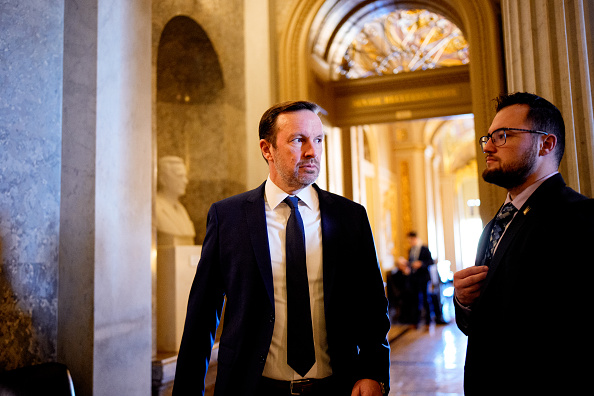
Last week, Senator Chris Murphy angrily questioned Jeremy Carl, nominee for Assistant Secretary of State for International Organizations, about his past statements on race and on his book, which explores the history of anti-white discrimination and DEI. Murphy accused Carl of being a “white nationalist” and expressed bafflement over the concept of “white culture.”
One problem, though: Murphy knows exactly what white culture is. He grew up in Connecticut when it was almost exclusively white. And he studied at a college founded by Anglo-Protestants.
“We’ve seen a lot of this game in recent years,” Christopher F. Rufo writes. “During America’s ‘racial reckoning,’ virtually all our prestige institutions advanced a notion of ‘whiteness’ that sought to pathologize ‘white people’ as inherently oppressive and ‘white culture’ as pernicious. Now, the same people who marshaled these narratives, including the leadership of the Democratic Party, are pretending that these concepts don’t exist and that anyone who uses them is engaged in a racist conspiracy theory.”
Read Rufo’s take on what he refers to as the “whiteness parallax.” |
|
|
Last month, President Trump proposed capping credit-card interest rates at 10 percent to help Americans save. A smart idea?
Judge Glock doesn’t think so. In fact, it “would be the single worst thing the president and Congress could do to the U.S. economy,” he writes. “It would end Americans’ most-preferred method of payment, cut off the flow of tens of billions of dollars in credit-card rewards, stall trillions of dollars in transactions, and likely cause a recession.”
Read on. |
|
|
Imagine an artificial intelligence data center floating around in space. It sounds like something out of a sci-fi movie. But will it prove to be an inevitable step in the technology’s advancement? The answer, Mark P. Mills writes, depends on AI more broadly—essentially, whether it’s a boom or a bubble.
Time will tell. Forecasting demand for AI presents the same challenges as predicting how other revolutionary technologies would unfold. “Few imagined, for example, that the automobile’s invention would lead to more registered cars in America than drivers and also stimulate entirely new industries, such as ‘fast food,’” Mills writes. “Similarly, few imagined circa 1984 that the PC would lead to more computers than humans, or that e-commerce would emerge as a transformational economic force.”
Read the rest here. |
|
|
|
Author and cultural critic Douglas Murray joins Rafael Mangual to talk about the growing challenges facing the West. They discuss the rise of anti-Semitism, the failures of socialism, and the erosion of free speech, especially in the U.K. Murray makes a clear case for defending Western values with courage, clarity, and action. |
|
|
“I must admit that I knew little about Warsh prior to his prospective nomination, but if this article accurately depicts his sole focus to be price stability, I favor his appointment. Any moves that tend to tame government overreach are good, and so largely declawing the Fed is a step in the right direction.”
|
|
|
Photo credit: Andrew Harnik / Staff / Getty Images News via Getty Images |
|
|
A quarterly magazine of urban affairs, published by the Manhattan Institute, edited by Brian C. Anderson. |
|
|
Copyright © 2026 Manhattan Institute, All rights reserved. |
|
|
|