|
Forwarded this email? Sign up for free to have it sent directly to your inbox. |
|
|
Good morning, Today, we’re looking at the effects of L.A.’s mansion tax, bad housing policy in Boston, a weak argument for free buses in New York, and the new documentary on First Lady Melania Trump. Write to us at editors@city-journal.org with questions or comments. |
|
|
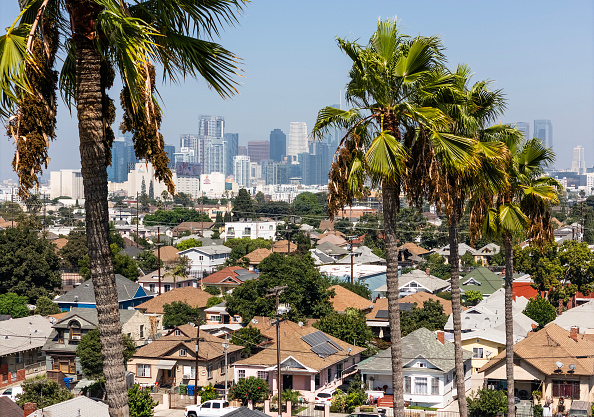
In 2022, voters approved Measure ULA, Los Angeles’s “mansion tax,” which imposes steep taxes on properties worth more than $5 million in order to fund affordable housing and tenant assistance. Progressive advocates estimated that the law would bring in as much as $1 billion for housing programs—but four years later, even some of the law’s supporters concede that it isn’t working as intended.
“Measure ULA has both raised less revenue than promised and discouraged the kinds of property transactions that make new housing possible, including new multifamily units,” writes Shawn Regan. One problem: the tax applies to all properties, including many large multifamily developments. L.A.’s experience shows that “blunt-force taxes on housing transactions reduce housing supply and thwart affordability.”
Read here for more. |
|
|
Good luck finding reasonably priced housing around Boston. The city and its environs are the fifth-most expensive rental market in the country. Half of the area’s renter households spent more than 30 percent of their income on housing in 2024. Residents, understandably, are fed up.
Boston Mayor Michelle Wu recently endorsed a measure to lift the statewide ban on rent control. But this won’t boost the city’s housing supply, argues Eric Kober—in fact, it will likely worsen the shortage. By effectively promising to protect current tenants from short-term rent hikes, Wu is penalizing “future residents, many of whom will be unable to find housing at rents they can afford.”
|
|
|
Last week, the New York Times published an op-ed arguing that free buses ease traffic, promote public safety, and encourage commuters to use public transit—and best of all, the buses pay for themselves. The evidence? A Washington State study from 1994 that said the cost of enforcing fares can outweigh revenue “for small to medium sized transit agencies.” Never mind that Seattle lost $2.2 million a year from its partial implementation of such a project and shut it down in 2012.
As Josh Appel observes, “bus fares in New York City are already relatively cheap, especially given the system’s scale and effectiveness.” Read his takedown of the Times’s argument, which he says is “long on enthusiasm but light on evidence.” |
|
|
Melania, the new film following First Lady Melania Trump through the days leading up to her husband’s inauguration, has been a commercial and popular success. The First Lady herself was involved in the film’s production, applying her careful stylistic eye to every scene.
In her review of the film, the Manhattan Institute’s senior multimedia producer, Isabella Redjai, calls it “a carefully composed study in image, intention, and identity” that emphasizes the causes most important to the First Lady. Read more here. |
|
|
“If I go see my doctor about a problem with my elbow, and he operates on my knee, I’m still going to have a problem with my elbow.
‘Gender affirming’ care is the same. The doctor sees patients for problems with their head, and operates on their reproductive parts. Any surprise that the patients still have head problems?” |
|
|
Photo credits: Myung J. Chun / Contributor / Los Angeles Times via Getty Images |
|
|
A quarterly magazine of urban affairs, published by the Manhattan Institute, edited by Brian C. Anderson. |
|
|
Copyright © 2026 Manhattan Institute, All rights reserved. |
|
|
|