|
Forwarded this email? Sign up for free to have it sent directly to your inbox. |
|
|
Good morning, Today, we’re looking at a new Manhattan Institute survey on Republicans, higher education’s decline, and disorder at a recent soccer match in England. Don’t forget to write to us at editors@city-journal.org with questions or comments. |
|
|
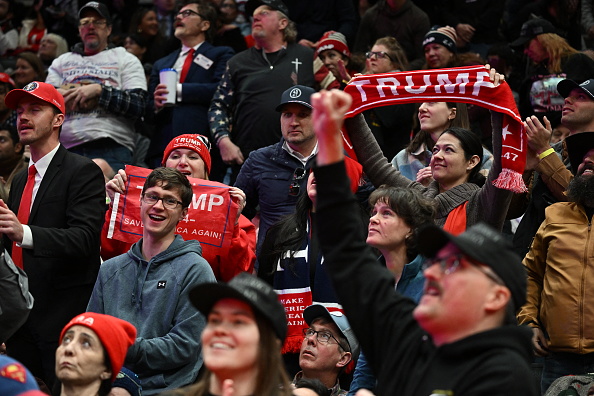
What does today’s Republican coalition look like? A new Manhattan Institute survey finds that it’s more complex than legacy media suggests. We asked nearly 3,000 voters about their beliefs on some of the nation’s biggest issues and found that roughly two-thirds of them are “Core Republicans”—longtime GOP voters who are consistently conservative on foreign policy and economics. “They still prefer cutting spending to raising taxes, still see China as a threat, still support Israel, and remain firmly opposed to DEI and gender ideology,” Jesse Arm writes.
The other main cohort are the “New Entrant Republicans”—those who joined the coalition during the Trump era. They are less conservative than Core Republicans, and many believe in most, if not all, of the six conspiracy theories we tested. And more than half say that political violence is sometimes justified. “The racist in your X mentions who thinks the moon landing was faked and that George Bush arranged 9/11 is just as likely to want higher taxes and abortion-on-demand as he is to support eradicating DEI bureaucracies or doing anything to rein in the welfare state,” Arm writes.
Read more about the survey and what Republicans should take away from it. |
|
|
In 2011, 18 percent of high school seniors said they did not want to graduate college. In 2024, that figure jumped to 30 percent.
That’s just according to one survey, but it’s more evidence of higher education’s decline—and not just because of tuition costs or the appeal of career opportunities outside of college. As Kevin Wallsten puts it, “universities have become more ideologically homogenous, more overtly activist, and more monomaniacally focused on power and identity.”
Indeed, university faculty are increasingly skewing to the left: the liberal-conservative ratio was two-to-one in 1995; by 2010, it was five-to-one. College administrators and students lean more liberal, as do most scholarly articles that universities are producing.
“The cumulative effect of these changes has been the evaporation of trust in higher education, particularly among conservatives,” Wallsten writes. This is bad news for universities across the country, he observes, as “a conservative exodus from colleges will leave corporations, media, academia, and government without the voices needed to argue for right-of-center approaches to public policy issues.”
Read his analysis. |
| |
During the recent soccer match between Aston Villa and the BSC Young Boys, Swiss fans threw things at the players, hitting one of them in the head, and later threw punches at police officers. “English hearts swelled with patriotic pride,” Theodore Dalrymple writes, “that it was not only their own spectators who behaved badly!” |
|
|
|
Tal Fortgang, Jim Copland, and Rafael Mangual discuss the developing political relationship between Mayor-elect Zohran Mamdani and President Donald Trump, exploring how Mamdani’s anticipated approach to immigration enforcement and public safety could reshape the city’s political landscape. They consider the consequences when local policy collides with federal authority, and whether New York could be headed toward a new wave of protests or civil unrest.
|
|
|
“Rule # 1 from the DNC playbook: When you can’t defend your failure, play the race card.”
|
|
|
Photo credit: ANGELA WEISS / Contributor / AFP via Getty Images |
|
|
A quarterly magazine of urban affairs, published by the Manhattan Institute, edited by Brian C. Anderson. |
|
|
Copyright © 2025 Manhattan Institute, All rights reserved. |
|
|
|