|
Forwarded this email? Sign up for free to have it sent directly to your inbox. |
|
|
Good morning,
Today, we’re looking at explosive new reporting on the Palisades Fire, the meaning of citizenship, a new biography of novelist Muriel Spark, the work and vision of Norman Podhoretz, and society’s embrace of beauty.
City Journal wishes readers a very Happy New Year. Our newsletter will return on Monday, January 5. Write to us at editors@city-journal.org with questions or comments. |
|
|
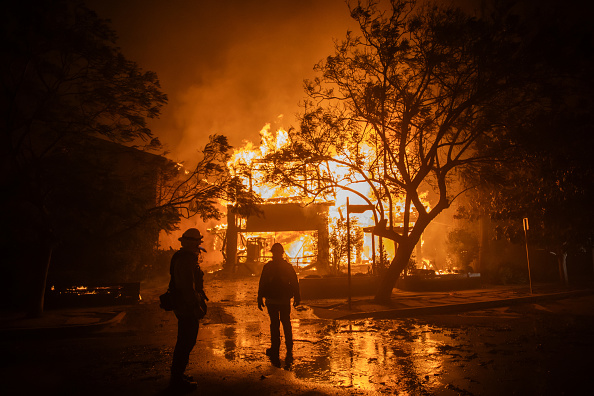
It was just a year ago that the Palisades Fire ripped through Los Angeles, burning more than 23,000 acres, destroying 6,800 structures, and killing 12 people. Ignited by a former Palisades resident who has since been charged with arson, the initial eight-acre fire was quickly brought under control, but it reignited a week later, becoming L.A.’s worst urban wildfire catastrophe.
Now, evidence from a lawsuit filed on behalf of the victims reveals the many ways that California policies may have caused the fire to rekindle. As Shawn Regan summarizes, the evidence includes “text messages that appear to show California State Parks employees seeking to limit the impact of fire suppression to protect endangered plants; an unreleased agency document stating that the park’s preferred policy is to let the area burn in a wildfire event; and secret maps that attempt to constrain firefighting operations in certain areas of the park—even adjacent to densely populated areas—to protect ‘sensitive natural and cultural resources.’”
As Regan maintains: “Not only was the Palisades Fire entirely preventable, the evidence suggests; it was also fueled by California state policies that, in the words of one attorney representing fire victims, ‘put plants over people.’”
Read more from his explosive investigation. |
|
|
In the ancient world, citizenship was a privilege dispensed to a chosen few. Today, however, citizenship is regarded as a universal right, defined primarily by the benefits that it confers rather than the obligations it imposes.
David Polanksy sketches relevant history to contextualize the debate over birthright citizenship, which, he argues, is really a debate about citizenship itself. “Political controversies over immigration, protected industries, and elite loyalties,” he writes, “flow from a wellspring of disagreement about the importance of citizenship.”
Read his piece here. |
|
|
In the Autumn 2025 issue of City Journal, Ian Penman looks at Electric Spark, Frances Wilson’s recent biography of writer Muriel Spark. Wilson treats the novelist as a paradox machine: half-Jewish/half-Gentile, stern moralist/wry comedienne, and a conservative anarchist. Penman traces how that doubleness hardened into an art of sleight-of-hand: her novels take the form of tidy entertainments about blackmail, murder, and the like, but in the process they smuggle in deep metaphysical themes.
Read here to find out why Spark’s misdirection remains compelling, and why Wilson’s portrait of the novelist leaves her only “odder, and more haunting, and more profound.” |
|
|
Former Commentary magazine editor Norman Podhoretz died earlier this month at the age of 95. Known for his shift in the 1960s from radicalism to conservatism, Podhoretz was looked to by many “for guidance in cutting through the fashionable left-wing views that they encountered in schools, Hollywood movies, and television news programs,” James Piereson writes. “It was a response that he did not expect but certainly welcomed.”
Read more about Podhoretz’s life and contributions, and the concerns that caused him to change his views more than half a century ago. |
|
|
The Manhattan Institute is proud to serve as the Principal Institutional Partner for the Sun Valley Policy Forum’s 2026 Winter Summit in the iconic resort town of Sun Valley, Idaho on February 11, 2026.
We are thrilled to join Joe Lonsdale and MI senior fellow Christopher F. Rufo for an evening on principled leadership and the future of American institutions in an AI-driven era. Please click here to learn more about the Sun Valley Policy Forum and our partnership and to purchase tickets at a discounted rate for friends of the Manhattan Institute.
|
|
|
“Even as we have strained to embrace a broader definition of beauty, we are more tyrannized by appearances than ever,” Jonathan Clarke writes. “If you are obese or have a skin disease, you are marked and identified by this fact, regardless of any other qualities you might possess, in a way that probably wasn’t true when the ties of community and family were stronger.”
Read his take on society’s views of beauty. |
|
|
|
In this year-in-review episode of the City Journal Podcast, we look back at the most compelling conversations from recent months. From Douglas Murray to Heather Mac Donald and Abigail Shrier, the episode features engaging, timely cultural debates and in-depth policy discussions, offering listeners a snapshot of City Journal’s podcast coverage. |
|
|
“The most that can be said, and it’s stretching the ‘spirit of Christmas’ quite a bit, is that the jury is still out on that.”
|
|
|
Photo credit: Apu Gomes / Stringer / Getty Images News via Getty Images |
|
|
A quarterly magazine of urban affairs, published by the Manhattan Institute, edited by Brian C. Anderson. |
|
|
Copyright © 2025 Manhattan Institute, All rights reserved. |
|
|
|