|
Forwarded this email? Sign up for free to have it sent directly to your inbox. |
|
|
Good morning,
Today, we’re looking at the life and work of Ralph Waldo Emerson, anti–Asian American discrimination in higher education, the Napa Institute’s sixth annual Eucharistic procession, and a timely book about the American Founding.
Don’t forget to write to us at editors@city-journal.org with questions or comments. |
|
|
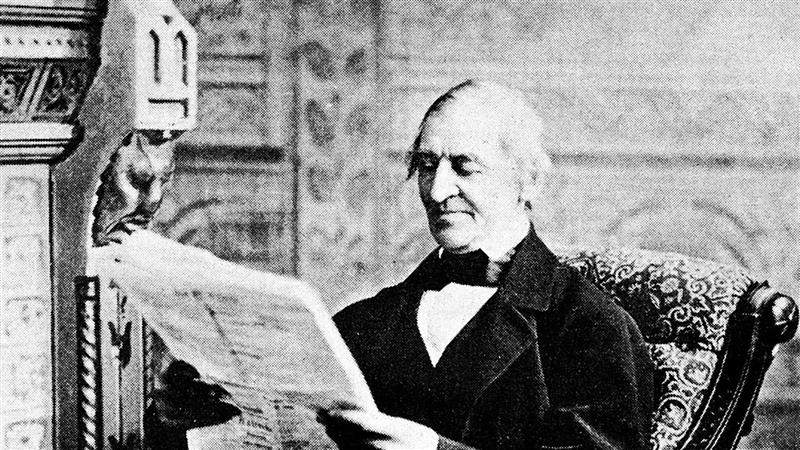
In the Autumn issue of City Journal, Brian Patrick Eha explores the life and career of Ralph Waldo Emerson—”preacher, lecturer, essayist, sage” and “the American Plato and Marcus Aurelius in one.”
Eha places Emerson’s emergence between America’s two formative struggles—the American Revolution and the Civil War. As Americans searched for a national identity, Emerson counseled a creed of personal agency: “the only sin,” he told Americans, was “limitation,” and his “one doctrine” was “the infinitude of the private man.” In his essays, he forged a distinctly American moral vocabulary of self-reliance and inner discipline that still reads like a challenge to our complacent age. “Emerson’s essays, like the variegated peaks of a mountain range, persist in the present tense,” Eha writes. “In them the soul and youthful sinews of America abide.” |
|
|
In August, President Donald Trump instructed Secretary of Education Linda McMahon to require all federally funded universities to disclose demographic data on their applicants, admissions, and enrollees. The data will help identify universities failing to comply with the Supreme Court’s 2023 ban on racial preferences in admissions.
One group that stands to benefit is Asian American applicants, who have long faced discrimination in admissions despite having, on average, superior academic credentials. In City Journal’s Autumn issue, Renu Mukherjee sketches the decades-long history of anti–Asian American discrimination in higher education, and argues that the Trump administration’s reporting requirements could enable Asian American student organizations to bring more successful lawsuits against discriminatory universities.
|
|
|
Back in October, more than 6,000 people walked from St. Patrick’s Cathedral in New York City to Broadway and back in the Napa Institute’s sixth annual Eucharistic procession. “As the golden monstrance containing the consecrated Host emerged from the Mass and the doors of St. Patrick’s, thousands joined in prayer and song,” John Ketcham writes. “For one autumn hour, New Yorkers put aside their worldly concerns and stepped into eternity.”
|
|
|
The Manhattan Institute is proud to serve as the Principal Institutional Partner for the Sun Valley Policy Forum’s 2026 Winter Summit in the iconic resort town of Sun Valley, Idaho on February 11, 2026.
We are thrilled to join Joe Lonsdale and MI senior fellow Christopher F. Rufo for an evening on principled leadership and the future of American institutions in an AI-driven era. Please click here to learn more about the Sun Valley Policy Forum and our partnership and to purchase tickets at a discounted rate for friends of the Manhattan Institute.
|
|
|
Edward Short reviews Joseph Ellis’s The Great Contradiction: The Tragic Side of the American Founding, which confronts slavery and the dispossession of Native Americans—“the two evils arising from the very liberty for which the founding of America had been fought,” Short writes.
As the nation prepares to mark its semi-quincentennial in 2026, Short praises Ellis’s book for refusing to portray the Founders as either demigods or devils. Instead, the distinguished historian explores how the Founders’ loftiest ideals collided with hard political necessity, human weakness, and America’s original sins.
“Ellis’s book should be read by all who mean the future of the republic well,” Short writes. “Its balance, lightly worn scholarship, and consistent fair mindedness are both salutary and necessary in our contentious times.” |
|
|
“Mamdani wants to take on fundamental principles of economics. Good luck with that.”
|
| |
Photo credit: Culture Club/Getty Images |
|
|
A quarterly magazine of urban affairs, published by the Manhattan Institute, edited by Brian C. Anderson. |
|
|
Copyright © 2025 Manhattan Institute, All rights reserved. |
|
|
|