|
Forwarded this email? Sign up for free to have it sent directly to your inbox. |
|
|
Good morning,
Today, we’re looking at the horrific Bondi Beach shooting, New York City mayor-elect Zohran Mamdani’s concerning new immigration video, the relationship between poverty and crime, New York’s class-size law, and what a Warner Bros. takeover could mean for consumers.
Write to us at editors@city-journal.org with questions or comments. |
|
|
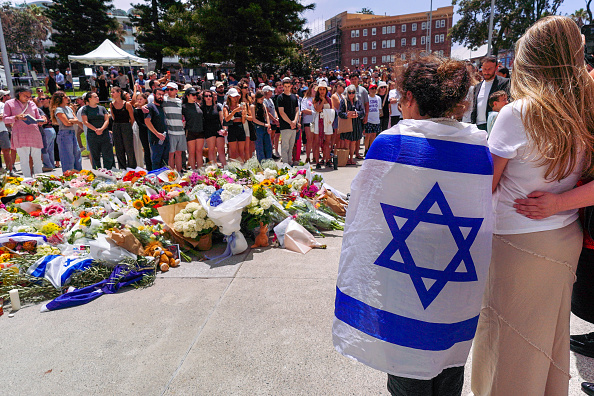
At least 15 are dead and 42 have been hospitalized after two men shot at Jewish families in Australia on Sunday. The families were celebrating Hannukah at a park by the beach. “We can quibble about historic anti-Semitism in Australia, but nothing like this evil has plagued Australian Jewry before,” Misha Saul writes. “This murderous Jew hatred is an imported scourge.”
Australia has one of the world’s largest foreign-born populations, but it’s time to be more selective, Saul argues. “To avoid importing ethnic or religious hatreds is not to disparage immigrants or immigration generally,” he writes. “Australians have a choice to make about what kind of society we want to have, and that starts with determining whether we will permit such evil to come and fester here.”
Read his powerful essay. |
|
|
New York City mayor-elect Zohran Mamdani recently released a video about immigration enforcement. The top-line theme? “Know your rights.”
That sounds reasonable enough, but “the video’s message is far more sinister,” Rafael A. Mangual writes. It endorses “resistance to the enforcement of duly enacted federal immigration law,” he points out, “as well as tacit encouragement of chaotic, disruptive, and potentially violent clashes between anti-Trump activists and immigration-enforcement authorities.”
Read more about the video and Mamdani’s stance on illegal immigration. |
|
|
It’s true that those living in poverty are more prone to commit crime, but the relationship isn’t always consistent. “Some cities and countries with high poverty rates have low murder rates, and vice versa,” Barry Latzer points out. The same goes for different populations.
New York City offers an example. Last year, Latinos, Asians, and blacks had similar poverty levels there (26 percent, 24 percent, and 23 percent, respectively). But the murder-arrest rate for blacks, adjusted for population size, is almost twice the rate for Latinos and nearly 16 times the rate for Asians. “So while more Asians live in poverty than blacks, African Americans are 16 times more likely to be arrested for murder,” Latzer explains. And the disparities extend to other crimes, too, including felony assault, rape, and robbery.
Read more of Latzer’s analysis here. |
|
|
Three years ago, Governor Kathy Hochul signed a bill that required New York City public schools to reduce class sizes. Now, as the city implements the law, children are seeing their educations disrupted.
Danyela Souza Egorov reports that across the city, schools are contemplating radical changes to comply with the law. One school district proposed creating a separate annex in a different building exclusively for freshmen. Another passed a resolution removing all pre-K and 3K classes from the district’s elementary schools.
These developments are just the beginning. As the city continues to expand its compliance efforts, high-performing schools will have fewer incoming students—a development, Egorov argues, that will hurt low-income kids the most. |
|
|
Politicians, including President Trump, have been raising alarms about Netflix’s $82.7 billion bid to acquire Warner Bros., with some suggesting that the deal might make the streaming service too large.
Size does matter, argue John Garnett and Craig Roach—but not in the way critics of the Netflix deal think. As the economist Joseph Schumpeter showed, large firms are often best positioned to “invest more money into research and development to produce new technologies and drive innovation,” thus benefiting consumers. Moreover, getting larger does not guarantee market dominance.
“Our first instinct should not be that big is bad, but rather, that big can be better for all,” write Garnett and Roach. |
|
|
“Once again, thank God for President Trump doing what everyone knows is right but is too afraid to say. Disparate Impact is an insidious and racially divisive theory which demands one believe that all cultures have the same values. This has never been true.”
|
|
|
Photo credit: Anadolu / Contributor / Anadolu via Getty Images |
|
|
A quarterly magazine of urban affairs, published by the Manhattan Institute, edited by Brian C. Anderson. |
|
|
Copyright © 2025 Manhattan Institute, All rights reserved. |
|
|
|