|
Forwarded this email? Sign up for free to have it sent directly to your inbox. |
|
|
Good morning, Today, we’re looking at shifting public sentiment about marijuana and a legal tool New Yorkers can use to resist Zohran Mamdani’s incoming administration. Don’t forget to write to us at editors@city-journal.org with questions or comments. |
|
|
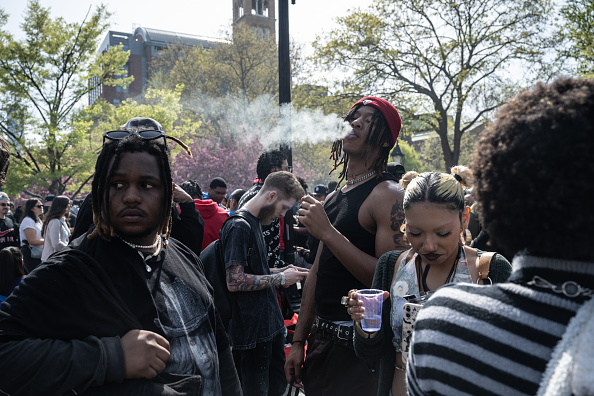
Recreational pot has been legal in Massachusetts for almost ten years now. That could change next November, when voters will have a chance to ban it again, thanks to the 74,000 signatures organizers gathered to get the initiative on the ballot.
While few believe the proposal will pass, the fact that it’s even under consideration suggests that attitudes are changing. Indeed, a broader shift appears to be underway across the country. Voters in Idaho will decide whether they want to prohibit legalizing marijuana by ballot initiative next year. Voters in Florida and in North and South Dakota rejected legalization ballot initiatives last year. And there’s an active effort in Maine to repeal legalization. “Support for legalization has dipped—about a six-point decline between 2023 and 2025, according to Gallup,” Charles Fain Lehman writes. “But that represents a significant drop-off among Republicans, a majority of whom oppose legalization for the first time since 2016.”
Read more about the changing public sentiment and Lehman’s take on the factors that could be driving it. |
|
|
Zohran Mamdani won barely 50 percent of the vote in New York City’s mayoral election. Many of the voters who opposed him are looking to Albany—which has more power than the state’s local governments—to halt some of his policies.
But New Yorkers have their own legal tool to rein in his administration: voter-initiated referenda. “New York State’s Municipal Home Rule Law (MHRL) allows voters to petition to amend their city’s charter, or even to adopt an entirely new one,” Joseph Burns writes. “Under this law, a petition with 30,000 city voters’ signature triggers a general election vote on a charter amendment. If a city council, through inactivity, prevents this amendment from reaching the ballot, citizens, by submitting a second petition signed by 15,000 voters, can bypass the council and force the amendment to a vote on a general election ballot.”
Read more about the process. |
|
|
|
Rafael Mangual, Judge Glock, and Adam Lehodey talk about New York City Mayor-elect Zohran Mamdani’s pledge to end homeless encampment clearances. They discuss the small group of supporters who believe sheltering outside is a human right, explain why relying on the shelter system is preferable, and consider the implications of letting the homeless occupy the city’s limited public spaces. They also examine the Community Opportunity to Purchase Act, which would give nonprofits the first right of refusal to buy housing.
|
|
|
“Porn affects the ways men see women, and not in a good way. I’ve also heard stories about teenage girls being asked to do sick things by teenage boys that the boys learned about from watching porn. To my mind, there’s absolutely no doubt porn is destructive to the individuals who consume it, to the individuals who produce and star in it, and to the society that widely permits or embraces it. Having said that, I do understand and experience its allure, but I think it’s an allure best resisted.”
|
|
|
Photo credit: Stephanie Keith / Contributor / Getty Images News via Getty Images |
|
|
A quarterly magazine of urban affairs, published by the Manhattan Institute, edited by Brian C. Anderson. |
|
|
Copyright © 2025 Manhattan Institute, All rights reserved. |
|
|
|