|
Forwarded this email? Sign up for free to have it sent directly to your inbox. |
|
|
Good morning,
Today, we’re looking at the National Science Foundation and its history of funding left-wing research, medical schools’ alarming admissions practices, racial achievement gaps (and why specialized high schools aren’t to blame for them), and the importance of economic data. Write to us at editors@city-journal.org with questions or comments. |
|
|
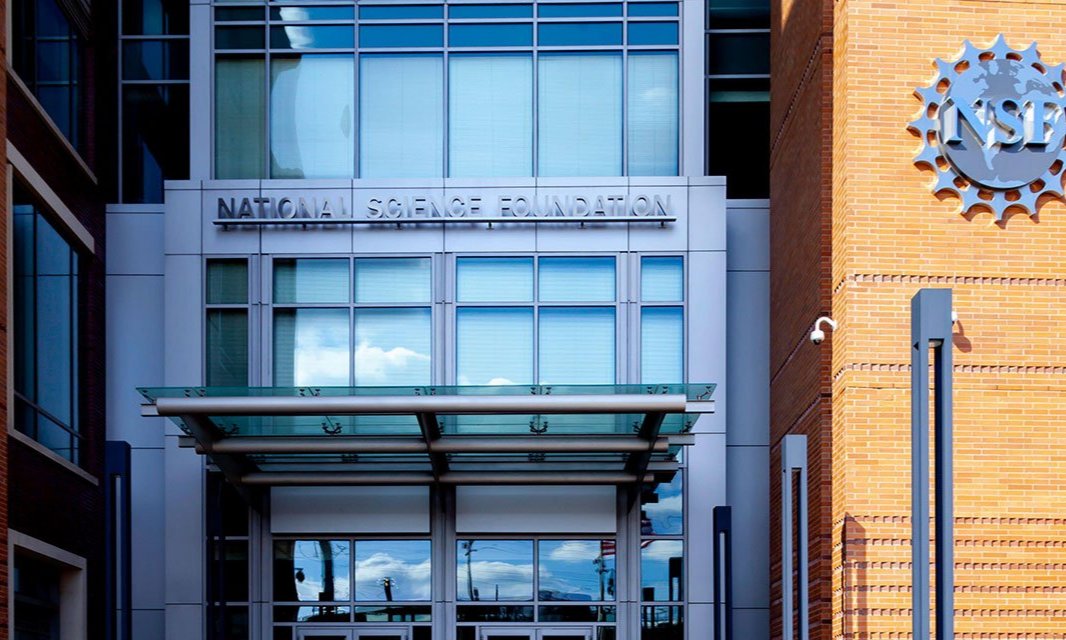
Each year, the National Science Foundation disperses up to $9 billion to support university research in engineering, physics, biology, and computing. But as Heather Mac Donald points out in our summer issue, the foundation has also long supported ideologically driven research through its Directorate for STEM Education. Indeed, the directorate had a $1.15 billion budget in 2024, more than its funding for biology, computer science, and engineering. And that amount is “just a starting point for gauging how much the NSF spent on education projects,” Mac Donald writes. “Other directorates, nominally focused on hard science, also distributed education grants.”
Read her analysis of the NSF and what the Trump administration is doing to pursue an overdue shake-up in Big Science. |
|
|
When Ian Kingsbury submitted Freedom of Information Act requests to all 93 public medical schools in the U.S., 23 responded. “I sought data on race, undergraduate grades, MCAT scores, and admission status, in order to assess whether racial disparities in admission standards persisted,” he writes. His conclusion? Two years after the Supreme Court ended affirmative action in college admissions, schools are at least skirting the decision, “if not violating it outright,” he observes. Read more about what he found here. |
|
|
Critics of New York City’s eight elite high schools argue that the lack of diversity in the schools’ incoming ninth-grade classes this year proves that the entrance exam—the Specialized High School Admissions Test (SHSAT)—is racially biased. Others suggest that the schools themselves should be shut down. And some make both arguments.
These critics miss the mark, argues Danyela Souza Egorov. Performance on the SHSAT reflects a student’s level of preparation. “If New York City wants to increase diversity in its specialized high schools, it needs to focus on its underprepared students,” she writes.
That would mean tackling the problems of chronic absenteeism, low academic engagement, and a lack of test preparation—all of which disproportionately affect minority students. Read here for details. |
|
|
National economic statistics are essential. They ensure that buyers and sellers have access to reliable information and help leaders assess the effectiveness of their policies. But increasingly—including in the United States—leaders are manipulating economic data to manage public opinion.
Manhattan Institute fellow Danny Crichton argues that Chinese and American public officials are attacking the institutions that collect and publish economic data, with potentially disastrous consequences. “Statistics are the means by which leaders evaluate the outcomes of their decisions,” he writes. “With a shrinking set of increasingly unreliable metrics, countries are reducing their ability to make the right calls at critical moments of uncertainty.”
|
|
|
Photo credit: Mehmet Eser/ZUMA Press Wire/ZUMA Wire/Alamy Live News |
|
|
A quarterly magazine of urban affairs, published by the Manhattan Institute, edited by Brian C. Anderson. |
|
|
Copyright © 2025 Manhattan Institute, All rights reserved. |
|
|
|