|
Forwarded this email? Sign up for free to have it sent directly to your inbox. |
|
|
|
Good morning,
Today, we’re looking at New York Mayor Zohran Mamdani’s city-owned grocery stores, New York City’s education spending, and a legal battle over Roberto Clemente’s name and image.
Write to us at editors@city-journal.org with questions or comments. |
|
|
|
Photo credit: Spencer Platt / Staff / Getty Images News via Getty Images |
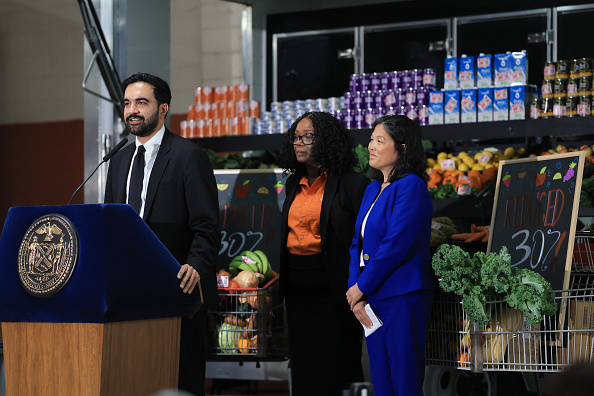
New York City Mayor Zohran Mamdani’s proposal to build five city-owned grocery stores is a puzzling one, Seth Barron argues. The city will spend tens of millions of dollars building a complicated system—one that already exists—that will do little more than undercut existing taxpaying grocery businesses.
“It seems preposterous,” Barron writes, “for the mayor to wage war against neighborhood enterprises while he simultaneously promises to help small businesses thrive.” The most obvious solution to help families afford food is to issue coupons to supplement Supplemental Nutrition Assistance Program benefits, he points out.
Read more. |
|
|
Last week, New York City Mayor Zohran Mamdani ordered every government agency to find 2.5 percent in savings for the next four fiscal years. For the Department of Education, that would mean cutting almost $1 billion.
There are lots of places the department can look for cuts, Danyela Souza Egorov and Jennifer Weber write. Take administrative bloat. Salary spending has grown from $186 million in 2010 to $261 million last year, despite schools losing 215,000 students since 2003. If the department reduced head count by just 10 percent, it would save $26 million.
“Then there’s non-personnel spending, meaning what the administration buys from outside vendors, such as contracts, consultants, technology, and other supplies,” Egorov and Weber write. “The city spent $187 million in fiscal year 2025. Returning to 2013 spending levels, when the system had more students than today, could save another $60 million.”
Read more about where the department could economize. |
|
| In 2021, Puerto Rico enacted laws that required drivers to pay for registration tags and license plates that displayed baseball Hall of Famer Roberto Clemente’s name, jersey number, image, and references to his career hit total of 3,000. The money collected went into a government fund.
Clemente’s sons received none of the proceeds, despite the decades they spent licensing their father’s trademark, so they sued under the federal trademark statute and the Fifth Amendment’s Takings Clause. The U.S. Court of Appeals for the First Circuit allowed parts of the trademark case to continue but tossed the constitutional claim. The court believes that the rule that requires compensation when government takes property applies only to tangible property. “Roberto Clemente’s legacy belongs in Puerto Rican history and culture, but his registered commercial mark still belongs to his family,” Ilya Shapiro argues. “The commonwealth was free to negotiate a license, seek the family’s cooperation, or design a voluntary tribute. It chose instead to legislate itself permission and pocket the revenue.”
Read more on why the Supreme Court should take up the case. |
|
|
“Getting physicians to stop sexually mutilating children for profit is as hard as getting trial attorneys to agree to tort reform.”
|
|
|
|
A quarterly magazine of urban affairs, published by the Manhattan Institute, edited by Brian C. Anderson. |
|
|
|
Copyright © 2026 Manhattan Institute, All rights reserved. |
|
| |
|