|
Forwarded this email? Sign up for free to have it sent directly to your inbox. |
|
|
|
Good morning,
Today, we’re looking at Mayor Zohran Mamdani’s new judicial panel, how AI can reduce health-care costs, George Washington’s escape from New York, and a new film about a Cold War-era summit meeting.
Write to us at editors@city-journal.org with questions or comments. |
| |
|
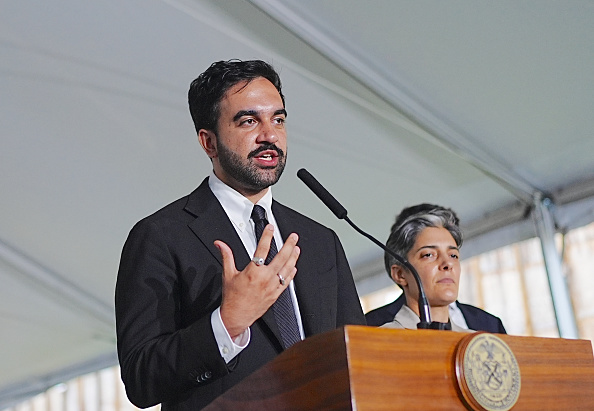
Photo credit: Anadolu / Contributor / Anadolu via Getty Images |
New York City Mayor Zohran Mamdani’s announcement last month of 18 new appointments to a “revitalized” judicial panel initially received attention because he included no Jews among the picks. But the names were notable for another reason, according to Stu Smith and Daniel Edward Rosen.
“Several panel members have extensive histories of advancing progressive criminal-justice reforms, prison abolition, alternatives to policing, and various forms of decriminalization,” they write.
These new members have the potential to leave a big mark on public safety in Gotham. The judicial panel, formally known as the Mayor’s Advisory Committee on the Judiciary, has a say in who becomes a judge in the city’s criminal and family courts, as well as interim appointments to civil courts. As Smith and Rosen note, Mamdani’s selections suggest a pivot back to his progressive roots on criminal-justice issues.
Read here for profiles of several of the mayor’s appointees. |
|
|
“[S]aying that AI will cure cancer is more a cliché than it is inspiring,” noted Anthropic CEO Dario Amodei posted on X recently, conceding that AI hasn’t yet delivered on many of its big promises. He’s right, notes Mark P. Mills. While AI tools have undoubtedly been a boon to scientists, real-world clinical trials to capitalize on that work still take time. But Mills is bullish on AI’s future impact on many areas of health care. “To see where, one only needs to follow the money,” he writes. AI holds out promise for reducing bureaucratic costs, improving diagnostics, and coordinating care across a universe of organizations and professionals, as well as the “unavoidable administrative work of oversight, compliance, tracking, and insurance.” All of these will soon add up to “meaningful advances in health-care productivity.”
Such advances may not be as dramatic as “the cure,” but they will make our lives better. Read more here. |
|
|
On July 4, 1776, George Washington was based in New York, preparing to defend it against the British. The Continental Congress had just issued the Declaration of Independence, and it wouldn’t be long before the British sent an expeditionary force into New York Harbor. On August 27, 1776, the Americans suffered 300 casualties in the Battle of Long Island (in what is now Brooklyn), and 1,000 men were captured.
“Washington had made many mistakes in the New York campaign, but he redeemed himself with his next move: he decided to try to evacuate his army to Manhattan,” Barry Strauss writes. “Pulling a defeated army together is one of a general’s hardest tasks. Washington joined a select group of commanders in history who refused to take part in a retreat until every combatant was evacuated.”
Read more about how Washington saved the American cause with his late-August New York escape. |
|
|
In the film The Brink of War, director Michael Russell Gunn tells the story of the 1986 summit meeting between President Ronald Reagan and General Secretary Mikhail Gorbachev of the Soviet Union. At the time, the arms control meeting was considered a failure, but it would prove an historic turning point in the Cold War. Gunn used declassified transcripts and conversations with former Secretary of State George Shultz to create “a densely scripted, tautly paced political drama,” Robert Steven Mack writes.
Read Mack’s review. |
|
|
“Good thoughts. I, too, am open to the idea of SCOTUS term limits or even a larger court. But any reforms made to the current system should only be made because the proponents of the reforms believe a fairer and more just system or process, not different outcomes, will be the result. ‘My team isn’t winning, so we should change the rules’ is not reform; it’s childish.”
|
|
|
|
A quarterly magazine of urban affairs, published by the Manhattan Institute, edited by Brian C. Anderson. |
|
|
|
Copyright © 2026 Manhattan Institute, All rights reserved. |
|
|
|
|