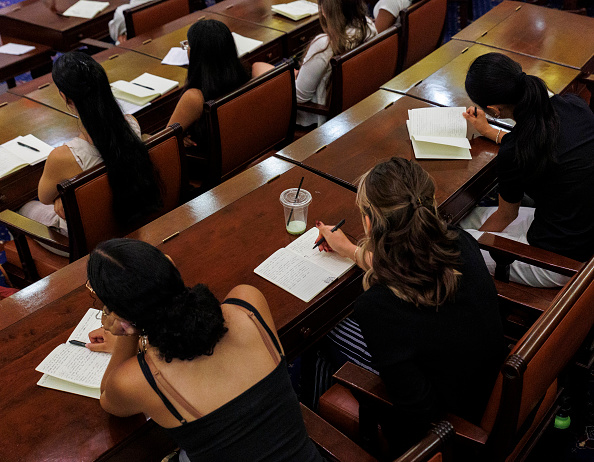
Since 1978, “duration of status” has governed immigrant students, allowing them to stay in the United States for as long as they maintained their status and made progress toward completing their program. If they needed more time, a university official could typically extend their program’s end date.
Come September, that will change. F-1 students will be allowed an admission period of no more than four years. Anyone who takes longer (like doctoral students) will have to pay a $420 fee and gather evidence to persuade U.S. Citizenship and Immigration Services that he should be allowed to finish his program.
“The administration is right that student visas require enforcement. Visa mills, fake employers, and ‘forever students’ are small but real problems,” Santiago Vidal Calvo writes. “But the old system does not produce fraud on a scale that justifies alienating immigrant students, many of whom might otherwise become some of America’s most valuable residents.”
Indeed, of the 1.58 million active records in the government’s Student and Exchange Visitor Information System, only about one-tenth of 1 percent of them had unusually long enrollments, a distinction that doesn’t automatically signify fraud. “The category could include lawful students who completed multiple degrees or pursued extended doctoral research,” Vidal Calvo explains.
Read more about the new rule.