|
Forwarded this email? Sign up for free to have it sent directly to your inbox. |
|
|
|
Good morning,
Today, we’re looking at New York City’s lack of fiscal restraint, how fare gates can reduce transit crime, and private education’s place in American life.
Write to us at editors@city-journal.org with questions or comments. |
| |
|
Photo credit: JOSE PEREZ/BAUER-GRIFFIN/GC IMAGES/GETTY IMAGES |
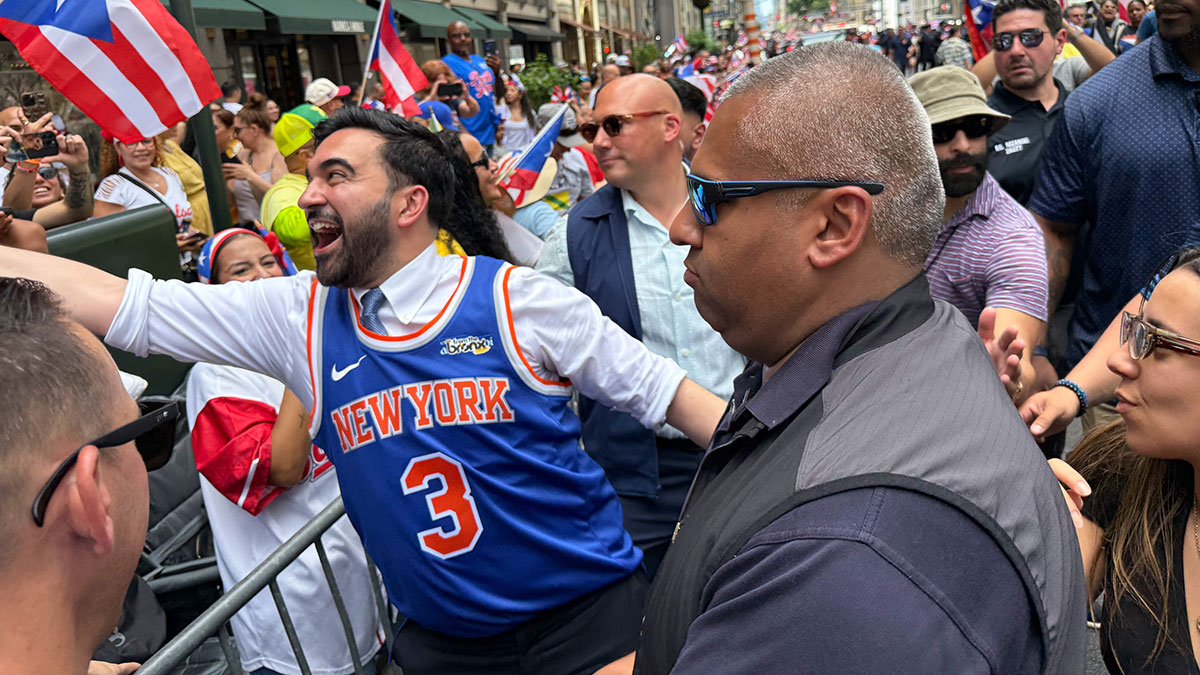
“For too long, working New Yorkers have been told that ambition must give way to austerity,” New York City Mayor Zohran Mamdani said when he unveiled the second draft of his $125.6 billion budget in May. He pointed to a “new era,” where austerity is no longer “the only answer to adversity.”
His views echo those of the Democratic Socialists of America: that the country’s problems stem from governments’ unwillingness to tax and spend aggressively—not from excessive spending.
“The obvious problem with this stance is that New York is hardly austere,” Nicole Gelinas writes. “After decades of rising debt and expanding budgets—and financial markets willing to absorb both—fiscal restraint has been the exception rather than the rule.” Read more. |
|
|
An overwhelming amount of serious transit crime is committed by people who evade fares. For instance, in Los Angeles, 97 percent of people who committed a violent crime didn’t pay. In Washington, D.C., that number is 99.5 percent. The CEO of New York’s Metropolitan Transportation Authority says that “virtually all” crimes are done by people who skip paying the fare.
The solution? Full-height fare gates. Cities that have installed them have seen crime and disorder plummet. Crime fell 41 percent in San Francisco’s BART after the city installed new gates. Washington, D.C.’s WMATA saw crime fall by nearly 40 percent. L.A. Metro said its pilot program for new fare gates reduced passenger reports of security concerns by 69 percent.
Unfortunately, in Washington, the House’s version of the Surface Transportation Reauthorization—the government’s five-year approval of road and rail funding—doesn’t include fare gates. “The bill requires jurisdictions to have criminal or civil enforcement mechanisms for fare evasion but doesn’t specify how those requirements must be enforced,” Lucas Pombo explains.
Read what he says Congress should do to help reduce crime on transit systems. |
|
|
Back in May, New York Governor Kathy Hochul announced that she would sign the state up for the One Big Beautiful Bill’s tax credit for Scholarship Granting Organizations (SGOs). The program gives taxpayers a credit of up to $1,700 for donations to SGOs, which can then use the money to offer scholarships and tutoring to families. And it all costs the state nothing.
Now, teachers’ unions are pressuring Hochul not to move forward on the plan, with New York State United Teachers President Melinda Person saying the program “is using taxpayer dollars to fund private school education,” that public schools are “the great equalizer,” and that Americans shouldn’t be separated into religious schools. “If we all start separating everyone,” she asked, “what is the impact on our country, on our democracy?”
Actually, Ray Domanico argues, private education—including religious education—has been and will continue to be an important part of our pluralistic nation. “Person’s assertions are at odds with both America’s history and the Constitution’s guarantee of religious freedom,” he writes. “Governor Hochul should stand firm and support this pro-family, pro-democracy, and pro-religious liberty initiative.”
Read more. |
|
|
“‘Arday’s death is a tragedy for his family and friends. It must not become an excuse to introduce yet more restrictions on press freedom.’
It shouldn’t, but that’s exactly what the U.K. government will do. I suspect there will be additional totalitarian creep on the continent as well. Sometimes, I think that we Americans don’t appreciate our First Amendment enough.” |
| |
|
A quarterly magazine of urban affairs, published by the Manhattan Institute, edited by Brian C. Anderson. |
|
|
|
Copyright © 2026 Manhattan Institute, All rights reserved. |
|
|
|
|