|
Forwarded this email? Sign up for free to have it sent directly to your inbox. |
|
|
|
Good morning,
Today, we’re looking at tokenism and Jason Arday, sexual abuse in Washington State schools, and a new DOJ brief concerning gender-transition procedures.
Write to us at editors@city-journal.org with questions or comments. |
| |
|
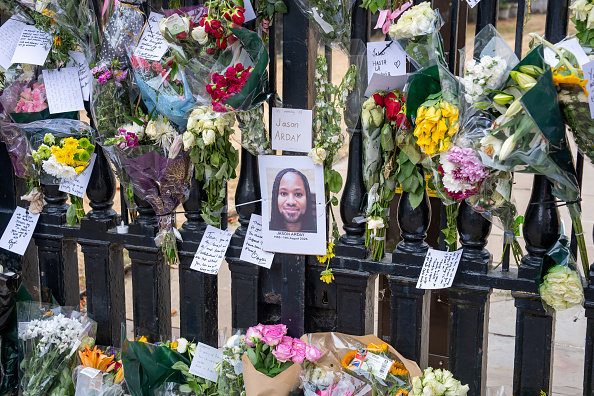
Photo credit: Nordin Catic / Contributor / Getty Images News via Getty Images |
For a long time, the idea that someone should be elevated to a higher position just because of his skin color was considered disrespectful.
That changed in 2020, when “Woke 1” took hold. Suddenly, such tokenism was the point. This approach led inevitably to the story of Jason Arday, the former Cambridge University professor who died earlier this month after revelations about his fraudulent scholarship.
Arday’s story was “so incredible, in the literal sense, that a white scholar making these claims would almost certainly have been instantly dismissed as a fabulist,” John H. McWhorter writes. “But Arday was black, and the whites around him considered it more important to be seen elevating him—especially as he was someone claiming past hardships—than viewing his claims as the fables they were.”
Indeed, the Arday tragedy illustrates just how far some whites will go to ensure they can’t be viewed as racist. Presenting Arday “as an exemplar of academic excellence was immoral—both insulting to blacks and cruel to him,” McWhorter argues. “Without it, he would have experienced no gruesome public downfall, and he would likely still be alive.”
Read more. |
|
|
Nationally, the state of Washington has one of the highest rates of sexual violence in K–12 schools.
“The problem isn’t that Washington public schools don’t know how to prevent educator sexual misconduct,” Forest Romm explains. “It’s that many are choosing not to—in part by participating in Screening, Brief Intervention, and Referral to Treatment (SB-SBIRT), a school-based behavioral health program implemented in more than 60 King County middle and high schools across 13 school districts.”
The problem with SB-SBIRT? Its behavioral health “interventionists” are unlicensed, and some even have criminal records. Schools that participate in the program administer a controversial questionnaire to students that screens for substance use, psychological issues, and “gender identity” confusion. About half of all students are flagged to meet with a “trusted adult,” and the meetings are often “ongoing.” And the program flouts the state’s own guidance on sexual abuse prevention. “Schools must recognize the signs of sexual grooming, intervene appropriately, and ensure that staff maintain clear professional boundaries,” Romm writes. “Staff should not single out students for special attention, meet alone with them out of the view of others, become confidants, disclose personal problems, or communicate beyond legitimate school business.”
Read more on the program and the lawsuits and high insurance premiums that have resulted. |
|
|
In 2025, a federal court ruled that when Premera Blue Cross refused to cover elective double mastectomies for two young girls, it unlawfully discriminated against them. “The decision read like a harsh warning to every employer: exclude gender-transition procedures for children from your health plan and risk an Affordable Care Act discrimination claim,” Douglas H. Napier explains.
But just last month, the Justice Department’s Civil Rights Division filed a brief urging the Ninth Circuit to reject the ruling, arguing that refusing to cover the surgeries “is rooted in biological reality.” Indeed, Napier writes, “the claim that surgically transitioning a child is ‘medically necessary’ does not rest on science but rather on an ideology and reliance on the discredited standards issued by the World Professional Association for Transgender Health (WPATH).”
Read more about the Justice Department’s brief and what it could mean for employers. |
|
|
“Obviously, it was easier for ‘progressives’ to take over the humanities than STEM. The humanities are ‘soft sciences.’ They are based on nothing and are not provable. You can make up whatever theory fits your ideology, make predictions from it, then carry out meaningless, biased ‘studies’ that ‘somehow’ always manage to ‘prove’ that you are completely correct. And if the experiment doesn’t confirm your results, you just pivot and tap dance a bit, tweak your bogus theorem a little, and insist that the next experiment will surely prove you out. Lather, rinse, repeat.”
|
|
|
|
A quarterly magazine of urban affairs, published by the Manhattan Institute, edited by Brian C. Anderson. |
|
|
|
Copyright © 2026 Manhattan Institute, All rights reserved. |
|
|
|
|