|
Forwarded this email? Sign up for free to have it sent directly to your inbox. |
|
|
|
Good morning,
Today, we’re looking at the Right to Worship Act, New York City’s fiscal woes, and the Mellon Foundation’s problematic approach to funding the arts and humanities.
Write to us at editors@city-journal.org with questions or comments. |
| |
|
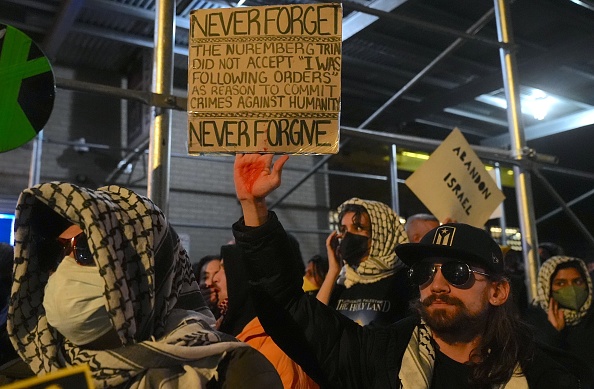
Photo credit: Anadolu / Contributor / Anadolu via Getty Images |
Earlier this month, congressional lawmakers introduced the Right to Worship Act, which would forbid disruptions within 100 feet of houses of worship whenever a religious service is being conducted.
“While the proposed bill would hardly fend off acute threats like attempted massacres at synagogues or Iran-backed attacks on Jewish schools, a federal buffer zone would raise the cost of antisocial behavior targeting religious Americans—which has a tendency to spill over into violence,” Tal Fortgang writes.
The Freedom of Access to Clinic Entrances (FACE) Act already prohibits interference with anyone who is exercising their right of religious freedom at a place of worship if done “by force or threat of force or by physical obstruction.” But prosecutions are rare, as they often turn on whether actual interference or intimidation has occurred. The Right to Worship Act “aims to keep violators away before they can do damage—and without inviting endless scrutiny over the meaning of intimidation,” Fortgang explains.
Read more about the legislation. |
|
|
In his first month in office, Mayor Zohran Mamdani sounded the alarm: New York City was facing a $12 billion budget shortfall for the next two fiscal years.
How could this be, when tax revenues, buoyed by stock-market gains and Wall Street bonuses, were still flowing freely into municipal coffers? “The episode uncovered one of New York’s deepest structural problems,” explains John Ketcham. “New York’s surging revenues have fueled government expansion at the cost of the discipline that scarcity imposes.”
As long as he can ride the bull market, Mayor Mamdani can preserve the spending status quo. “If revenues fall, however, he will face hard choices that he has so far avoided,” warns Ketcham. Rather than waiting for a bear market, state and city leaders should lean on Mayor Mamdani to pass the spending reforms the city needs.
Read Ketcham’s feature from the Summer 2026 issue. |
|
|
The Andrew W. Mellon Foundation is the largest private funder of the arts and humanities in the United States. Over the years, it has embraced progressive social justice and used its influence to reshape higher education—and it has come under scrutiny for doing so.
Earlier this month, Mellon’s program director for higher learning, Philip Brian Harper, wrote an article defending the foundation’s approach to funding. “While he emphasizes broadening the humanities, he ironically showcases a conception of the field that is extremely narrow,” John Sailer writes. For instance, of the three “core questions” Harper refers to, two deal with representation. “This is a striking admission: for Mellon, the humanities are largely about identity,” Sailer observes. “When he puts this in concrete terms, it becomes clear that this means race, gender, sexuality, and perhaps disability status. Every grant that Harper mentions deals with a demographic identity category.”
Read more about the problems with Mellon’s approach. |
|
|
“She’s not interested in Kagan’s or Sotomayor’s respect. She’s writing her dissents for the use of upcoming generations of transnational socialist judges. It’s a long game.”
|
|
|
|
A quarterly magazine of urban affairs, published by the Manhattan Institute, edited by Brian C. Anderson. |
|
|
|
Copyright © 2026 Manhattan Institute, All rights reserved. |
|
|
|
|