|
Forwarded this email? Sign up for free to have it sent directly to your inbox. |
|
|
|
Good morning,
Today, we’re looking at Supreme Court Justice Ketanji Brown Jackson’s judicial philosophy, New York City Mayor Zohran Mamdani’s pick to lead a land-use board, nonprofits’ reliance on government funding, and Sweden’s childcare system.
Write to us at editors@city-journal.org with questions or comments. |
| |
|
Photo credit: The Washington Post / Contributor / The Washington Post via Getty Images |
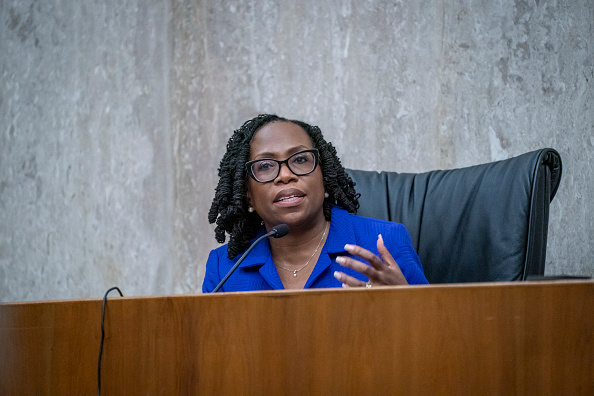
Conservatives criticized Earl Warren’s Supreme Court for ignoring the meaning of the Constitution and for transgressing limits on judicial power. The John Roberts Court has largely tried to avoid making these same mistakes, but its newest member, Justice Ketanji Brown Jackson, has taken a different path.
She questions originalism and textualism and takes “a selectively imperial view of judicial power, one that makes the Warren Court look modest and principled by comparison,” John O. McGinnis writes. “She likely foretells the direction of future Democratic appointees.”
Just look at how far left Democrats have been moving. They “increasingly seek policy victories even when those would require a new judicial paradigm,” McGinnis observes. And “the Biden pool of lower-court judges from which future Democratic appointees are likely to emerge is considerably more left-leaning than the pools assembled by previous Democratic presidents,” he writes.
Read about some of Jackson’s recent opinions. |
|
|
In June, New York City Mayor Zohran Mamdani nominated John Mangin to chair the Board of Standards and Appeals (BSA), which decides on special permits, zoning variances, and other development matters. Currently the director of the Housing Division at the Department of City Planning, Mangin has worked on city housing policies for more than a decade. He is clearly qualified for the job, John Ketcham and Eric Kober write.
Yet, the city council has been resistant to his nomination, largely due to his work as director of policy and research for the 2025 Charter Revision Commission. During his time there, the commission decided to limit “member deference,” where the council would defer to a local member who wanted to block projects in his district. This reform meant that one member could no longer quash housing proposals, and approval processes were expedited, removing the council’s vote. “The council should not use Mangin’s nomination as an opportunity to relitigate or settle scores over zoning changes and charter amendments that both it and voters have already approved,” Ketcham and Kober argue. “The BSA needs a chair who understands New York’s complicated land-use rules and will exercise good judgment in applying the law. Mangin is a strong fit on both counts.”
Read more. |
|
|
Federal grants to “everyday” charities fell by more than 40 percent from February to September of last year, compared with the same period in 2024. That’s good news, Naomi Schaefer Riley and James Piereson argue. For one thing, funding was cut from arts and criminal-justice groups, along with NPR and PBS—all of which are standing against Trump’s anti-DEI agenda. And it’s worth considering what obligation the federal government has to support groups like this, and what would happen if these groups relied more on private donations.
“Maybe this will force organizations to be more responsive to a wider audience,” Riley and Piereson explain. “The donors might still cater to large foundations with liberal agendas, but there’s only so much of that money to go around. The nonprofits may have to rely more on funds from members of their communities.”
Read more about the ramifications of nonprofits’ reliance on public funds. |
|
|
The Left often praises Sweden for having the perfect universal childcare system. But many don’t realize that unlike the U.S., the country doesn’t mandate child-to-staff ratios.
And children and the preschools are doing just fine. “Even without any explicit mandate, typical child-to-staff ratios remain quite reasonable,” Chelsea Follett writes. How? Competition.
“A preschool that created unreasonable conditions would swiftly face reputational consequences,” Follett explains. “Sweden gives families the freedom to choose private preschools. Parents can select environments they feel best meet their children’s needs, encouraging preschools to provide a high-quality environment as they compete for families.”
Read more about child-to-staff ratio mandates and why they may not be worth their high costs. |
|
|
“What’s hilarious is they rail against the high cost of living due to capitalism yet aren’t complaining about the high cost of secondary education that ultimately benefits them.
Hypocrisy is a leftist virtue.” |
|
|
|
A quarterly magazine of urban affairs, published by the Manhattan Institute, edited by Brian C. Anderson. |
|
|
|
Copyright © 2026 Manhattan Institute, All rights reserved. |
|
|
|
|