|
Forwarded this email? Sign up for free to have it sent directly to your inbox. |
|
|
|
Good morning,
Today, we’re looking at gender in women’s basketball, the University of Michigan’s new “grade covering” policy, the dangers of confirmation bias within institutions, and a compelling new book about AI and work.
Write to us at editors@city-journal.org with questions or comments. |
| |
|
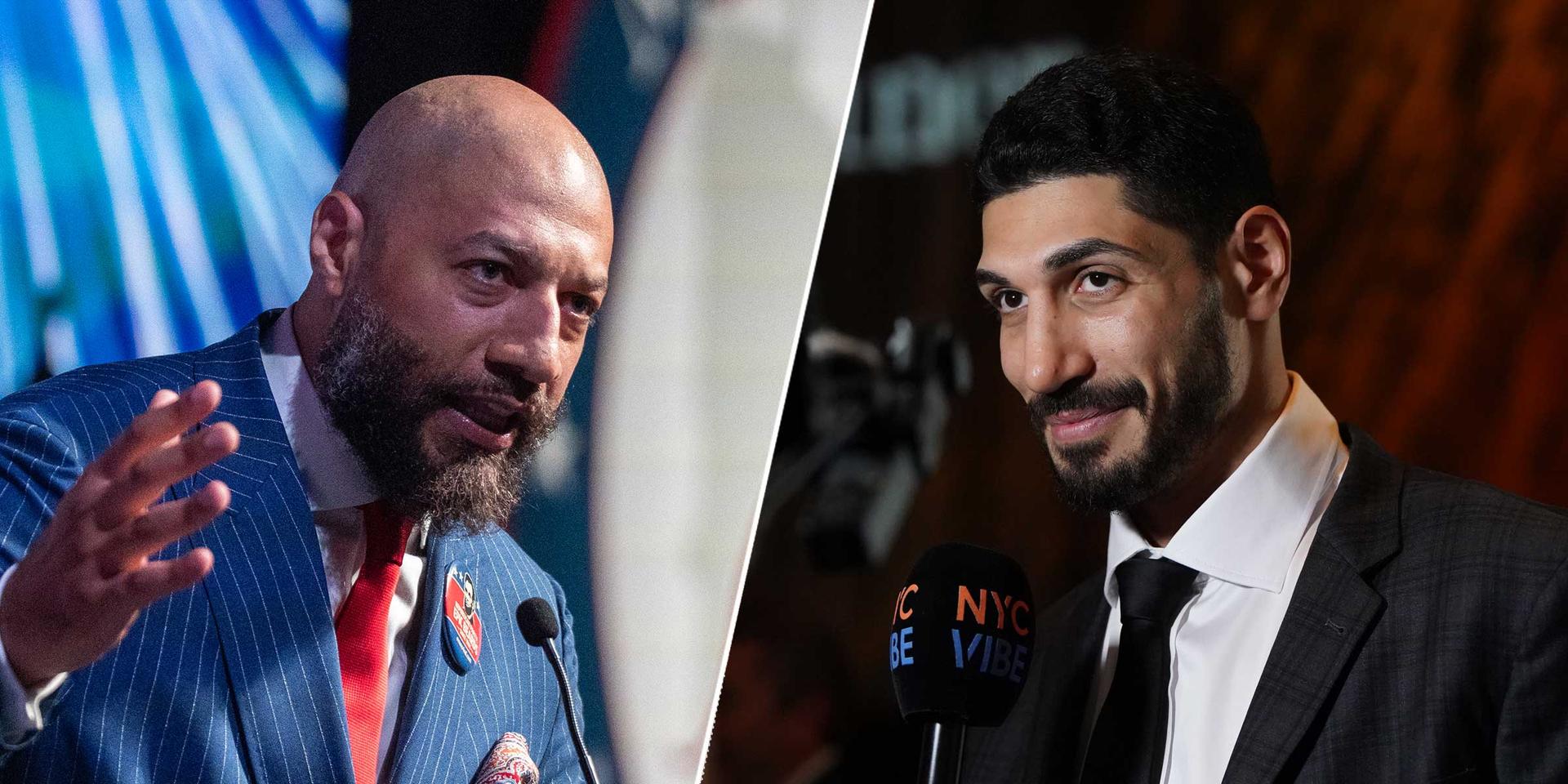
Photo credit: Richard Tsong-Taatarii/The Minnesota Star Tribune via Getty Images (left) and Jared Siskin/Patrick McMullan via Getty Images (right) |
What is a woman? The WNBA may soon be forced to give an answer. Two former NBA players—Enes Kanter Freedom and Royce White—have declared their intention to enter the WNBA draft, with White saying that he identifies as a woman for purposes of playing professional basketball.
Is it a stunt? Perhaps. “But calling something a stunt does not mean it won’t be effective in providing clarity about where the WNBA truly stands on the question of transgender inclusion,” maintains Colin Wright.
The WNBA is now faced with a choice, argues Wright: either block Freedom and White or “allow them in and create a spectacle so absurd, and an angry backlash so extreme, that indifference on the ‘What is a woman?’ question would be impossible to sustain.” Read Wright’s analysis here. |
|
|
The University of Michigan has announced that it will exclude grades from overall GPA totals for some freshmen undergraduates starting in fall 2027. Officially, the university claims this new “covered grading” pilot program is aimed at curbing the “mental health crisis” among first-year students.
But as Neetu Arnold argues, officials may have other reasons for the move: “The evidence suggests that the University of Michigan’s main motivation for adopting a grade-covering policy isn’t giving high achievers a boost but instead softening academic expectations—the better to accommodate the consequences of its admissions decisions.”
Whatever their motive, university officials could soon regret instituting the policy. Johns Hopkins University canceled a similar program in 2016 after professors found that it “delay[ed] development of study skills and adaptation to college-level work,” “negatively impact[ed] students who perform well,” and was “not well-received by graduate schools and potential employers.”
Read the rest of Arnold’s piece here. |
|
|
In 1964, the New York Times published an article by Junius Griffin about a supposed gang called the Blood Brothers. He wrote that the members, all black, were “roaming the streets of Harlem with the avowed intention of attacking white people.” Just one problem: none of it was true. When outside reporters tried to follow up on the story, they couldn’t. One of Griffin’s sources said he had only heard rumors about the gang. And when asked to follow up after supposedly having met with the Blood Brothers, Griffin said he could no longer locate them.
“Griffin must have sensed that his lurid portrait of ghetto life would be titillating to his white editors,” John McMillian writes. “The Times hired Griffin specifically to cover news from the black community, and he gave his bosses what he must have thought they wanted.”
A similar dynamic played out in the recent story of Jason Arday, which has now ended tragically. “Arday’s biography seemed to exemplify values prized in higher education for years: diversity, inclusion, triumph over adversity, and the elevation of historically underrepresented scholars,” McMillian observes. Given their predispositions, Cambridge faculty and officials simply accepted his claims at face value.
|
|
|
In Messy Jobs: The Work That AI Cannot Reach, economists Luis Garicano, Jin Li, and Yanhui Wu argue that machines will never be able to perform the most valuable aspects of human work—tasks that require judgment, accountability, and trust, for example.
“The accountant, for instance, survives not because AI can’t reconcile ledgers but because he or she interprets tax law for a client, signs the audit, and carries the legal exposure,” Sean Speer writes. “For workers worried about AI-induced displacement, the framework is reassuring. The messier the job, the safer it is.”
Read his review, in which he refers to the book as the best “yet written on AI and work.” |
|
|
“These policies Spanberger has promoted are so diametrically opposed to the former sensible ones, or any sensible ones, it causes one to wonder just why do the Democrats hate their own constituencies so? It’s almost like that old Ed Koch chestnut: ‘The voters have spoken. Now they must be punished.’”
|
|
|
|
A quarterly magazine of urban affairs, published by the Manhattan Institute, edited by Brian C. Anderson. |
|
|
|
Copyright © 2026 Manhattan Institute, All rights reserved. |
|
|
|
|