|
Forwarded this email? Sign up for free to have it sent directly to your inbox. |
|
|
|
Good morning,
Today, we’re looking at how San Francisco voters feel about the city’s prospects, Mayor Zohran Mamdani’s disdain for philanthropy, and what Republicans should focus on ahead of the November elections.
Write to us at editors@city-journal.org with questions or comments. |
| |
|
Photo credit: Smith Collection/Gado / Contributor / Archive Photos via Getty Images |
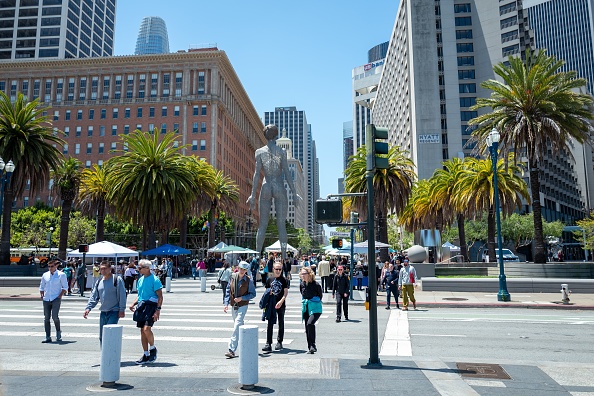
During a recent Manhattan Institute focus group, San Francisco residents described, variously, being held at gunpoint, bitten by a stranger, pushed off a bus, and robbed. They noted the public drug use, mental illness, and car break-ins that have become rampant around the city in recent years.
Even so, they are hopeful. “Participants who had lived through San Francisco’s worst pandemic years described cleaner streets today, a busier downtown, returning companies, and a city that felt more serious about restoring order,” Jesse Arm and Christopher F. Rufo write. “Their optimism was cautious but real.”
Nearly everyone pointed to affordability as an unresolved issue, and a few residents still felt the city was moving in the wrong direction. But most praised Mayor Daniel Lurie for his leadership and willingness to focus on basic governance. “This is the encouraging lesson of San Francisco’s recovery,” Arm and Rufo observe. “A city does not have to change parties before it can change direction.”
Read more about what voters had to say. |
|
|
New York City’s civic culture runs on philanthropy. From operas to museums, food banks, universities, and world-class hospitals, private donors are key players in making the city a magnet for people from across the country and around the world.
But democratic socialists like Mayor Zohran Mamdani don’t believe in philanthropy—they believe in heavy taxation and government spending. “The mayor doesn’t want to ask wealthy corporations and people for more money so much as take it—gleefully,” writes Nicole Gelinas.
Hence, the mayor’s mass firing, earlier this month, of the advisory board of the Mayor’s Fund to Advance New York City—a philanthropic vehicle transformed by Mayor Michael Bloomberg into a multimillion-dollar funder of everything from hurricane relief to arts facilities to poverty-reduction and summer-jobs programs for youth.
The problem with Mayor Mamdani’s philosophy is that “government money, even in a high-tax, high-spend city, is never infinite,” writes Gelinas. “Mamdani should not alienate the city’s donor class, because he can’t replace it with city government.” |
|
|
Socialist candidates are winning elections nationwide, but Republicans are betting on securing midterm victories simply by showcasing how radical the Democrats have become. Steven Malanga warns that this approach is misguided. Anger against incumbent Republicans can outweigh voters’ concerns about socialist policies, giving Democrats an advantage even when their candidates hold unpopular views. With Democrats leading generic congressional polling and showing greater enthusiasm, Republicans must address voters’ economic concerns and offer a compelling alternative rather than simply warning that Democrats are worse.
“What’s emerging is one of the most unusual midterm elections in decades, in which some extreme candidates with views considered unpalatable may ride to victory on a wave of anti-incumbent anger,” Malanga writes. “Republicans don’t have much time to turn things around—and imagining that they can succeed without offering voters a better version of their own agenda is likely a losing proposition.”
Read more here. |
|
|
“This is a natural consequence of one-party rule. There are no competing interests within government to push back when things go wrong because whatever serves the interests of the ‘party’ becomes their first priority.”
|
|
|
| A quarterly magazine of urban affairs, published by the Manhattan Institute, edited by Brian C. Anderson. |
|
|
|
Copyright © 2026 Manhattan Institute, All rights reserved. |
|
|
|
|