|
Forwarded this email? Sign up for free to have it sent directly to your inbox. |
|
|
|
Good morning,
Today, we’re looking at Gavin Newsom’s attempts to conceal public records, how Virginia is faring under Governor Abigail Spanberger, and New York’s budget woes.
Write to us at editors@city-journal.org with questions or comments. |
| |
|
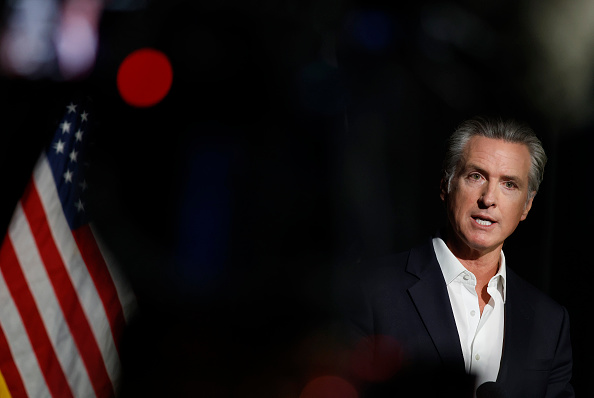
Photo credit: Justin Sullivan / Staff / Getty Images News via Getty Images |
For much of his political career, Gavin Newsom has presented himself as a champion of open government. But when City Journal’s California team has requested public records from Newsom-controlled agencies, they’ve run into repeated roadblocks—and have experienced similar stonewalling tactics at the local level.
Christopher Rufo, Santiago Vidal Calvo, and Ryan Thorpe review the governor’s record on transparency and recount the repeated delays and denials that City Journal reporters have encountered after filing records requests in Newsom’s California. These failures, they suggest, are not accidental, and raise questions about Newsom’s commitment to open government.
“Until the governor chooses to do the right thing, live up to his commitments to transparency, and release records to the public,” they write, “it is entirely legitimate to ask: What is Gavin Newsom hiding?” |
|
|
Jason S. Miyares was Virginia’s attorney general from 2022 to 2026. During his time in office, he worked with Governor Glenn Youngkin to spur job creation, moving the state’s ranking from 46th in the nation post-Covid to the top five. They brought down the state’s murder rate from its 20-year high. They worked with law enforcement to reduce drug overdose deaths from record highs. Their fiscal discipline helped to produce budget surpluses every year. “Some dubbed it the ‘Virginia Renaissance,’” Miyares writes.
But it’s a renaissance no more, thanks to Governor Abigail Spanberger’s policies. Higher taxes, more regulations, refusal to work with federal authorities, forced collective bargaining, and gerrymandering have all undermined the previous administration’s accomplishments. “In doing so, Governor Abigail Spanberger has managed to become one of the least popular governors in modern state history after a little more than half a year in office,” Miyares observes.
Read more. |
|
|
Over her five fiscal years as governor, New York’s Kathy Hochul has increased the state’s operating budget by 40 percent ($46 billion). That’s the largest five-year increase since the late 1980s.
The budget is now in uncharted territory, E. J. McMahon and Ken Girardin observe. It is “larger than ever, structurally unbalanced, and growing at an unsustainable pace,” they write, “yet temporarily flush with more surplus cash than Albany has ever seen.”
That cash comes from pandemic aid and a surge in tax revenues. The massive growth in spending, meantime, comes from local aid to school districts, which has grown even for those with shrinking enrollments, and a 60 percent surge in New York’s share of Medicaid outlays.
“Reducing New York’s tax burden would require substantial and sustained reforms to public education and Medicaid, both of which would mean confronting the state’s powerful public-sector unions, something that Hochul has shown little appetite for doing,” McMahon and Girardin write. “The state’s annual spending commitments already exceed projected recurring revenues, pointing to multibillion-dollar budget gaps beyond the current fiscal year.”
Read more about the state’s fiscal woes. |
|
|
“Jason Arday was detected because his lies and intellectual theft were so flagrant and easily spotted that it became impossible to run cover for him. Even by people who lie, deflect, and misdirect for a living.
But the corruption and rot within the academy that enabled his Icarian rise despite his utter lack of qualifications and perennial dishonesty? That runs deep. Very deep. Make no mistake, the Arday scandal may be sensational, but it is not exceptional.” |
|
|
|
A quarterly magazine of urban affairs, published by the Manhattan Institute, edited by Brian C. Anderson. |
|
|
|
Copyright © 2026 Manhattan Institute, All rights reserved. |
|
|
|
|