|
Forwarded this email? Sign up for free to have it sent directly to your inbox. |
|
|
Good morning, Today, we’re looking at a shocking new report out of California, Mayor Mamdani’s racial equity plan, and whether prediction markets should be considered gambling. Write to us at editors@city-journal.org with questions or comments. |
|
|
Photo credit: Anadolu / Contributor / Anadolu via Getty Images |
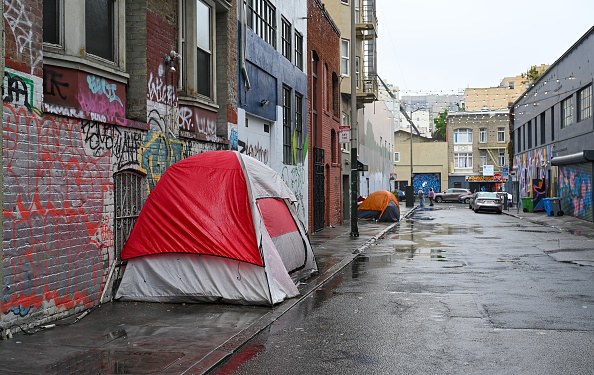
Last month, Christopher F. Rufo and Jonathan Choe received a whistleblower tip: illegal aliens were staying in San Francisco homeless shelters. They decided to visit some of the shelters to speak with employees and residents. They verified that this was indeed the case and also discovered that state and local governments are providing some of these illegal aliens with sex-change procedures.
“When most Californians think about ‘homeless services,’ they imagine that their tax dollars are going to support veterans, families, and those who have fallen on hard times,” Rufo and Choe write. “But in San Francisco, the reality is that some homeless shelters have apparently turned into havens for transgender-identifying illegal aliens, who can receive ‘gender-affirming care’ on taxpayers’ dime.”
Rufo and Choe spoke with several transgender residents about the “care” they’ve received. Read what they had to say. |
|
|
New York City Mayor Zohran Mamdani’s racial equity plan makes for quite a read. The city is one of the most opportunity-filled places on earth, yet the 375-page document treats it as a machine of oppression, where racism accounts for every achievement gap.
The plan calls for 45 agencies to view every decision and budget item through a “racial equity lens.” The agencies are to conduct anti-bias trainings, disaggregate data until they find disparities, and align spending and policies with equity targets. The word “race,” (including its variants “racist,” “racial,” and “racism”) appears 751 times. The word “merit” gets just one mention.
“Mamdani’s equity plan is not the product of neutral analysis. It is a framework that presumes its conclusions and then operationalizes them,” Wai Wah Chin writes. “The result will be a city government less flexible and empirically oriented, one virtually obligated to see every outcome and process from a racial perspective.”
Read her take. |
|
|
Prediction-market platforms like Kalshi are wildly popular. They give users the chance to put money on the outcome of future events, like who President Donald Trump will choose as his next attorney general. And they’re pretty good at it.
“That makes prediction markets extremely useful for those of us who make day-to-day decisions based on how big social or political events are likely to shake out,” Charles Fain Lehman writes. “If your business depends on who the next attorney general is, then having a bunch of people betting on that outcome probably benefits you, and society by extension.”
But prediction markets can potentially constitute gambling, Lehman points out. Sports contracts make up about 90 percent of Kalshi’s trading volume. And almost everyone agrees that sports betting is, in fact, gambling. “A number of states where sports gambling is legal have sued the prediction markets,” Lehman writes, “arguing that they are operating in flagrant violation of the states’ regulatory authority.”
Read more about the issue. |
|
|
“‘There was a time when we conceived of the human race as only one-sex.’
I suspect that almost all peoples in the long prehistory would be surprised that they supposedly saw the human race that way—as well as the vast majority of the cultures in pre-Enlightenment history. How much historical research did the thesis writer do? How many anthropological accounts of traditional cultures were consulted?
I’m guessing the answer to both questions is none.”
|
|
|
A quarterly magazine of urban affairs, published by the Manhattan Institute, edited by Brian C. Anderson. |
|
|
Copyright © 2026 Manhattan Institute, All rights reserved. |
|
|
|