|
Forwarded this email? Sign up for free to have it sent directly to your inbox. |
|
|
Good morning, Today, we’re looking at a common false narrative about transgender murders, whether the MAHA movement has been successful, and two new proposals for work visa wage requirements. Write to us at editors@city-journal.org with questions or comments. |
|
|
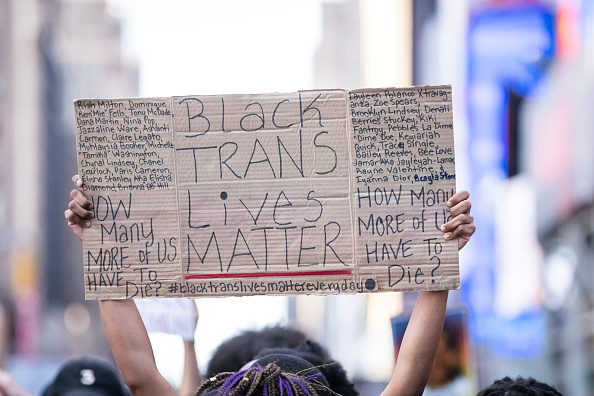
Photo credit: Ira L. Black / Contributor / Corbis News via Getty Images |
For over a decade, the Human Rights Campaign has argued that white supremacy and transphobia have led to an “epidemic” of deadly violence among transgender individuals. The facts suggest otherwise. For one thing, the transgender homicide rate is below that of the general population. And those who are murdered are mostly victimized by members of their own race. As for the leading motive, it’s intimate partner violence—not hate. “In other words, the dominant pattern is not hateful white men hunting down black transgender victims because of racism and transphobia,” Vincent Lundgren and Colin Wright observe. “It is violence between people who know each other, sleep with each other, live around each other, or encounter each other in high-risk contexts.”
Read more about the data, and why Lundgren and Wright argue that blaming white supremacy will do nothing to protect transgender people. |
|
|
Robert F. Kennedy Jr.’s Make America Healthy Again movement has generated widespread appeal, sparking interest in better nutrition and more regulations on the drug industry.
Even so, Chris Pope observes, it hasn’t achieved much by way of public policy. “That’s because easy and effective interventions to target its concerns were already enacted many years ago,” he writes. “What remain are initiatives that tend to be trivial, off-base, costly, or fiercely opposed—particularly by more established elements of the Republican coalition.”
Read more. |
|
|
In a new rule published last week, the Department of Labor proposed two potential changes to wage requirements for different work-based visa programs, including the H-1B. The primary proposal, which Jeremy Neufeld and Connor O’Brien refer to as “Blind Benchmarking,” would prevent employers from paying foreign workers more than American workers by raising the minimum salary thresholds.
But this approach has two problems. “First, Blind Benchmarking determines wage levels based on job description rather than the qualifications of the foreign candidate. This encourages employers using the H-1B and employment-based immigrant programs to game the system by strategically writing job descriptions that secure a lower wage requirement,” they write. “Second, Blind Benchmarking does not use data that allow for apples-to-apples comparisons between foreign and American workers.” A second approach, “Experience Benchmarking,” would work much better, the authors argue. Read more here. |
|
|
“‘Dismantling systems of privilege and oppression.’
Is there a better example of privilege and oppression than teachers’ unions? Let’s start by dismantling them.” |
|
|
A quarterly magazine of urban affairs, published by the Manhattan Institute, edited by Brian C. Anderson. |
|
|
Copyright © 2026 Manhattan Institute, All rights reserved. |
|
|
|