In 2015, a socialist won election to the Chicago City Council for the first time since the Black Sox threw the World Series 96 years earlier.
In the decade since, Chicago’s far-left radicals have entered the political mainstream with the institutional backing of the Chicago Teachers Union (CTU) and the Democratic Socialists of America (DSA). A small but growing minority on the city council, socialists enjoy the sympathy of Mayor Brandon Johnson and a national political wind at their backs, with candidates of their persuasion winning prominent races—including, most notably, the mayor’s office in New York City. In Chicago, resurgent socialists and their like-minded allies are building a new political machine to steer the city toward collectivism and away from the more pragmatic Democratic governance that long marked its politics. They openly endorse revolutionary Marxism, including municipal takeovers of private enterprise and “the total abolition of the capitalist system.”
Finally, a reason to check your email.
Sign up for our free newsletter today.
Though this growing movement has yet to implement its most extreme policies, its influence threatens further decline for America’s onetime “Second City” through fiscal irresponsibility, support for substandard education, and contempt for the rule of law. With some of the nation’s largest unfunded pension liabilities, Chicago is rapidly approaching a fiscal cliff, even as it spends lavishly on a shrinking and failing public school system. Domestic outmigration, driven by high taxes, housing costs, and crime, has been offset by international migration, but the underlying problem remains: many residents are leaving in search of greater affordability, livability, and opportunity.
If its financial situation worsens and Chicago receives a federal bailout, the consequences would extend beyond the city itself. A rescue could encourage other municipalities to pursue reckless tax-and-spend policies by weakening the expectation that they will bear the full costs of fiscal mismanagement. Chicago’s predicament thus offers a warning about the dangers of vesting Marxists with municipal authority.
Socialism has a long history in the Windy City, from the Haymarket Affair to the Pullman Boycott; but until recently, it had been effectively marginalized in electoral politics.
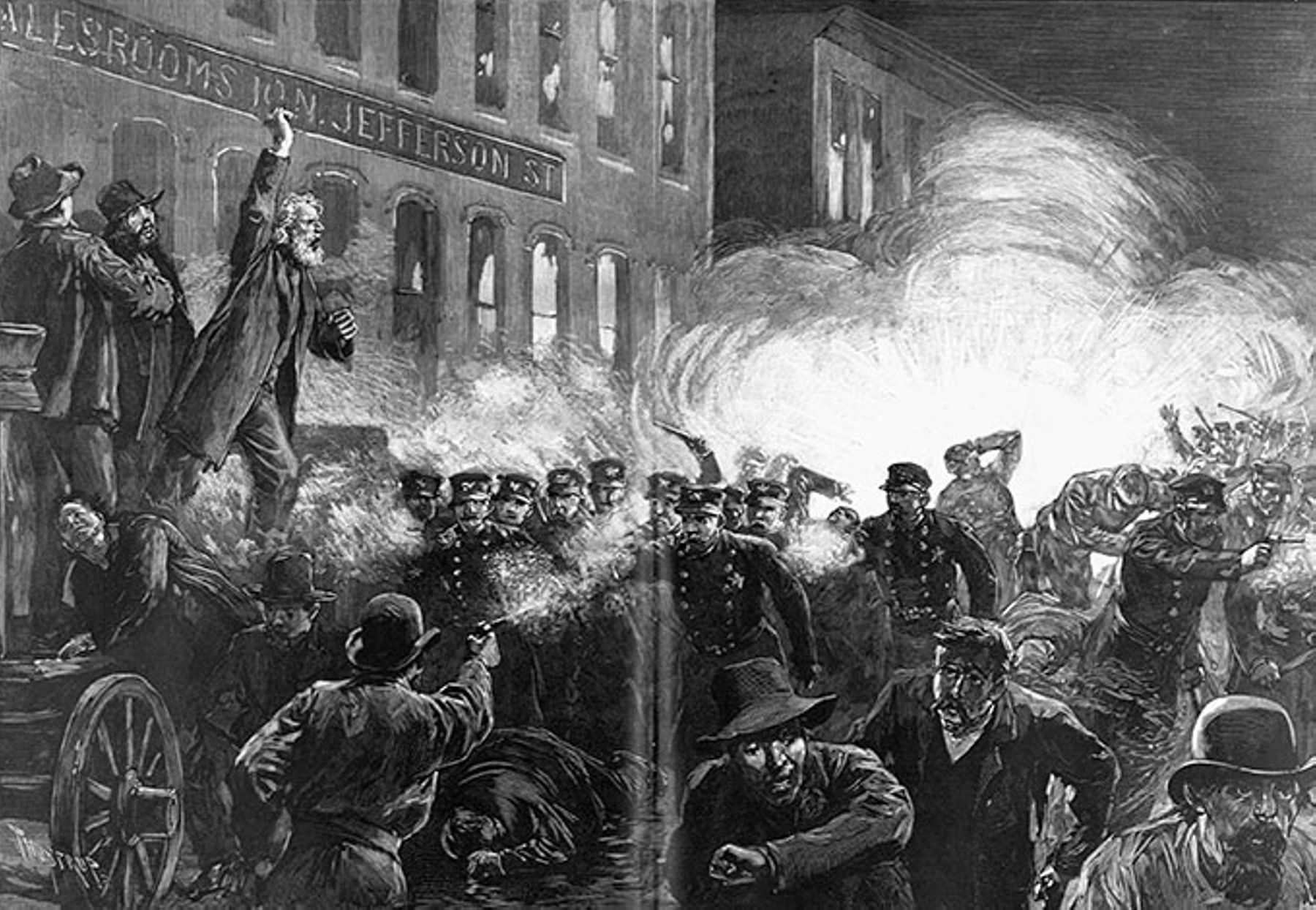
At the dawn of the Gilded Age, socialism gained a foothold on the Chicago City Council, with the Socialist Labor Party electing five aldermen in the 1870s. But the 1886 Haymarket Square bombing, which killed seven police officers, along with the Red Scare following the 1917 Bolshevik Revolution, dashed socialists’ political fortunes. In 1919, the city’s last socialist alderman, former Pullman electrician Charles V. Johnson, suffered an electoral defeat that the Chicago Tribune described as a “Hard Blow to Bolsheviki.”
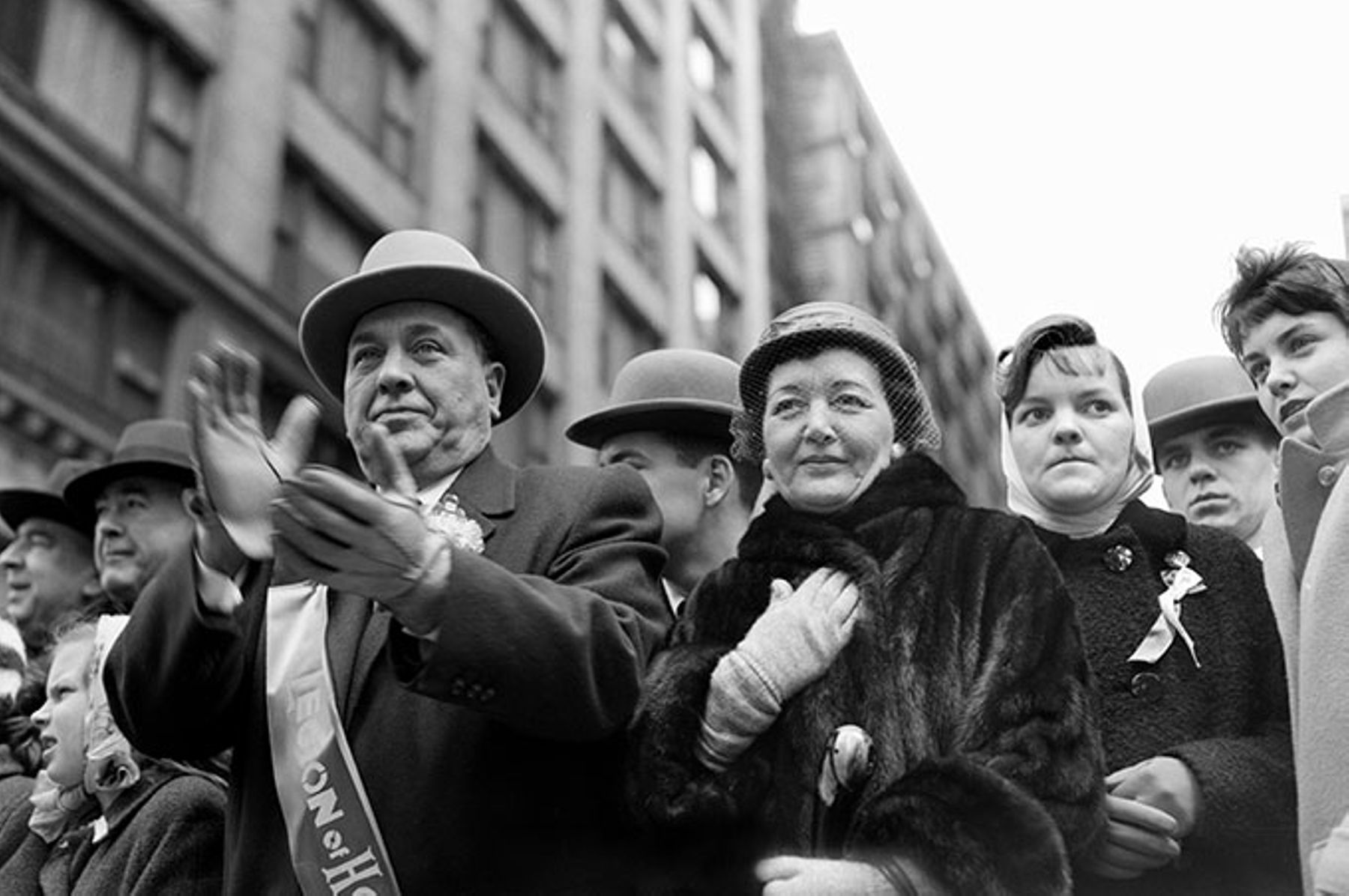
In the post–World War II era, Chicago, a capitalist powerhouse, kept socialism at bay, even as it was governed by one of modern America’s great big-government enterprises: Richard J. Daley’s patronage-based Democratic machine. Daley, who served as mayor from 1955 to 1976, led the city during the height of the Cold War, when most Americans equated socialism with Soviet totalitarianism, breadlines, and gulags. Though Daley had authoritarian instincts—he was called “the Boss” for good reason—and the machine was rife with corruption, Chicago was known for much of his tenure as “the city that works.” He was elected six times.
By the time Daley died in office in 1976, Chicago was struggling with many of the same problems facing other major cities, from high crime to “white flight.” But Chicago avoided the fate of other Rust Belt cities like Detroit and Cleveland. It embraced the dynamism of a globalizing economy and made a successful transition from a Midwest manufacturing hub into an epicenter of commerce and tourism with a burgeoning service sector. Daley’s son Richard M. Daley became mayor in 1989 and wound up serving 22 years in office, one year longer than his father. The younger Daley earned the nickname “Mayor Daisy” for beautifying the city through a series of ambitious projects, including opening Millennium Park in the heart of the Loop and renovating Navy Pier with a Ferris wheel, a children’s museum, and bars and restaurants.
Chicago’s transformation into a prosperous global city was aided by competent policing and a relatively business-friendly environment, particularly for construction. The crime wave of the 1970s and 1980s, which contributed to a 17 percent drop in the city’s population, receded dramatically during the younger Daley’s tenure. After he expanded the police force by nearly 2,000 sworn officers, violent crime fell 63 percent between 1991 and 2009, while per-capita income rose substantially and the city’s population stabilized, even growing modestly during the 1990s. Meantime, a building boom helped keep the city affordable: office space and condominiums in greater Chicago were roughly 30 percent cheaper in 2009 than in New York City or Boston.
Notwithstanding his reputation as a machine Democrat, Daley’s views were described in a 2012 Atlantic profile as “radical libertarianism” because of his criticism of the growth of the federal bureaucracy and the erosion of state and local sovereignty, particularly in education. “Once the federal government said it was going to control urban education, it destroyed the cities,” Daley said. “People fled. It didn’t matter who you were. . . . They mandated everything in big cities. They destroyed us and they destroyed the middle class.”
Unlike many other Democrats, especially on the far Left, Daley didn’t blame middle-class decline on Wall Street or free trade. In 1993, he even supported the North American Free Trade Agreement (NAFTA), despite opposition from local unions that backed his mayoralty. President Bill Clinton appointed Daley’s brother, William, to chair the administration’s NAFTA Task Force.
The Daleys’ combined 43-year mayoral legacy is, of course, tarnished by fiscal imprudence and broad-ranging corruption, from the patronage-driven graft of the elder Daley’s era to the federal scandals that emerged during his son’s tenure. While the city’s pension-debt crisis has worsened under Richard M. Daley’s successors, the seeds of financial ruin were sown under “Little Richie,” who ran structural budget deficits and used tax-exempt bond proceeds to cover short-term expenditures, a practice that drew IRS scrutiny. Still, the Daleys deserve credit for preserving a politically moderate status quo that valued public safety, economic dynamism, and commercial development. With the Boss and, later, his son running the machine or its remnants, Chicago’s fringe of left-wing radicals and community organizers rarely stood an electoral chance.
Yet those radicals and organizers remained resolutely committed to their cause, often squabbling with the Daleys and other mainstream Democrats. The most infamous of these figures was Saul Alinsky, author of Rules for Radicals. He was the subject of Hillary Clinton’s senior thesis at Wellesley, and the community-organizing tradition he pioneered influenced Barack Obama, who worked as an organizer on Chicago’s South Side before launching his political career as a young lawyer. The future president also worked on a philanthropic venture with University of Illinois Chicago professor Bill Ayers, cofounder of the Marxist terrorist group the Weather Underground, which carried out bombings of the U.S. Capitol in 1971, the Pentagon in 1972, and the State Department in 1975.
Ayers later disapproved of Obama’s presidency, especially his foreign policy, accusing him of acting like an “imperial leader.” Indeed, despite his political background, Obama staffed his White House with key Democratic establishment figures: his administration included numerous Wall Street insiders; and Rahm Emanuel, a Clinton administration alumnus, served as chief of staff. After Daley announced in 2010 that he would not seek another term, Emanuel left the White House and was elected Chicago’s next mayor.
Five years later, now in his second term, Emanuel clashed with a 26-year-old rabble-rouser on the city council: Carlos Ramirez-Rosa, the city’s first socialist alderman since 1919.
When Ramirez-Rosa was in sixth grade, high school students from the Young Communist League visited his Chicago Public Schools classroom. Among their recommended readings was The Communist Manifesto, which helped form his identity as a young leftist. A native of Chicago’s upscale Lakeview neighborhood, Ramirez-Rosa read Noam Chomsky in high school and attended the University of Illinois Urbana-Champaign, where he earned a degree in political science.
Like Alinsky and Obama, Ramirez-Rosa got his political start in community organizing, which helped propel him to a 2015 aldermanic victory in Ward 35 over machine-backed incumbent Rey Colón. In office, he clashed with Emanuel over the “head tax” that the mayor and the city council had voted to phase out in 2011. In 2017, Ramirez-Rosa and 17 other aldermen backed an ordinance for a new $33-per-employee monthly head tax to bail out Chicago Public Schools. The proposal went nowhere—not even years later, under Mayor Brandon Johnson, who proposed reviving the tax.
In the 2019 aldermanic elections, Ramirez-Rosa held on to his seat and gained five new comrades on the city council: Daniel La Spata (Ward 1), Jeanette Taylor (Ward 20), Byron Sigcho-Lopez (Ward 25), Rossana Rodríguez-Sánchez (Ward 33), and Andre Vasquez (Ward 40). All are DSA members, together constituting 12 percent of the 50-member council. The victories gave Chicago the largest contingent of socialists on the city council of any major American city.
Under Ramirez-Rosa’s leadership, they formed the Chicago Democratic Socialist Caucus, “guided by an anti-racist, feminist analysis of society” and opposition to “neoliberalism and austerity.” (The group shunned Vasquez after he voted to approve then-mayor Lori Lightfoot’s 2020 pandemic budget, which sought to close a $1.2 billion budget deficit in part through a $94 million property-tax increase.)
The caucus’s list of demands is far-reaching: free housing and health care, a universal basic income, rent control, wealth- and corporate-tax hikes, defunding the police, banning charter schools, municipalizing the electric utility ComEd, and establishing a “People’s Bank” in a bid to “cancel Wall Street.” The caucus has also called on the city to cancel its municipal bonds held by Wall Street banks—an almost certainly unconstitutional move—and argued that the Federal Reserve should let Chicago refinance its debt and obtain new loans at zero percent interest.
Public safety under the socialist caucus’s agenda could be positively perilous. Its platform vows to “remove police from all public spaces, and institutions, including but not limited to libraries, schools, health centers and parks.” With Chicago “teen takeovers” not uncommon at Millennium Park and lakefront parks and beaches, public safety would be severely compromised if the Chicago Police Department (CPD) were prevented from maintaining law and order in those places.
So far, however, despite serving together on the city council for nearly two terms and welcoming another comrade, Angela Clay, to represent Ward 46 in 2023, the socialists have fallen short of their most ambitious plans. Their policy victories have generally aligned with mainstream progressivism: barring the CPD from cooperating with Immigration and Customs Enforcement, advancing Treatment Not Trauma as an alternative to policing, and eliminating the city’s gang database and ShotSpotter gunshot-detection system. The socialists haven’t succeeded in their “Lift the Ban” campaign to overturn Illinois’ rent-control prohibition; the city council has blocked their “tax the rich” ordinances; police spending has only grown since 2019, exceeding its allotted budget almost every year; and municipalizing ComEd and establishing a People’s Bank remain distant prospects.
The caucus has two key allies, however, that together may constitute the foundation of a new political machine: the Chicago Teachers Union and Mayor Brandon Johnson. The CTU’s political spending in 2023, when Johnson was elected mayor, was almost three times higher than in 2019. According to a 2024 Illinois Policy Institute analysis, the CTU had contributed over $850,000 to the political committees of 30 aldermen since 2010. More than 60 percent of that money went to socialists—including over $100,000 each for Jeanette Taylor and Byron Sigcho-Lopez, both of whom took office in 2019.
Less than one-fifth of the CTU’s spending is devoted to teacher representation. Its main priority is political activism. The union even brought students on a “field trip” to 2026 May Day pro-labor and anti-Trump demonstrations. Many of its goals line up with the Chicago DSA’s, especially efforts to suppress charter schools and organize teacher strikes. Meanwhile, fewer than one in three Chicago Public Schools students reads or does math at grade level.
The CTU also cofounded the United Working Families (UWF) organization, which, unlike other labor unions and progressive groups, doesn’t shy away from the label “socialist.” The CTU, the UWF, and the Chicago DSA are also members of the Lift the Ban coalition, alongside 34 other local organizations. “A lot of us are communists and socialists,” a CTU functional vice president for high schools said in 2021. “The more militant we got, the more power we got.”
Formerly employed as a CTU organizer, Brandon Johnson was the union’s handpicked mayoral candidate for 2023. Though neither a self-identified socialist nor a DSA member, he has shown considerable generosity to his socialist colleagues on the city council, all of whom endorsed his mayoral candidacy. Upon taking office, Johnson appointed all five members of the caucus to committee chairs and elevated Ramirez-Rosa to one of the council’s most powerful positions, naming him both zoning committee chairman and floor leader. Under Johnson’s predecessor Lightfoot, not one socialist served as a committee chair.
In November 2023, Ramirez-Rosa resigned from his leadership positions following a controversial incident in which he was accused of bullying and threatening fellow lawmakers and acknowledged trying to prevent Alderwoman Emma Mitts (Ward 37) from entering the council chamber during a contentious sanctuary-city debate. Ramirez-Rosa apologized for his behavior, but the episode didn’t derail his political career or undermine the strength of the socialist caucus. In 2025, after Ramirez-Rosa had served ten years as an alderman, Johnson selected him as the general superintendent and CEO of the Chicago Park District. The mayor then nominated Cook County Commissioner Anthony Quezada—a Chicago DSA member and former Ramirez-Rosa staffer—to fill Ward 35’s vacant seat. The city council approved Quezada’s appointment by a 32–11 vote.
In his famous essay “The Intellectuals and Socialism,” F. A. Hayek wrote: “Socialism has never and nowhere been at first a working-class movement.” Chicago’s socialist resurgence has likewise been driven largely by young, educated professionals. The Chicago DSA’s website acknowledges that DSA members are “disproportionately white, non-union, college educated, white collar, and millennial” and that the chapter is “especially dominated by ‘transplants’ ” without deep community and social ties to Chicago. (Ramirez-Rosa, a Hispanic native of Chicago, is an exception.) Similarly, Zohran Mamdani’s mayoral victory in New York City drew overwhelming support from newcomers and strong support from college graduates; native New Yorkers, by contrast, favored Andrew Cuomo.
Ultimately, the Chicago DSA seeks to foment class warfare by mobilizing a “militant minority” and encouraging workers to “fight the boss.” In classic Marxist terms, it defines the relationship between owners and workers as inherently oppressive, antagonistic, and irreconcilable—marked by “domination and subjugation,” with any gain for management coming at the expense of workers. The only solution to this “dictatorship of the capitalist class,” its stated political tasks declare, is the “total abolition of the capitalist system.”
Toward this end, the Chicago DSA openly declares that “the elucidation of Marxist politics is paramount.” Beyond supporting labor strikes and electoral activism, it hosts “Socialist Night Schools” aimed at residents new to socialist ideas and even a “Comrades with Kids: Picnic and Play” event. Echoing the national DSA, it demands extending voting rights to illegal immigrants and felons and creating a “new democratic constitution that puts an end to minoritarian rule.” While this lofty goal remains far from realization, it’s worth noting what it entails: abolishing the world’s longest-standing written national constitution and fundamentally remaking the American political order.
Second-city socialism remains a nascent grassroots movement, but it is becoming a political force. The Chicago DSA is targeting five more key wards in the 2027 municipal elections. If the seven current socialist aldermen retain their seats and five more win election, nearly one-quarter of the Chicago City Council would be socialist. The political barriers to higher taxes, banning charter schools, defunding the police, and municipalizing private businesses could then begin to erode. As Sean Duffy, a Chicago DSA cochair who drafted the chapter’s priorities, concluded, “Our road to power is long and the path will not always be clear, but our hope is not dimmed.”
Socialism is gaining ground nationally, propelled in large part by the DSA. Mamdani’s mayoralty in the Big Apple has received significant national attention, but Chicago has already been feeling the “warmth of collectivism” under its socialist caucus and a CTU-dominated mayor’s office, backed by a heavily CTU-aligned city council. According to the Chicago Tribune, Mayor Johnson will leave his successors with a “financial ash heap.” Don’t expect DSA-endorsed socialists to clean up that mess, let alone deliver freedom and prosperity, in Chicago or anywhere else.
Chicago’s financial problems may have begun under the Daleys, but neither father nor son had any illusions about socialism. Both championed free enterprise and the rule of law, however imperfectly, and helped make Chicago a world-class city that was affordable, beautiful, and free. A new generation of political leaders rejects these liberal ideals in favor of something far more radical and revolutionary—and antithetical to the American experiment. Chicago’s political future bears watching.