
In 1999, two young men entered Columbine High School in Colorado, gunned down 12 students and a teacher, then took their own lives. Grief therapists arrived “long before the gun smoke wafted away,” wrote Washington Post columnist Jonathan Yardley. The “self-appointed priests and priestesses of this New Age of self-awareness, unctuous parasites bearing portable confessionals who swoop down wherever catastrophe strikes, chanting mantras of pop psychology . . . [attach] themselves to the stunned, bewildered survivors of affliction, demanding that they give vent to their ‘feelings.’”
Yardley’s dismissal sounds jarring today. In the aftermath of a school shooting, the therapeutic response is no longer controversial; it's so ubiquitous that it goes unquestioned.
Finally, a reason to check your email.
Sign up for our free newsletter today.
Consider last month’s shooting at Brown University, which left two students dead. Within hours, school communications followed the now-standard playbook. Officials emphasized the “profound anxiety and fear” felt by whole communities, offered proactive emotional support to “those most affected,” and promoted counseling services for all. The school cancelled finals and assured students it was “normal to experience a wide range of emotions, including shock, fear, sadness, anger, numbness, or confusion. There was “no ‘right’ way to respond,” except to take care of oneself.
While offered with compassion, these services and scripts are an exercise in bureaucratized empathy. They can, and often do, undermine resilience in those whom they are meant to help, while providing cover for institutional failings.
Post-crisis mental-health support rests on the assumption that trauma is widespread and requires professional intervention—a claim often repeated by state and federal officials. But empirical evidence undermines the claimed pervasiveness of trauma and the ostensible necessity of credentialed professionals to help survivors handle it. “The idea that a dangerous or frightening event might cause lasting psychological difficulties does not appear in recorded history, literally anywhere, until relatively recently,” writes George A. Bonanno in The End of Trauma.
Bonanno directs the Loss, Trauma, and Emotion Lab at Columbia University’s Teachers College. He has studied depression, grief, and PTSD symptoms following various potentially traumatic events, including mass shootings. He and his colleagues consistently find that the average person’s normal, day-to-day feelings of stress and anxiety typically rise only modestly after difficult events—even the most violent and disturbing.
The most common experience, by far, is a “resilience trajectory,” which Bonanno describes as “when people in otherwise normal circumstances are exposed to an isolated and potentially highly disruptive event, but nonetheless maintain ‘a stable trajectory of healthy functioning across time.’” For those who experience prolonged distress (estimates run somewhere between 2 percent and 10 percent), the vast majority recover within a year, regardless of whether they receive treatment. Why? Because not all human beings who feel distraught need formal mental-health help.
In their book One Nation Under Therapy: How the Helping Culture is Eroding Self-Resilience, Christina Hoff Sommers and Sally Satel review the effects of therapeutic interventions in the face of grief and loss. “Evaluations show that intervention programs that recruit clients, through advertisements for example, or that visit families within hours of a loss are far more likely to have no effect or a negative effect than programs that wait for the bereaved person to initiate contact,” they write. For people who proactively seek therapy, the results aren’t much better: “A number of studies have reached the conclusion that grief therapies are relatively ineffective and even harmful to a minority.”
Opening up about one’s emotions is by no means the best coping mechanism. In fact, repression and distraction can have benefits. Sommers and Satel describe studies finding that unduly discussing or focusing on one’s mood, its causes, and its implications is associated with worse and longer symptoms. By contrast, those with a coping style reliant on distraction felt better, even if they had been depressed before the disaster.
Of course, suffering and distress exist. They are not uniformly disabling, though. Nor is mental-health treatment always ineffective. But the therapeutic narrative should not be unquestioningly accepted as morally unassailable and always applicable.
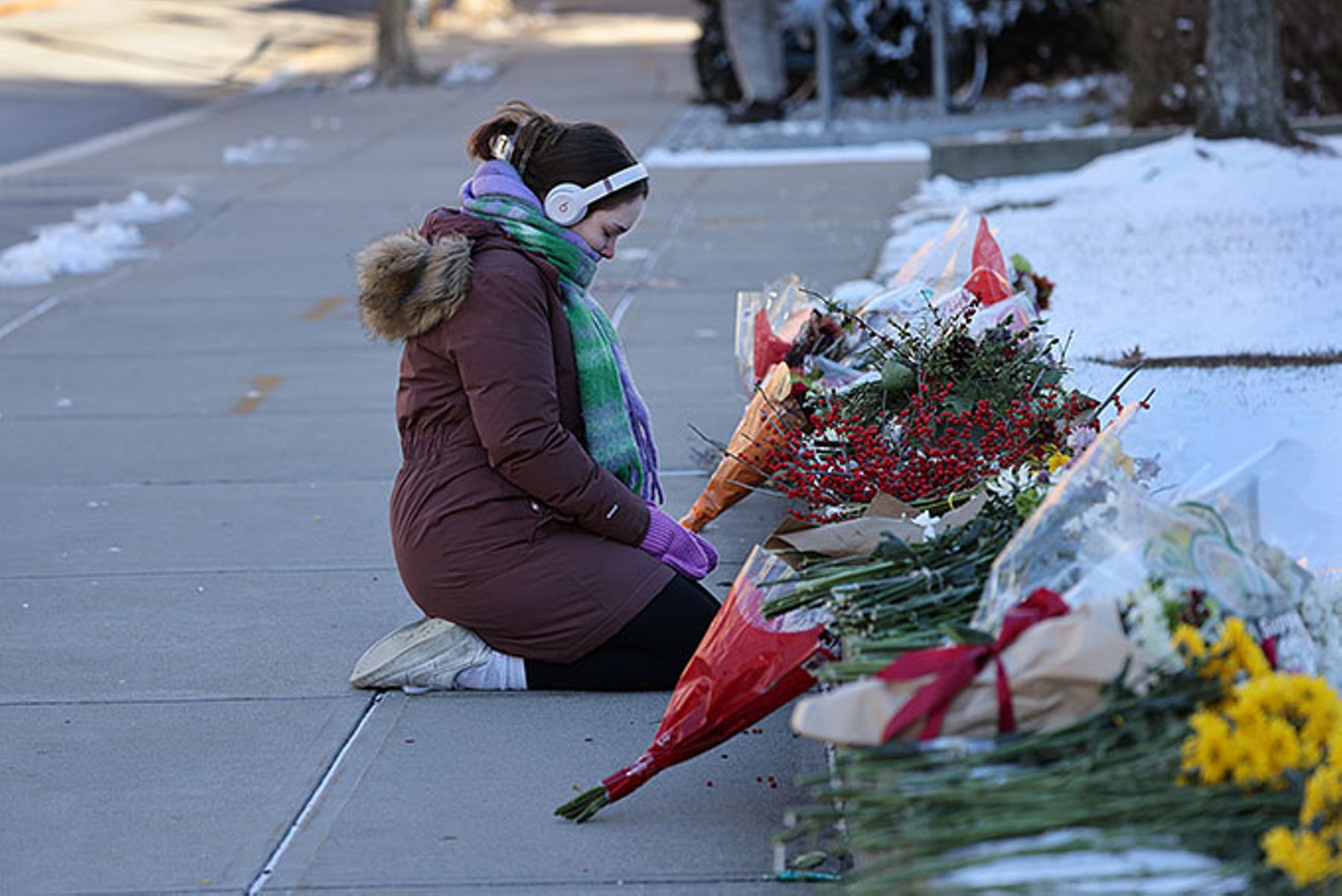
When schools adopt a mental-health emphasis, moreover, they send an implicit message to students: that they’re psychologically weak, that they should be affected by trauma, and that they need formal support when something bad happens.
That message has consequences. Students who are functioning healthily may feel guilty for not being a mess; they may worry about being perceived as cold or uncaring, encouraging them to adopt a victim mindset. Some may ruminate on their feelings because an authority figure implied that symptoms are expected—which may itself cause symptoms to manifest.
A better message is the old adage to be strong, keep calm, and carry on. Bonanno, sees clear benefit in what he calls a “flexibility mindset” centered on “three interrelated beliefs: optimism about the future, confidence in our ability to cope, and a willingness to think about a threat as a challenge.” Together, these beliefs can help get us “in the game” and get through bad situations.
We can also depend on our communities. Stories of Providence, Rhode Island, coming together in the wake of the Brown shooting show the potency of this approach. When patrons of a children’s library were stuck there during lockdown, staff and caterers made chicken nuggets for kids and tea for adults. Moms in town came to campus to offer students hugs. Mutual obligation does what self-care cannot.
But instead of encouraging students to be there for others, Brown’s explicit message was to put personal well-being above all else. In a communication from the vice president of human resources to faculty and staff, nonessential personnel were given permission to work from home after the lockdown ended, and managers were told to prioritize compassion. Students and faculty alike might have benefitted instead from coming together, rather than stewing on their emotions alone at home or obsessing over related news on their phones.
Empathy is not accountability—and can be a way to avoid it. The university announced that an incident review was under way, but findings likely won’t emerge until the incident is no longer in the headlines and the pressure to act has dissipated. Meantime, the school can point to a list of typical offerings: support services, outreach, and statements of concern for health and well-being.
This focus makes it easier to avoid asking hard questions. A custodian told the Boston Globe that in the weeks leading up to the shooting, he had noticed the would-be gunman repeatedly “casing that place” in the building where the attack later occurred. The custodian allegedly reported this to a security guard. Did that report get logged or escalated, or trigger any type of action? Were there clear expectations for what security should do with such a tip?
Brown, of course, is not alone in stressing empathy over accountability. Nearly all schools use this approach because it comes off as compassionate, is reputationally safe, and can be put into action immediately.
But it doesn’t do much good. That comes only with the hard work of admitting failure and identifying weak processes for violence prevention—and changing them.
Top Photo by Craig F. Walker/The Boston Globe via Getty Images