A man of sturdy temperament, silver tongue, and swarthy countenance, Richard Francis Burton—born in Torquay in 1821—was better equipped than most Englishmen for undercover travel in Arabia. Laid low for a time in Karachi in 1848 by trouble with his eyesight, Burton began shaping a plan for a feat never yet achieved: to enter Mecca not merely as a European infidel but as a pilgrim indistinguishable from the rest.
Against the perils of the journey, and the risk of execution if unmasked, Burton could set his talent for disguise and his gift for languages. An Arabist since his Oxford days, he now spoke Hindustani, Gujarati, Marathi, Persian, Sindhi, and more. He was also drawn to Islam and eager to study it more deeply. “The more he thought of it,” writes his biographer, Mary S. Lovell, “the more the notion took shape as a credible project.”
Finally, a reason to check your email.
Sign up for our free newsletter today.
As Lovell notes, it was not unusual at the time for army officers (Burton was by then a captain) to receive paid leave if they used it to gather intelligence. The East India Company was keenly interested in the lands surrounding its territories, and Mecca, the theological heart of the Islamic world, remained a blind spot. Burton’s quest would thus serve what we would now call the national interest, while also satisfying his appetite for adventure and his desire to bring an account of the journey to the British reading public.
He studied the Koran with ardor; adopted a shaven-headed alias, the Persian scholar Sheikh Abdullah; and, at some point—perhaps at the hands of his garrison’s assistant surgeon—underwent a certain elective operation. “Were Richard discovered to be an uncircumcised man,” Lovell writes, “and therefore not what he purported to be, his chances of survival among fanatics in Mecca were small.”
After spending three years with his mother and sister in France, Burton set off for Arabia in 1853. His skin darkened with walnut oil, he took a steamship to Alexandria and then on to Cairo, refining his alias into the more plausible guise of a Pashtun wanderer. Judging a third-class ticket truest to his assumed identity, Burton was relegated to deck accommodation, roasting in the North African sun during the three-day passage.
He then joined a band of pilgrims and sailed from Suez to Yanbu, a port in what is now Saudi Arabia. The 14-day voyage was marked by brawling, but greater dangers lay ahead: a desert route to Medina, the holiest Arab city after Mecca, where Bedouin snipers often picked off pilgrims. By this point, Burton was traveling with a larger party, 12 of whom died during a 36-hour march. When he reached Medina, he learned that fanatical Sunnis had recently murdered Persian pilgrims, whom they regarded as infidels. It was fortunate that “Abdullah” now passed as a Pashtun.
In Medina, Burton beheld the tomb of Muhammad, later recalling that a “constellation of pearls” had been set in the gloom, “that a man’s eye may be able to endure its splendours.” Mecca still lay ahead. Burton joined a caravan of 50,000 pilgrims trudging and riding across the Nejd Desert. Here, burning winds blasted travelers with sand—the “flaming breath of a lion,” as Burton described it. The ten-day march claimed many lives in those days; those who collapsed and were left behind were sometimes set upon by vultures before they had even died.
At last, Burton entered Mecca. Then, as now, the Kaaba—the black stone structure said to stand where Muhammad once prayed—rose at the center of a plaza thronged with frenzied worshippers. Its door stood seven feet off the ground. After “days of ritual prayer conducted in unbearable heat,” Lovell writes, Burton was lifted aloft by fellow worshippers—or rather, by those who took him to be one—and manhandled through the raised doorway. Inside this cramped space, at the heart of the tumult, the keeper of the Kaaba’s silver padlock questioned “Abdullah” about his background. As Burton later recalled: “A blunder, a hasty action, a misjudged word, a prayer or a bow not strictly the right shibboleth, and my bones would have whitened the desert sand.”
Burton deserves his reputation as one of the most daring adventurers of Britain’s most audacious age. Beyond service in India and his penetration of Mecca, he trained Turkish soldiers in the Crimean War; became the first European to reach Lake Tanganyika, the world’s longest freshwater lake, while searching for the source of the White Nile (taking a javelin to the jaw en route); documented cannibalism, ritual murder, and sexual customs in West Africa while serving as a diplomat; published 43 volumes; learned as many as 29 languages and several dialects; and translated some 30 foreign works into English.
Burton’s rich and unpredictable life exemplifies what is now voguishly called “agency.” It is a term often heard in Silicon Valley, where one quickly encounters the related maxim “You can just do things.” The phrase can sound trite: everyone knows that, in theory, one can simply act. Yet most people are constrained by the invisible bonds of convention, fear, and habit. They may show flashes of imagination or audacity, but the constraints remain. Such figures have been dismissively dubbed “NPCs,” after the non-playable characters populating the background of video games.
To slip the surly bonds of NPC-dom is not merely to just do things or to display agency, but to approach the status of “live player”—to show initiative. Elon Musk, who has willed into being both the Western electric-vehicle market and large-scale commercial spaceflight, is an archetypal live player. He is imaginative, disagreeable, and more willing than most to disregard proceduralism. “A big secret,” wrote Sam Altman, no stranger to rule-breaking, “is that you can bend the world to your will a surprising percentage of the time—most people don’t even try, and just accept that things are the way that they are.”
Burton was privy to that secret. He broke rules, reinvented himself more than once, and seems to have been driven as much by a hunger for greatness as by a taste for novelty. The result was a life that few would choose for themselves.
The Britain that produced Burton prized such initiative and made room for it. The Britain of today, by contrast, has grown uneasy with agency of this kind—and has built its institutions accordingly.
Today’s world is more organized and homogenized than the anarchic, exotic planet that Burton knew; and in important respects, it is less hospitable to initiative. The essayist Simon Sarris, arguing that agency is our most precious resource, notes how little opportunity is now afforded to talented children and teenagers. Leonardo, Nabokov, and Carnegie, he observes, “were all doing from a young age, as opposed to merely schooling.”
In Britain, more than two centuries after Burton’s birth, the emphasis has shifted decisively from doing to schooling. By raising the school-leaving age to 16, then to 18, and by sending roughly half of young Britons to university until 21, the country has standardized life paths. Burton himself, educated across several countries in an itinerant childhood, was sent down from Oxford, but had long since demonstrated himself to be an “ungovernable” pistol-toting youth. Prescriptive, long-term education raises those of middling gifts, restrains those of adventurous temperament, and teaches everyone that life consists of jumping through hoops rather than venturing into dark continents or conniving one’s way into foreign citadels.
Consumer technology exerts a similar gravitational pull. The internet has undeniably lowered the barriers to acquiring skills; yet, as Sarris ultimately laments, modern Western societies have combined these tools with institutions that dampen, rather than cultivate, agency. “There is no reason the world must stay this way,” he concludes.
To be sure, modern life offers far more options, and far less danger, than Victorian life did. Yet certain features of modernity corrode personal agency, with analogous effects at the national level. National agency, though less discussed, is a useful lens through which to compare Burton’s Britain with today’s. The former was the most powerful country the world had ever seen—capable of grave wrongs but also a civilizing force that left an enduring legacy in invention, commerce, and law. The latter is much reduced, a declining middle power whose own prime minister recently described it as being immersed in “the tepid bath of managed decline.” Incapable of building much of anything, let alone rejuvenating its stagnant economy or restoring its place in the world, modern Britain squats in the vaulted halls bequeathed by its forebears. To slow the decay of public services, and to keep prices low in a flatlining economy, the British state has resorted to administering vast doses of immigration, in defiance of an increasingly angry electorate.
This loss of national agency is no accident. A central premise of the postwar liberal order holds that the world becomes more harmonious and prosperous when national decision-making is ceded to supranational legal structures, the European Union being the clearest example. Though Britain voted in 2016 to reclaim some autonomy, it remains enmeshed in a dense web of international law. Cooperation often brings benefits, but it also carries costs. Treaties designed to restrain state power now compel Britain to admit tens of thousands of illegal migrants each year, even when those immigrants go on to abuse women and children at a high per-capita rate. Kindred legal regimes make it easy for small groups—or even individuals—to block construction, driving costs up and output down. Burton’s generation laid railway tracks across the country; its descendants, unable to build a high-speed rail network, have not completed a single reservoir in over 30 years.
The erosion of agency has come from within as well. After coming to power in 1997, Tony Blair enacted sweeping constitutional reforms that shifted decision-making authority from elected government to unelected bodies. The independent Bank of England now sets monetary policy; the Office for Budget Responsibility shapes fiscal policy; the Migration Advisory Committee influences immigration. Meanwhile, the Human Rights Act—enforced by a newly created Supreme Court—bears on virtually every act of Parliament.
Britain’s so-called quangocracy (rule by quangos, or quasi-autonomous nongovernmental organizations) was constructed by politicians hoping to constrain future governments and guard against irresponsibility. The officials are fallible and their remits poorly conceived. One consequence has been a polity that struggles to act decisively and is oddly deaf to signs of internal distress. Why should officials tasked with minimizing environmental impact care about the long-term economic gains of building railways? Why should the commerce-minded Migration Advisory Committee worry about the rise of sectarian MPs, or the fact that ethnic Britons—despite repeatedly expressed preferences for lower immigration—are on course to become a minority? Without ever quite choosing it, Britain is undergoing a profound demographic transformation, even as economic stagnation hardens into permanence.
Other forces reinforce this paralysis. Britain’s low birthrate has fused quangocracy with gerontocracy. Pensioners now form an ever-larger share of the electorate, ensuring that their priorities increasingly dominate politics—above all, the extraction of more generous benefits from the taxpayer. As such largesse grows increasingly unaffordable, it is financed less by the state than by Britain’s creditors, who, in turn, acquire leverage over political life, including the ability to defenestrate prime ministers. Younger nations tend to be fractious and adventurous; older nations, the reverse. Britain’s falling birthrate can therefore be counted among the causes of its modern reluctance to take risks, challenge orthodoxies, and pursue the new—though this malaise, hardly unique, is visible across much of Europe.
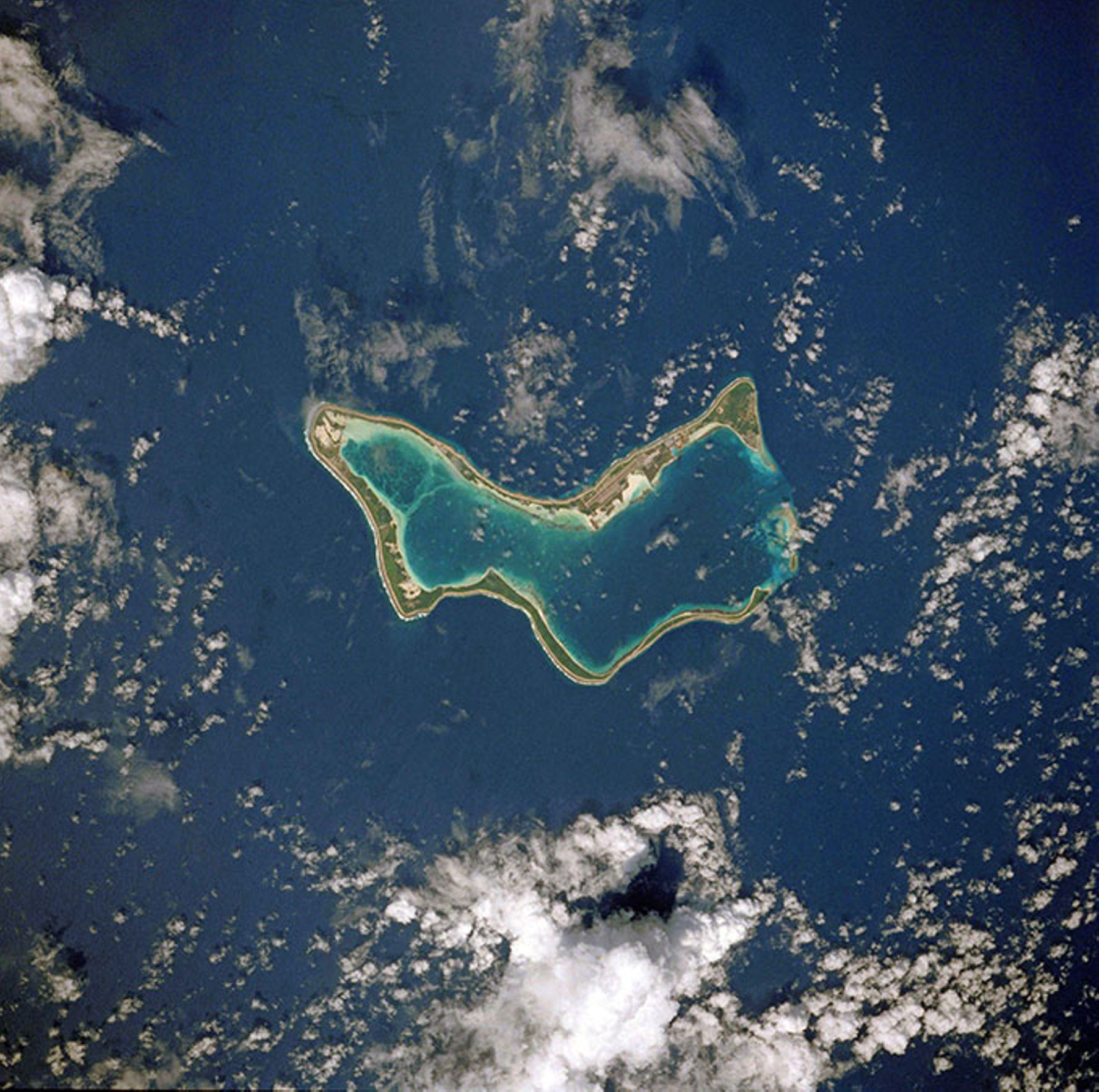
Britain may not be unique in its passive acceptance of a future shaped elsewhere, but it is among the world’s most accomplished practitioners of self-abnegation. A case in point is the government’s decision to follow a foreign court’s nonbinding recommendation that Britain cede the strategically vital Chagos Islands to distant Mauritius. Under the proposed deal, Britain would lease back a single atoll for military use at an eye-watering cost, even as Mauritius welcomes Britain’s rivals into the archipelago.
The deal’s architects view the agreement as the only way that Britain, whose modern armed forces lack the manpower to defend the archipelago’s thousands of atolls, can ensure the seclusion of Diego Garcia, the island that hosts a crucial U.S.–U.K. air base. But they are cheered on by those who treat international court pronouncements—binding or not—as sacrosanct and those who believe that Britain’s past misdeeds, real or imagined, permanently disqualify it from power. This is the same outlook that would cheer surrendering Britain’s seat on the UN Security Council: suspicious of national greatness unless it belongs to the “right” kind of underdog and, ultimately, suspicious of nationhood itself. Its lineage runs from postwar anti-nationalism to contemporary wokeism, which recasts Western history as little more than a chronicle of cruelty and rapacity, a disastrously one-sided view that owes more to resentment than to scholarship. Any serious attempt to raise Britain’s ambitions and recover its agency will collide with this school of thought.
For Britons who want their country to succeed, there is little alternative. The present paradigm is carrying the U.K. toward deeper sectarianism, prolonged economic malaise, and an even more diminished place in the world. To change that, the country will have to shed the liberal nostrums that have eroded cohesion, amend or discard elements of international law that strangle prosperity and threaten national security, and recover the virtues of parliamentary sovereignty.
For inspiration, Britain should look not to the European technocrats admired by Labour politicians but to high-agency statesmen who reversed bleak national trajectories. King Alfred, driven into the marshes, defeated the Vikings and laid the legal and educational foundations of English nationhood. Deng Xiaoping inherited a traumatized China and, through pragmatic reform, lifted some 800 million people out of poverty. Nursultan Nazarbayev, left in charge of Kazakhstan after the Soviet collapse, preserved a native culture at risk of being submerged by Moscow-directed migration.
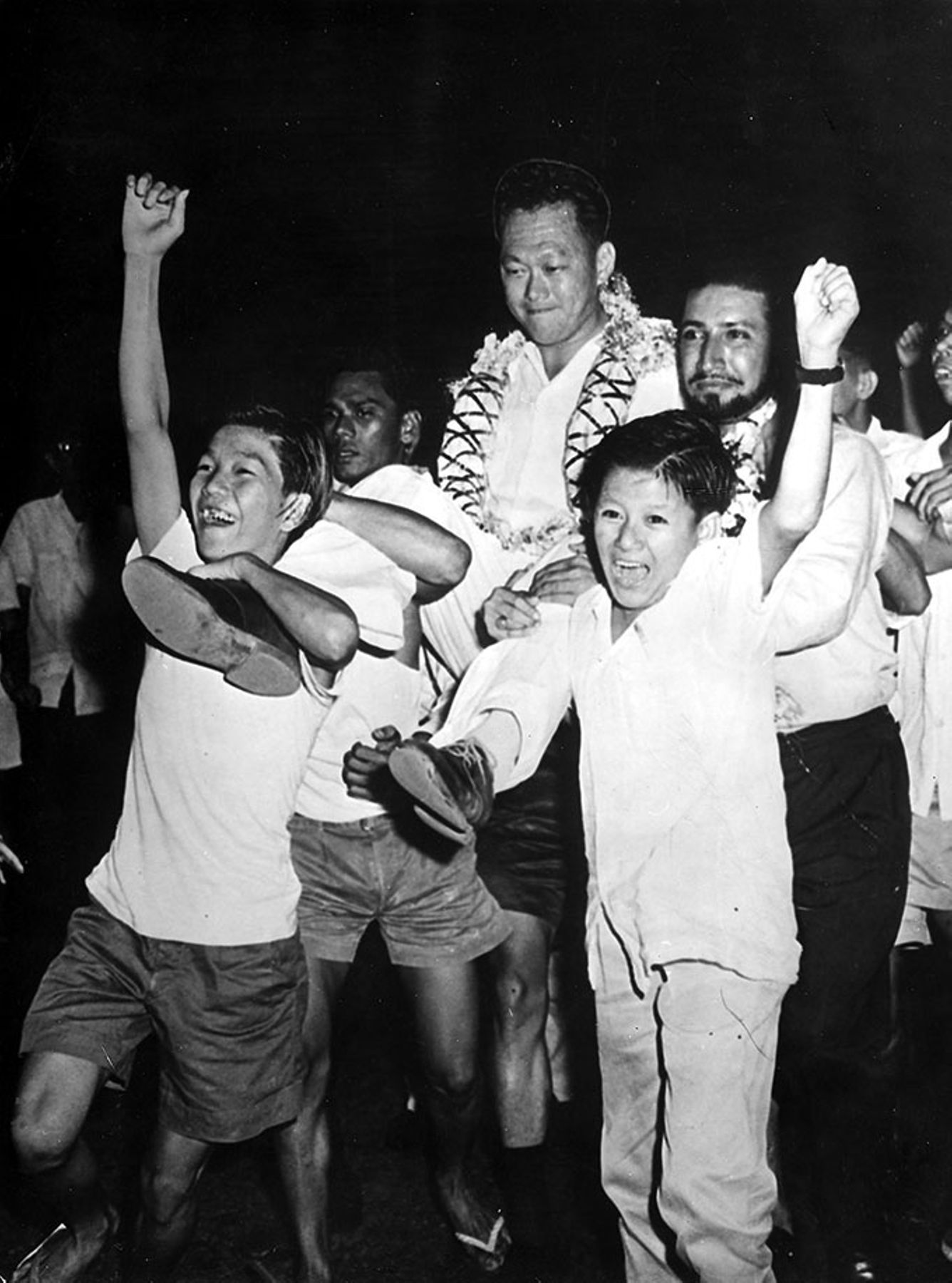
No such list would be complete without Lee Kuan Yew, who led Singapore from Third World to First. “I sensed a fundamental change in the attitudes of the people,” Lee wrote of his early days in power. “They realized Singapore was on its own.” Seizing that moment, he pursued industrialization, enforced cultural cohesion, and governed relentlessly with the country’s long-term interests in mind. Today, Singapore has the world’s second-highest per-capita GDP by purchasing power parity; Britain, the former imperial power from which it sprang, has the 26th-highest.
All these leaders were flawed, and the records of Deng and Nazarbayev, in particular, include conduct that no liberal democracy should emulate. Yet their achievements were real—born of crisis, pursued with boldness, and guided by an unsentimental concern for the long term. That perspective is conspicuously absent from modern British statecraft.
Consider 2010 footage of Nick Clegg, who was soon to be deputy prime minister, arguing that a new fleet of nuclear power stations was not worth building because it would take a decade to come online. By 2022, Britain had built none—and instead faced some of the world’s highest industrial energy costs, with foreseeable economic consequences. This kind of short-termism is often described as a pathology of democracy, especially in our dyspeptic age. But many democracies nonetheless outperform Britain when it comes to long-term planning.
How, in these dispiriting circumstances, might an agentic Britain avert its present fate? Any constitutional reform must restore the capacity of elected officials to act decisively, to make—and own—their mistakes, and, when necessary, to crack a few eggs in the making of an omelet. As Philip Cunliffe has argued, this requires restoring the concept of the national interest to politics. If Parliament decides that Britain needs a high-speed rail network, say, it must be able to build one, since the public benefit plainly outweighs the disruption imposed on those required to move.
Success will depend on a governing class willing to impose measures that are initially painful—economically or reputationally. There will be resistance to rethinking schooling radically, and louder resistance still to breaking the “triple lock” that is allowing pensions to consume the economy. Break it anyway.
Any serious effort to revive the birthrate will likewise provoke suspicion and charges of unsavoriness. What will work remains uncertain: generous support for large, taxpaying families; reforms to child care and planning; medical interventions that extend fertility—it may require all these, and more. Progressives are quick to impugn such efforts, just as they are to denounce attempts to curb mass immigration, but leaders intent on saving Britain must be willing to endure the criticism.
Britain still has much in its favor: an intellectually able, technically skilled population; world-class universities; a diaspora with fondness for its homeland; architectural traditions ripe for renewal; and a legal culture widely emulated abroad. Yet these advantages add up to less than they should. Those of an “Anglofuturist” bent—seeking a future that is high-tech yet recognizably British—look with regret on the sale of DeepMind, the country’s leading AI lab, to Google’s parent, Alphabet. Nations that merely import powerful AI, rather than create it, will find themselves at a structural disadvantage as such technologies grow more capable.
Still, some on these isles are working to ensure that British innovation continues to shape the world. Inspired by the American DARPA (Defense Advanced Research Projects Agency), the government founded ARIA in 2023. The Advanced Research and Invention Agency funds high-risk work on perpetual flight, robotics, programmable plants, radically cheaper computation, and micro-devices that could one day treat degenerative neurological disease. Tellingly, it has been designed to operate at arm’s length from bureaucracy and short-term political pressures.
Britain is well placed to capitalize on the space economy and biotechnology, and it has the talent to play a more serious role in AI. To do so, government must liberalize planning to make lab space and housing cheaper, and expand energy supply to reduce industrial costs. If quangos stand in the way, they must be defanged. These broad reforms can then be reinforced with targeted government support for the most promising sectors. Perhaps the British government could set a national project of building a permanent space habitat. Someone, somewhere, will do it; it takes guts to go first.
Anglofuturists also see untapped potential in Britain’s remaining overseas territories. The giveaway of the Chagos Islands must be halted, but that should be only the start. Having defended the Falklands in 1982, Britain has since done next to nothing with them, despite their vast reserves of oil and gas and capacity for expansion through the reclamation of their shallows. Inspired by the Dutch and their raising of land from the sea, Britain could, as AI researcher Jason Hausenloy and economist Duncan McClements have argued, reclaim the shallows of Dogger Bank in the North Sea and build a planned city free from the dead hand of NIMBYism. As they say in Amsterdam: “God created the world, but the Dutch made the Netherlands.”
South of the Falklands lies the British Antarctic Territory, whose mineral wealth is presently shielded by treaty. A “non-player” assumes that the status quo will hold. A “live player” notes that the principal treaty can be renegotiated from 2048—and that rivals are already moving. Russia has surveyed oil and gas reserves in the Weddell Sea; China has built an intercontinental airport on Antarctic territory claimed by Australia.
Rather than wait to be outflanked, Britain should deploy its geological expertise to build the world’s most comprehensive model of Antarctica’s resources—precious metals, hydrocarbons, uranium, rare earths. That knowledge would be valuable intellectual property and a bargaining chip. Britain could, for instance, offer the United States access to data on unclaimed regions in return for backing its contested claim to the more accessible peninsula and a slice of the mainland.
At the same time, Britain should encourage startups to develop robotic systems capable of extraction in extreme environments, aiming to become the global leader in hostile-terrain mining—a capability equally applicable to asteroids, the moon, and Mars. Britain may not reach these frontiers first, but it could make itself indispensable to those who do. Such projects would also restore a sense of adventure now absent from the predictable graduate hiring track. Today’s frontiers may be lifeless, but they are frontiers all the same, and no serious power should shrink from them.
To reclaim an upward trajectory, Britain must relearn the habit of national agency and the qualities it requires: courage, curiosity, intuition, disagreeableness, and a willingness to make difficult decisions. These virtues are visible in Richard Burton’s life and in the actions of statesmen who rescued their countries from far graver predicaments than ours. The combined weight of law and cultural habit is formidable, however, and renewal will not come easily.
To repurpose a line of Lee Kuan Yew’s: whoever governs Britain “must have that iron in him—or give it up.” What took a few generations to squander may take several to recover. Burton, at least, grasped what self-rule demands. One of his couplets remains instructive:
Do what thy manhood bids thee do, from none but self expect applause. He noblest lives and noblest dies who makes and keeps his self-made laws.